The Pantry
Open any cupboard where a family keeps its flour, rice, spices and the jar of something nobody remembers buying, and you're looking at one of humanity's…
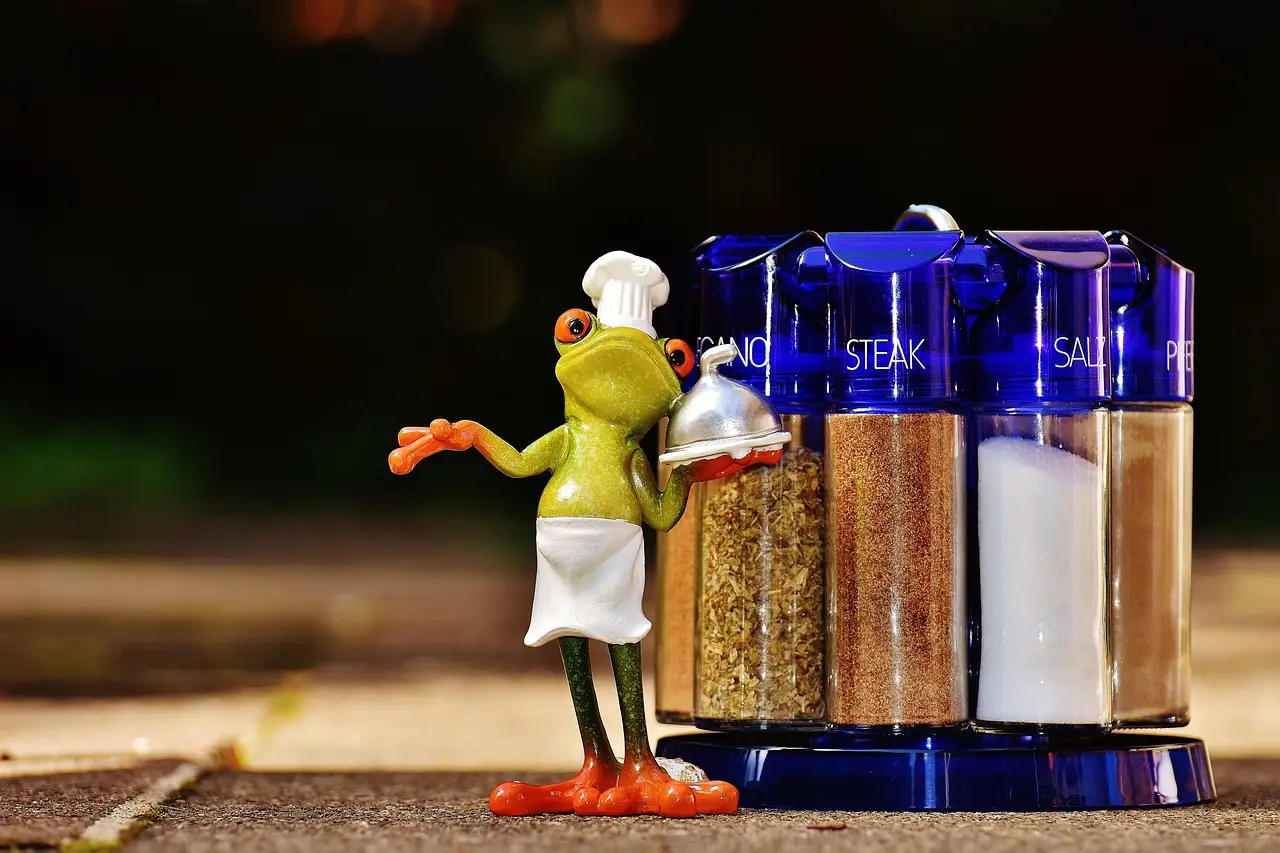
Open any cupboard where a family keeps its flour, rice, spices and the jar of something nobody remembers buying, and you're looking at one of humanity's oldest inventions: the store. Long before fridges, every household needed a cool, dry, safe place to keep food between harvest and table. The names we still use, pantry and larder, carry that story in them, from medieval bread rooms to Korean crock terraces to the hessian-wrapped safe on an Aussie veranda.
Background
"Pantry" comes from the Old French paneterie, from pain, bread, and before that Latin panis. It started life as the bread room 1. "Larder" comes from Latin lardarium, from laridum, lard, because it was where raw meat was coated in pig fat to keep it 2. That seal of fat kept out air and moisture: in cold conditions, larded meat lasted months; in warm weather, the fat turned rancid within weeks 2.
So the best larders sat on the shady side of the house: north or west in the Northern Hemisphere, and south or east in Australia and New Zealand. They had wire gauze instead of glass in the windows, to let air in and keep flies out, and stone larders had cold slate or marble shelves and hooks for hanging meat 2.
History
The big medieval hall split its food into departments, each with its own officer. The pantry held bread and other dry stores under the pantler; the larder held meat and dairy under the larderer; the buttery held barrels of ale and wine 12. By the 1700s the larder also kept bread, pastry, milk, butter and cooked meats 2.
By Victorian times, a grand British house had a pantry that held china and glass, washed in lead-lined wooden sinks so nothing chipped, while food lived in storerooms and cellars, and the messy jobs like gutting fish went to the scullery 1. Victorian household writer Isabella Beeton wanted the pantry, scullery and storeroom close to the kitchen, "to offer the smallest possible trouble in reaching them" 3. Her ideal housekeeper spent the evening breaking up lump sugar, stoning raisins, keeping accounts, and listing what the storeroom needed, with a full inventory every quarter or half-year 3.
In colonial America, the first pantries grew out of butteries built into a cold northern corner of the house. The 19th century brought the butler's pantry, a staging room between kitchen and dining room 1. In the early 1900s the freestanding Hoosier cabinet, a work surface with storage built in, packed a whole pantry into one piece of furniture until it faded out around the 1940s 1.
Preservation changed what a store could hold. In 1809 French confectioner Nicolas Appert worked out that food cooked in a sealed jar didn't spoil unless the seal leaked. In 1810 the French government, keen to feed its armies, paid him a 12,000-franc prize 7. That same year Peter Durand patented the tin can process for Philippe de Girard, and the patent was sold on in 1811 to Bryan Donkin and John Hall 7. Suddenly a pantry shelf could hold summer in a tin.
Then refrigeration made the larder obsolete 2. Australians had a clever halfway step: the Coolgardie safe, invented by Arthur Patrick McCormick in the Western Australian goldfields town of Coolgardie in the late 1890s. A wooden frame wrapped in wet hessian, fed by a tray of water on top, cooled food 3 to 9 degrees below the air around it as breezes blew through 4. Families bought them or built their own, and kept them on the veranda until the mid-20th century 4.
Customs, rules and rituals
Stores follow the calendar. Christians traditionally gave up meat, eggs, dairy and alcohol for the 40 days of Lent, so Shrove Tuesday became the day to use up the eggs, milk and butter. Hence pancakes, a British custom since the 16th century, and hence pancake races 8.
In Korea, the store sits outdoors. The jangdokdae is a terrace of earthenware onggi jars near the kitchen, holding kimchi, grains, soybeans and bean and red pepper pastes, some fermenting for years 5. Sun and fresh air matter, so placement is everything 5. In royal palaces, a court lady called the janggo mama looked after the store 5.
Some faiths make keeping a store a duty. The Church of Jesus Christ of Latter-day Saints asks members to keep a home food supply as part of its "Provident Living" guidance 6. And all over the world people have built their own versions: raised Yup'ik food caches in Alaska, woven granaries in Cameroon 6.
Place in human experience
A store is a promise about the future. Every society has had to manage the "natural, inevitable variability" of food supply, as one survey puts it: good harvests and bad, seasons of plenty and of want 6. The pantry is where a family turns plenty into safety.
It's also a map of who did the work. Medieval households gave each store its own official 12. Victorian homes put the housekeeper in charge of the storeroom and its accounts 3. Korean palaces trusted a court lady with the sauce jars 5. Whoever held the store held a quiet kind of power over the household.
And a pantry is personal. It shows where a family comes from and how it eats: the rice sack, the jar of chilli paste, the tin of golden syrup. The words outlived the rooms. Most of us no longer have a bread room or a lard room, yet we still say "pantry" and "larder" every day 12. Next time you reach for the flour, you're carrying on a very old habit.
Sources
- "Pantry", Wikipedia. https://en.wikipedia.org/wiki/Pantry
- "Larder", Wikipedia. https://en.wikipedia.org/wiki/Larder
- Isabella Beeton, The Book of Household Management, Project Gutenberg. https://www.gutenberg.org/ebooks/10136
- "Coolgardie safe", Wikipedia. https://en.wikipedia.org/wiki/Coolgardie_safe
- "Jangdokdae", Wikipedia. https://en.wikipedia.org/wiki/Jangdokdae
- "Food storage", Wikipedia. https://en.wikipedia.org/wiki/Food_storage
- "Canning", Wikipedia. https://en.wikipedia.org/wiki/Canning
- "Shrove Tuesday", Wikipedia. https://en.wikipedia.org/wiki/Shrove_Tuesday