Coffee
Coffee: from Sufi night prayers in Yemen and bans in Mecca to Melbourne espresso bars and the flat white, plus how to buy and store it.
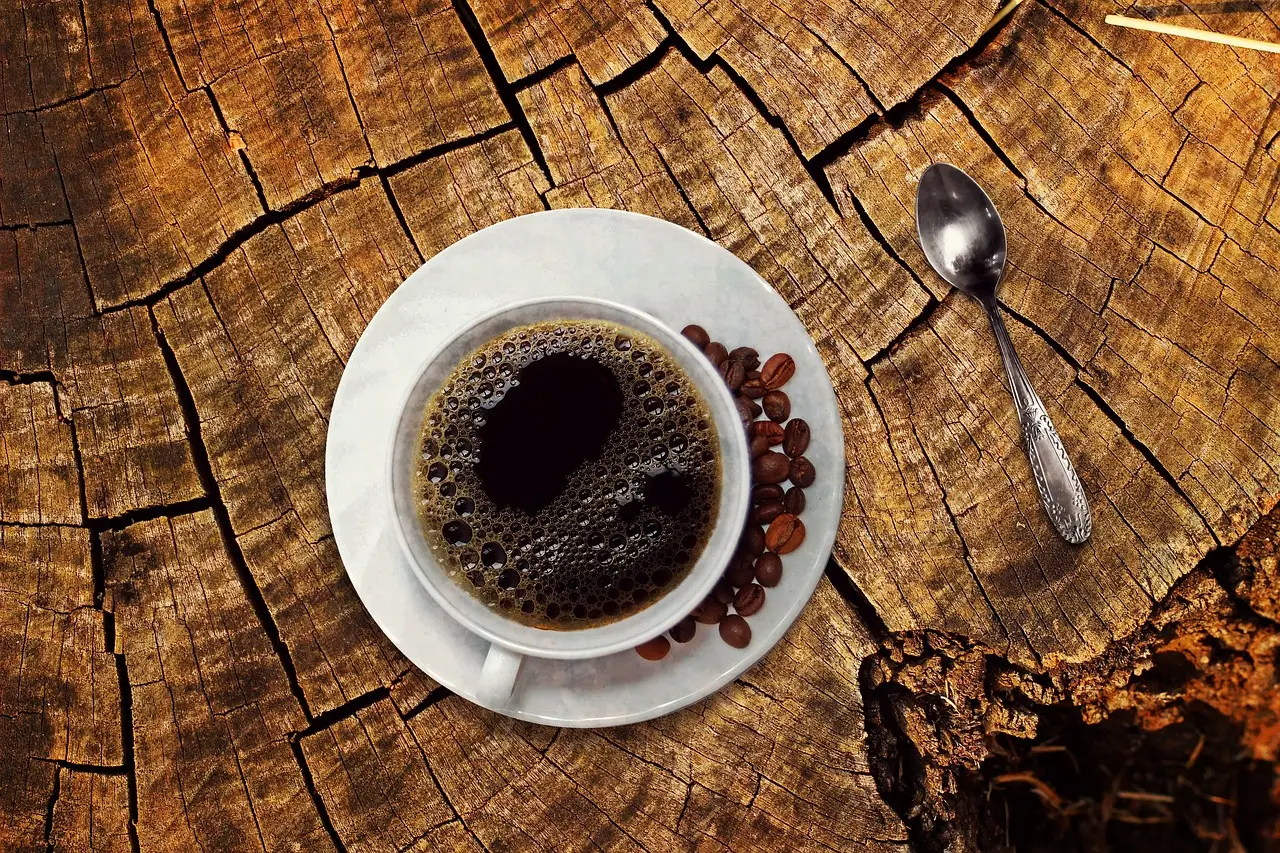
Few smells pull people out of bed like coffee. It's a roasted seed brewed in hot water, and it has been banned, blessed, taxed and argued over for 500 years. Today it's how half of Australia says good morning, and how the other half says "let's catch up".
Background
Coffee is the roasted seed of a small tree. About three-quarters of the coffee grown worldwide is Coffea arabica, prized for its flavour; the rest is mostly robusta, which has 40–50% more caffeine and turns up in many espresso blends 1.
Brazil grows the most by far: 3.41 million tonnes in 2023, about 31% of the world's 11.06 million tonnes. Vietnam comes second, at 1.96 million tonnes 1.
The word comes from Ottoman Turkish kahve, from Arabic qahwah. Scholars once read it as "wine", but it most likely meant "the dark one" 1.
History
There's a famous story about a goatherd who noticed his goats dancing after eating coffee cherries. The National Coffee Association tells it with the herder named Kaldi, in ninth-century Ethiopia 2. But the tale first appears in writing only in 1671, the herder is unnamed there, and "Kaldi" seems to be a twentieth-century addition 1. Lovely story; thin receipts.
The solid evidence starts in Yemen. By the late fifteenth century, Sufi communities there drank coffee to stay focused during night prayers 14. By the 1500s it had spread to Iran, Egypt, Syria and Turkey, and public coffeehouses called qahveh khaneh became known as "Schools of the Wise" 2. Istanbul's first coffeehouse opened in 1555 1.
Europe took a while. When coffee reached Venice in 1615, local clergy condemned it 2. Pope Clement VIII tasted it and gave it his approval 2. By the mid-1600s London had more than 300 coffeehouses, and Lloyd's of London began at Edward Lloyd's 2.
The Dutch got coffee growing in Java in the late 1600s. A tree gifted to Louis XIV of France produced a seedling that Gabriel de Clieu carried to Martinique in 1723, and in the eighteenth century Francisco de Mello Palheta brought seeds to Brazil 2.
Customs, rules and rituals
- Banned in Mecca. In 1511 a court of conservative scholars in Mecca prohibited coffee. The Ottoman sultan Suleiman I's grand mufti overturned the ban with a fatwa in 1524 4.
- Ethiopia's church. The Ethiopian Orthodox Church once banned coffee. Attitudes changed in the late nineteenth century, helped by Emperor Menelik II drinking it himself 4.
- The coffee ceremony. In Ethiopia and Eritrea, the host roasts green beans over a flame, grinds them in a wooden mortar, and brews them in a clay pot called a jebena 3. Coffee is served in three rounds; in Amharic the third is baraka, "to be blessed" 3. Incense may burn, and popcorn or bread is shared. It's usually performed by the woman of the house and is considered an honour 3.
- A king's worry. Charles II tried to suppress English coffeehouses in the 1670s, seeing them as places for risky religious and political talk 4.
Place in human experience
Coffee is the drink of talking. Sufis drank it to keep praying; Istanbul's coffeehouses were schools of the wise; London's became the place deals got done 12. Rulers tried to shut them down because people said too much in them 4.
Australia wrote its own chapter. In the 1880s, coffee palaces spread through Australian towns, partly pushed by the Temperance Movement as an alternative to the pub 5. After the Second World War, Italian migrants brought espresso machines. They appeared from 1952; Pellegrini's in Melbourne opened in 1954, and Leichhardt in Sydney became a heart of café culture 5. The flat white emerged in the 1980s; Sydney café owner Alan Preston says he put it on the menu at Moors Espresso Bar in 1985, though New Zealand disputes the claim 5. Our independent cafés have held their own so well that big international chains have struggled to get a foothold 5.
How to buy, store and use it
Picking good coffee. Look for a roast date, not just a best-before. Whole beans keep their flavour longer than pre-ground. Arabica gives more flavour; a bit of robusta adds punch and crema 1.
Where to find it. Australian supermarkets stock beans, ground coffee, pods and instant in the tea and coffee aisle. Local roasters and cafés often sell fresher beans by the bag.
Storing it. Keep coffee in an airtight ceramic, glass or non-reactive metal container, away from heat, light, moisture and strong smells 1. Skip the fridge, where moisture causes damage 1.
Decaf. Beans are decaffeinated while still green, either by soaking in hot water (the Swiss water process) or by steaming and using a solvent 1.
Swaps and uses.
- Dairy milk: oat, soy or almond milk.
- Espresso in baking: instant coffee dissolved in a little hot water.
- Leftover cold brew: tiramisu, chocolate cake or a marinade.
Sources
- "Coffee", Wikipedia. https://en.wikipedia.org/wiki/Coffee
- "History of coffee", National Coffee Association (aboutcoffee.org). https://www.aboutcoffee.org/origins/history-of-coffee/
- "Coffee ceremony", Wikipedia. https://en.wikipedia.org/wiki/Coffee_ceremony
- "History of coffee", Wikipedia. https://en.wikipedia.org/wiki/History_of_coffee
- "Coffee culture in Australia", Wikipedia. https://en.wikipedia.org/wiki/Coffee_culture_in_Australia