
Gochujang
Open a tub of gochujang and you'll find something glossy, brick-red and sticky enough to hold a spoon upright. Taste it and it's three things at once:…
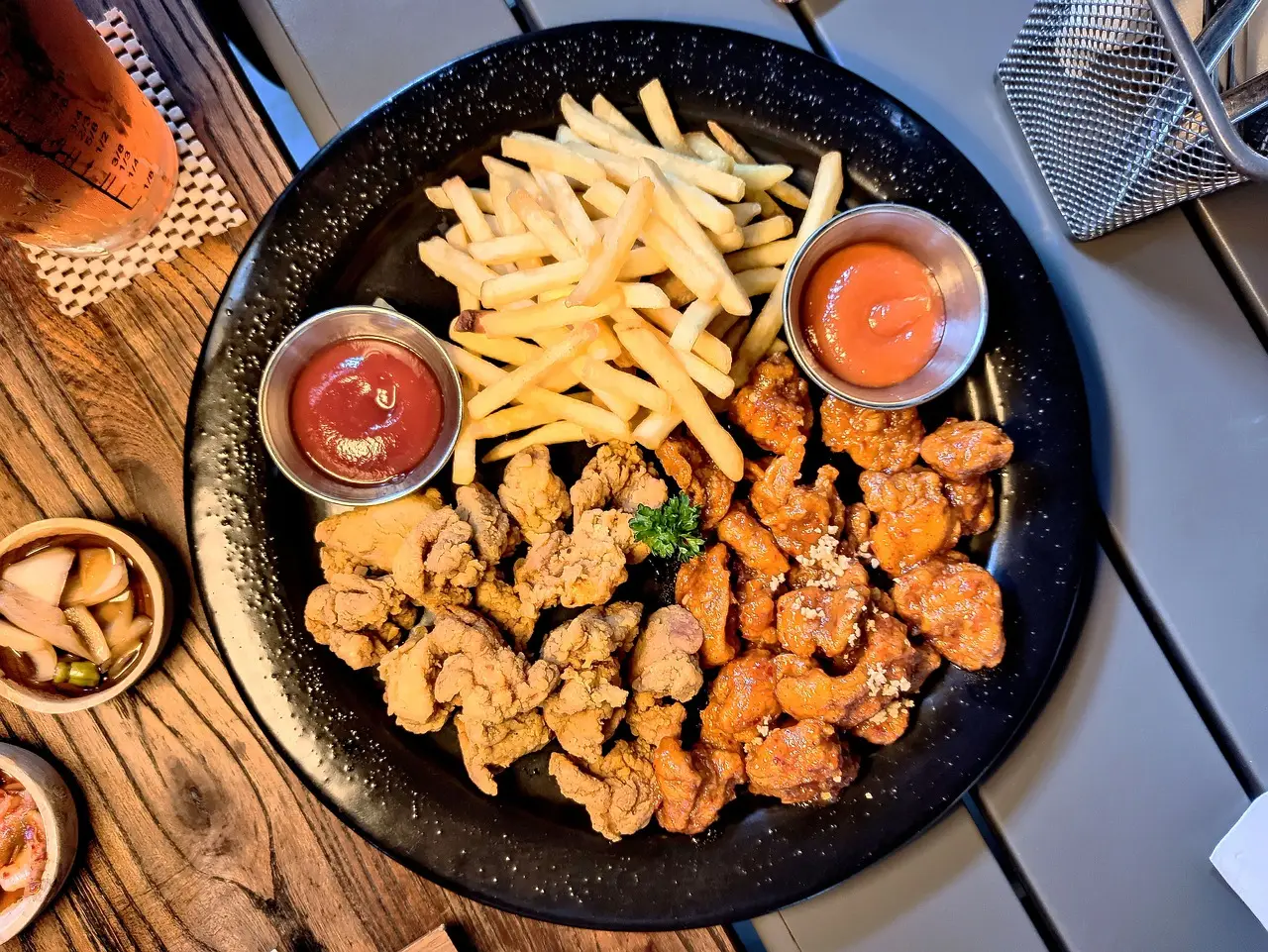
Open a tub of gochujang and you'll find something glossy, brick-red and sticky enough to hold a spoon upright. Taste it and it's three things at once: sweet, salty and slow-burning hot, with a deep, savoury funk underneath. Gochujang is Korea's fermented chilli paste, made from chilli powder, sticky rice, fermented soybeans and salt 17. It goes into bibimbap, tteokbokki and stews, and lately into burgers and wings far from Seoul. Its backstory involves kings, a temple lunch, a 250-year argument about dates, and backyards full of clay pots.
Background
The recipe looks simple. Cooks start with meju, blocks of cooked soybean left to ferment, then grind it to powder. They mix it with chilli powder, cooked glutinous (sticky) rice, barley malt and salt 17. The malt's enzymes break the rice starch into sugars, which is where that sweetness comes from 1. The meju brings the microbes that do the fermenting 7.
Then you wait. Home and small-batch gochujang can ferment for one to two years 7. Big factories use chosen starter cultures and much shorter ferments 7. Gochujang belongs to a family of Korean fermented sauces called jang, alongside soy sauce (ganjang) and soybean paste (doenjang) 8.
History
This is where it gets lively, because the dates don't agree.
When did chillies reach Korea? Chillies come from the Americas. The usual account says Portuguese traders brought them to East Asia in the early 1500s, and a Korean book of essays, the Jibong yuseol of 1614, notes their arrival 1. Korean researchers Dae Young Kwon and colleagues reject that. They argue Korean gochu is a distinct, mild pepper that grew on the peninsula long before the Japanese invasion of 1592, and that Koreans have farmed it for 1,500 years 3. That's a minority view, and readers should know both sides exist.
When did gochujang itself appear? Again, take your pick:
- Medical books from 1433 and 1445 mention a "pepper paste", though these predate chillies in Korea on the usual timeline, so the pepper may not be chilli at all 1. Kim and colleagues nonetheless count the 1433 Hyangyak jipseongbang as the first reference to gochujang 4.
- The Encyclopedia of Korean Culture says gochujang's first clear written appearance is the 1766 Jeungbo sallim gyeongje 5.
- Yet the same encyclopedia describes a cookbook, Somun saseol, probably compiled around the 1740s, that already names Sunchang gochujang 5. Korea's culture ministry webzine also points to a 1740 recipe for Sunchang's paste 6.
The 1766 recipe is wonderfully lopsided by modern taste: about 18 litres of meju powder to just 540 millilitres of chilli powder 1. Early gochujang was a soybean paste with a little heat, not the chilli-forward stuff we know.
Factory production began in the early 1970s, and most Korean households now buy their gochujang rather than make it 1. By 2017 gochujang brought in about US$150 million at home and US$32 million abroad, with exports to the US, China, Japan and the Middle East 7.
Customs, rules and rituals
- The pot terrace. Traditionally gochujang ripened for years in earthenware jars on a raised stone platform in the backyard, the jangdokdae 1. In Sunchang, families still keep rows of these jars 6.
- Sunchang, the gochujang town. One legend says Yi Seong-gye, founder of the Joseon dynasty, ate gochujang at a temple in Sunchang and later had it served at court 16. Kim and colleagues find Sunchang gochujang praised in Joseon-era royal writings and recorded by royal physicians as a medicinal food 4. Every October the town holds a fermented food festival where visitors can make their own 6.
- The table. A Korean meal, bapsang, sets rice, soup and side dishes together, with jang as the seasoning that ties it up 2. Gochujang also becomes chogochujang, with vinegar, for raw fish, and ssamjang, with soybean paste, for lettuce wraps 1.
- Halal and alcohol. Fermentation makes a little alcohol. A 2022 study of 35 cottage-made gochujangs found 57% held more than 1% alcohol, above the level recommended for halal products, so Muslim cooks may want to check labels 7.
Place in human experience
Gochujang is a lesson in patience. The KOCIS feature on Sunchang describes prep that alone takes over a year: meju in late summer, chillies dried in the sun, then about a year of ripening in the jar. Each master keeps a family recipe handed down the generations 6. Making jang was the work of a whole household's year.
It's also tied up with comfort and care. Kwon and colleagues note a widespread Korean belief that gochujang soothes a weak stomach 2. Sunchang's paste was valued both for flavour and as medicine 4.
And place matters. Kim and colleagues credit Sunchang's mountain basins, warm, humid air and big swings between day and night temperatures for both the peppers and the ferment 4. Locals add clean river-fed groundwater and mountains that block winter wind 6. That's terroir, Korean style.
Even the arguments about dates tell you something. When researchers push gochu's history back by centuries, they're claiming the flavour as Korea's own, not borrowed 3. For families in Korea and across the diaspora, a spoonful of red paste stirred into rice is home, whichever century it started in.
Sources
- "Gochujang", Wikipedia. https://en.wikipedia.org/wiki/Gochujang
- Kwon, D. Y., Chung, K. R., Yang, H. J. and Jang, D. J., "Gochujang (Korean red pepper paste): A Korean ethnic sauce, its role and history", Journal of Ethnic Foods, 2015. https://doi.org/10.1016/j.jef.2015.02.006
- Kwon, D. Y., Jang, D. J., Yang, H. J. and Chung, K. R., "History of Korean gochu, gochujang, and kimchi", Journal of Ethnic Foods, 2014. https://doi.org/10.1016/j.jef.2014.11.003
- Kim, S. H., Chung, K. R., Yang, H. J. and Kwon, D. Y., "Sunchang gochujang (Korean red chili paste): The unfolding of authenticity", Journal of Ethnic Foods, 2016. https://doi.org/10.1016/j.jef.2016.09.002
- "Somun saseol (소문사설)", Encyclopedia of Korean Culture, Academy of Korean Studies. https://encykorea.aks.ac.kr/Article/E0030064
- "Flavor Ripening in Tranquility", Korea webzine, Korean Culture and Information Service (KOCIS), June 2019. https://www.korean-culture.org/eng/webzine/201906/sub02.html
- Ramalingam, S. et al., "Physicochemical, Microbial, and Volatile Compound Characteristics of Gochujang, Fermented Red Pepper Paste, Produced by Traditional Cottage Industries", Foods 11(3), 2022, MDPI. https://pmc.ncbi.nlm.nih.gov/articles/PMC8834593/
- Shin, D. H. and Jeong, D. Y., "Korean traditional fermented soybean products: Jang", Journal of Ethnic Foods, 2015. https://doi.org/10.1016/j.jef.2015.02.002