Nettle
Stinging nettle: the weed that bites back, then turns soft and green in the pot. Its history, customs, and how to pick, cook and store it safely.
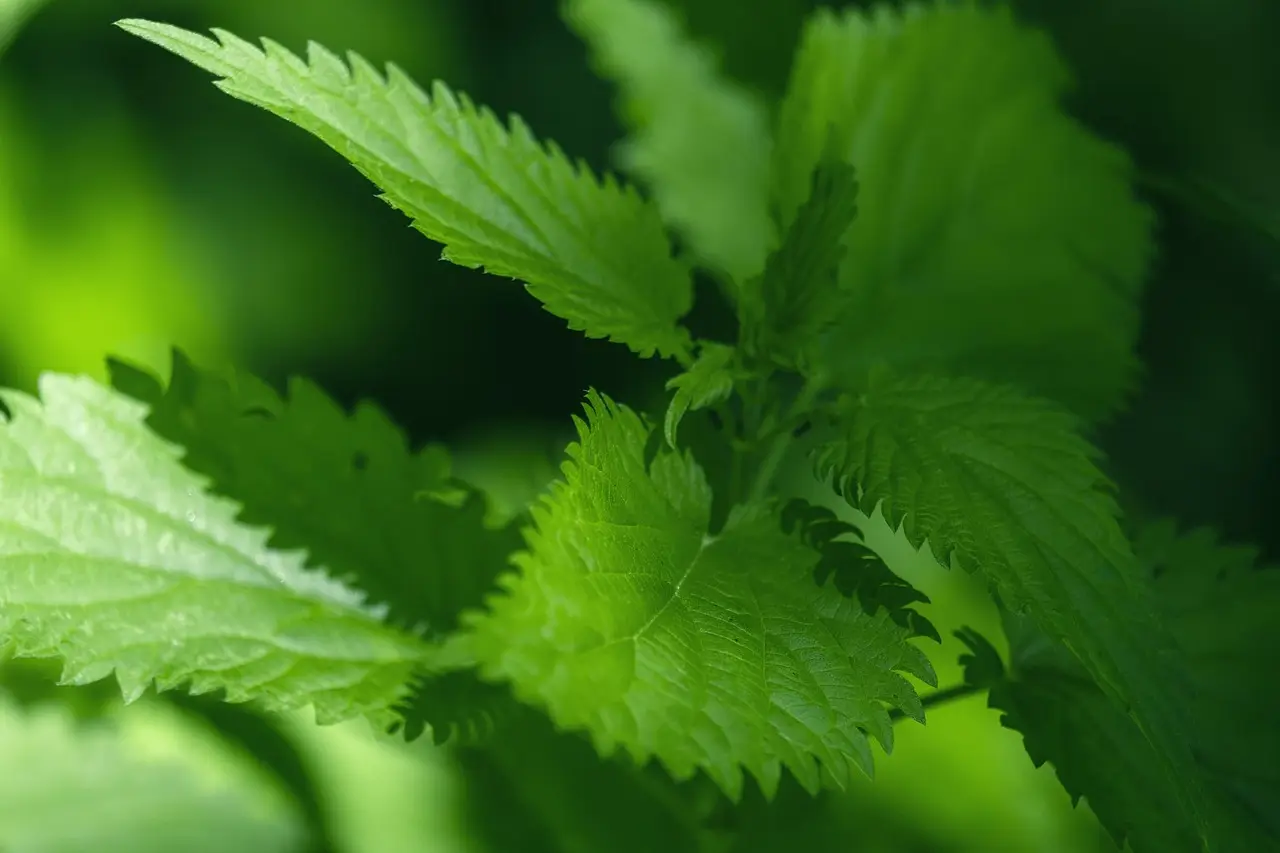
Most plants want to be eaten. Nettle would rather you didn't. Brush a bare arm against it and you'll know all about its hollow stinging hairs. Yet cooks have picked it for thousands of years anyway, wearing gloves, swearing a little, and turning it into soup. Drop the leaves into boiling water and the sting disappears 3. What's left tastes green and deep, somewhere between spinach and a spring field. Few weeds have fed, clothed and taunted people so thoroughly.
Background
The common stinging nettle, Urtica dioica, grows 0.9 to 2 metres tall in summer, with leaves 3 to 20 centimetres long 1. It comes from Europe, much of temperate Asia and western North Africa, and now grows almost worldwide 1.
The sting is clever engineering. The leaves and stems carry hollow hairs called trichomes, which work "like hypodermic needles", injecting histamine, serotonin, acetylcholine and other irritants into your skin 1. Most of the time the burn fades in about ten minutes, though it can last twelve hours or more 1.
Australia has its own nettle too. Urtica incisa, also simply called stinging nettle, is a perennial herb up to a metre high that grows in mountain gullies across New South Wales, Queensland, Victoria, Tasmania and South Australia 2. Botanists at Sydney's Royal Botanic Garden note it also turns up as a weed around stock camps and waste places 2. So if you've been stung on a bushwalk, you've met it.
History
People have eaten nettle for a very long time. Nettle stew fed people in Bronze Age Britain and Ireland, about 3,000 years ago 3.
They also wore it. Nettle stems hold a strong fibre, and a sash woven from nettle turned up in an early Bronze Age burial cist on Dartmoor, in England, dated to between 1730 and 1600 BC 1. A much more recent story says German Army uniforms in the First World War were almost all made from nettle. Wikipedia's editors add a warning: there is little evidence for it 1. Enjoy it as a legend, not a fact.
Nettle also turns up in an old English cookbook. In 1615 Gervase Markham wrote a recipe for a semi-hard cheese wrapped in nettle leaves 4. More on that cheese in a moment.
Customs, rules and rituals
- Spring soup. Nettle soup is still eaten mostly in Scandinavia, Finland, Iran, Ireland, the United Kingdom and Eastern Europe 3. Cooks pick the young tops in spring and early summer, when they're most tender 3. Sweden's nässelsoppa starts with blanched nettles and a roux, then gets chives and chervil 3. Ukrainian green borscht adds potatoes and carrots, and Russian spring shchi mixes nettle with sorrel and orache 3.
- A cheese in a nettle coat. Cornish Yarg is a semi-hard cheese wrapped in nettle leaves before it matures, which gives it an edible, mouldy rind 4. The nettles change the acidity on the outside of the cheese, and so change how it ripens 4. The name is less ancient than it sounds: "Yarg" is "Gray" backwards, after Alan and Jenny Gray, who found the old Markham recipe. Production began in 1984 4.
- The eating contest. Every year in Dorset, England, competitors at the World Nettle Eating Championship eat as much raw nettle as they can 1. Raw. On purpose.
Place in human experience
Nettle is the plant that teaches children caution. One brush and you learn to look where you walk. That same lesson runs through Hans Christian Andersen's 1838 fairy tale The Wild Swans. Elisa must gather stinging nettles from graveyards and knit them into shirts to turn her brothers back into men 5. She works with blistered hands and must stay silent the whole time, because one word would kill her and her brothers 5. It's a story about love measured in pain, and the nettle carries it perfectly.
Nettle also sits between wild and kept. It grows best where people have been: around stock camps, rubbish heaps and old farmyards 2. It follows us, feeds us if we're brave, and reminds us, every spring, that free food rarely comes without a catch.
How to buy, store and use it
Finding it. Australian supermarkets rarely stock fresh nettle. Look at farmers' markets and specialty greengrocers in spring, or ask a friend with a garden full of weeds. Dried nettle leaf is easier to find, usually sold as a tea.
Picking good ones. Choose the young tops in spring and early summer. They're the most tender 3. Skip anything growing beside busy roads or sprayed land.
Handling. Wear thick rubber gloves and use tongs. Rinse well. Boiling water deactivates the sting 3, so a one-minute blanch makes nettle safe to touch. Squeeze it dry, then chop.
Storing. Treat fresh nettle like any tender green: keep it in a bag in the crisper and cook it within a day or two. Blanched and squeezed nettle freezes well in small balls.
Using it. Stir it into soup, risotto, pasta, dumplings or a spanakopita-style pie. Blitz it into pesto with nuts, oil and lemon.
Swaps. Spinach or silverbeet are the easiest stand-ins. Sorrel brings a sour note, as in Russian shchi 3.
Sources
- "Urtica dioica", Wikipedia. https://en.wikipedia.org/wiki/Urtica_dioica
- "Urtica incisa", PlantNET (NSW Flora Online), Royal Botanic Gardens and Domain Trust, Sydney. https://plantnet.rbgsyd.nsw.gov.au/cgi-bin/NSWfl.pl?page=nswfl&lvl=sp&name=Urtica~incisa
- "Nettle soup", Wikipedia. https://en.wikipedia.org/wiki/Nettle_soup
- "Cornish Yarg", Wikipedia. https://en.wikipedia.org/wiki/Cornish_Yarg
- "The Wild Swans", Wikipedia. https://en.wikipedia.org/wiki/The_Wild_Swans