Spices
Spices are the dried seeds, bark, buds, roots and berries that make food smell like somewhere. A pinch of clove, a grind of pepper, a spoon of turmeric:…
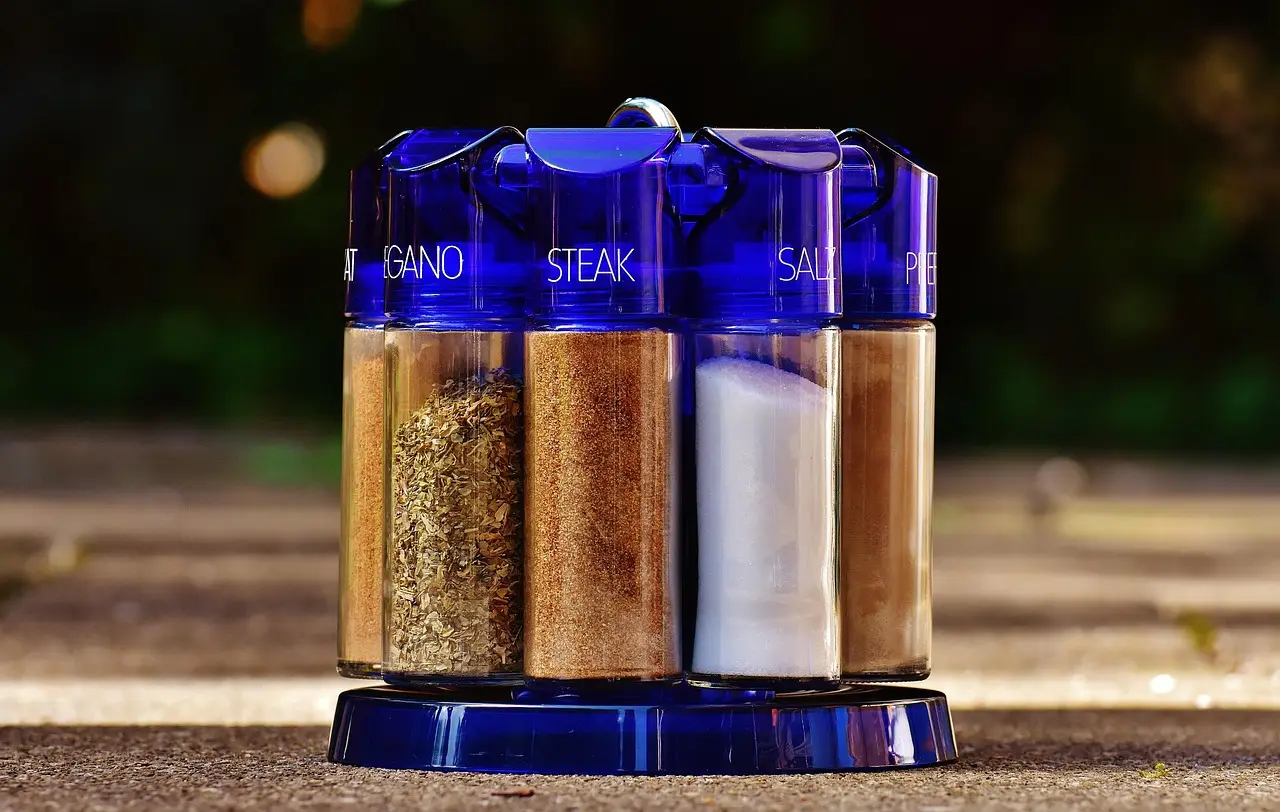
Spices are the dried seeds, bark, buds, roots and berries that make food smell like somewhere. A pinch of clove, a grind of pepper, a spoon of turmeric: each one carries a long story of sailors, emperors, monks and market cooks. For most of history these little jars held some of the most valuable goods on earth, and people crossed oceans, fought wars and wrote poetry to get them 12.
Background
Some of the world's favourite spices came from astonishingly small places. Cloves grew on just five volcanic islands in the Maluku group of Indonesia, and nutmeg and its lacy red coat, mace, came from the tiny Banda Islands 1. Black pepper grew on India's south-west Malabar Coast, and Indian cooks were using it as far back as 2000 BCE 2. Turmeric has an even longer kitchen record: residue found in pots near New Delhi, dated to about 2500 BCE, held turmeric alongside ginger and garlic 8.
So a cook in Rome, Venice or London reaching for pepper or cloves was handling something that had travelled thousands of kilometres, through many hands, before it landed in the pot.
History
The earliest written mention of cloves comes from Han dynasty China, around the third century BCE. Court officials had to hold a clove in their mouths before speaking to the emperor, an early breath mint 1. In India, the first-century medical text the Charaka Samhita gives the same advice for "fragrant" breath 1.
Pepper's story is just as colourful. When archaeologists examined the mummy of the pharaoh Ramesses II, who died in 1213 BCE, they found peppercorns in the nostrils 2. Once Rome took Egypt, Roman ships rode the monsoon winds to the Indian port of Muziris and hauled pepper home by the boatload. The writer Pliny grumbled that India drained the empire of fifty million sesterces a year, and admitted nobody even liked pepper for its looks: Romans wanted the bite 2. When Alaric the Visigoth besieged Rome in 408 CE, the ransom reportedly included 3,000 pounds of pepper 2.
For roughly a thousand years, Indonesian sailors carried cloves and nutmeg to ports where Indian and Arab merchants took over, and the islands' location stayed a mystery to almost everyone else. Around 1000 CE one Arabic writer was still describing the clove islands with fantastical tales 1. Arab cooks also led the way in cooking with cloves and nutmeg, and doctors such as Ibn Sina recommended nutmeg for a weak stomach 1.
By the late Middle Ages, Venice controlled much of Europe's supply, buying through Mamluk and Ottoman partners 3. Pepper bought in India for three ducats could sell in Europe for eighty 4. No wonder Portugal wanted in. Vasco da Gama sailed in July 1497 and reached Calicut in May 1498, the first European to reach India by sea, and returned with enough spice to promise huge profits for the Crown 3.
Then came the darkest chapter. The Dutch East India Company wanted total control of nutmeg. In 1621, under Governor-General Jan Pieterszoon Coen, it seized the Banda Islands, home to about 15,000 people. Bandanese were killed, enslaved or driven into the hills and the sea, and the company took a world monopoly on nutmeg and mace 5. Historians still discuss it: in 2021 the University of Dundee held a roundtable on the massacre that included people living on Banda today 6.
The fever eventually cooled. By the mid-1600s, Europe's appetite for pepper fell as tea, coffee and chocolate arrived and colonial plantations made spices cheaper 2.
Customs, rules and rituals
Spices have always been about more than flavour. Emperor Constantine gave the Bishop of Rome 150 pounds of cloves, a gift fit for a church 1. Medieval European feasts were showcases: one 1476 Bavarian banquet ordered 85 pounds of nutmeg, and about three-quarters of surviving medieval recipes call for spices 1.
In Jewish homes, a spice box comes out at Havdalah, the short ceremony that closes the Sabbath on Saturday night. The spices are blessed and passed round for everyone to smell, perhaps to hold on to the fragrance of the Sabbath as it leaves 7. Museums keep these boxes as treasures; the Victoria and Albert Museum holds one made in northern Italy in the 1400s 7.
In Hindu tradition turmeric is sacred and auspicious. At many weddings a groom ties a turmeric-dyed yellow string, the mangala sutra, around the bride's neck, a sign of marriage often compared to a wedding ring. In southern India, a piece of turmeric root can serve as a protective charm 8.
Place in human experience
There is a popular story that medieval cooks piled on spices to hide rotting meat. Historian Paul Freedman calls this a myth: anyone rich enough for spices could afford fresh meat. Spices were status, plain and simple, and a way to give good meat the sweet-sour taste that fashionable diners loved 4. When pepper got cheap enough for peasants' meals in the early 1300s, it quietly slipped out of the recipes for fine cooking 4.
Spices also travel with people. Turmeric and curry recipes appeared in Hannah Glasse's English cookbook of 1747, and curry reached American kitchens through The Virginia Housewife by 1831 8. India has grown more turmeric than anywhere else since ancient times 8.
So when you warm cumin in oil or shake nutmeg over a custard, you join a very old club: Chinese courtiers freshening their breath, Roman traders waiting on the monsoon, Bandanese families whose islands paid a terrible price, and every home cook who ever wanted dinner to smell a little more like somewhere else.
Sources
- "The Early History of Clove, Nutmeg, & Mace", World History Encyclopedia. https://www.worldhistory.org/article/1849/the-early-history-of-clove-nutmeg--mace/
- "Pepper", World History Encyclopedia. https://www.worldhistory.org/Pepper/
- "The Portuguese Conquest of India", World History Encyclopedia. https://www.worldhistory.org/article/2025/the-portuguese-conquest-of-india/
- "Spice and Status", The Wilson Quarterly (Winter 2009). https://www.wilsonquarterly.com/quarterly/winter-2009-robots-at-war/spice-and-status
- "Genocide in the Spice Islands", The Cambridge World History of Genocide, Cambridge University Press. https://www.cambridge.org/core/books/abs/cambridge-world-history-of-genocide/genocide-in-the-spice-islands/FB91452701BB794181164C59D08C659C
- "Bandanese Massacre of 1621", University of Dundee. https://sites.dundee.ac.uk/culture/bandanese-massacre-of-1621/
- "Spice box", Victoria and Albert Museum collections. https://collections.vam.ac.uk/item/O81647/spice-box-unknown
- "What is the History of Turmeric?", PBS Food. https://dipsy.pbs.org/food/stories/turmeric-history