Dal
Dal is the bowl that feeds South Asia: split lentils, peas or beans simmered soft with turmeric and salt, then finished with a spoonful of sizzling spiced…
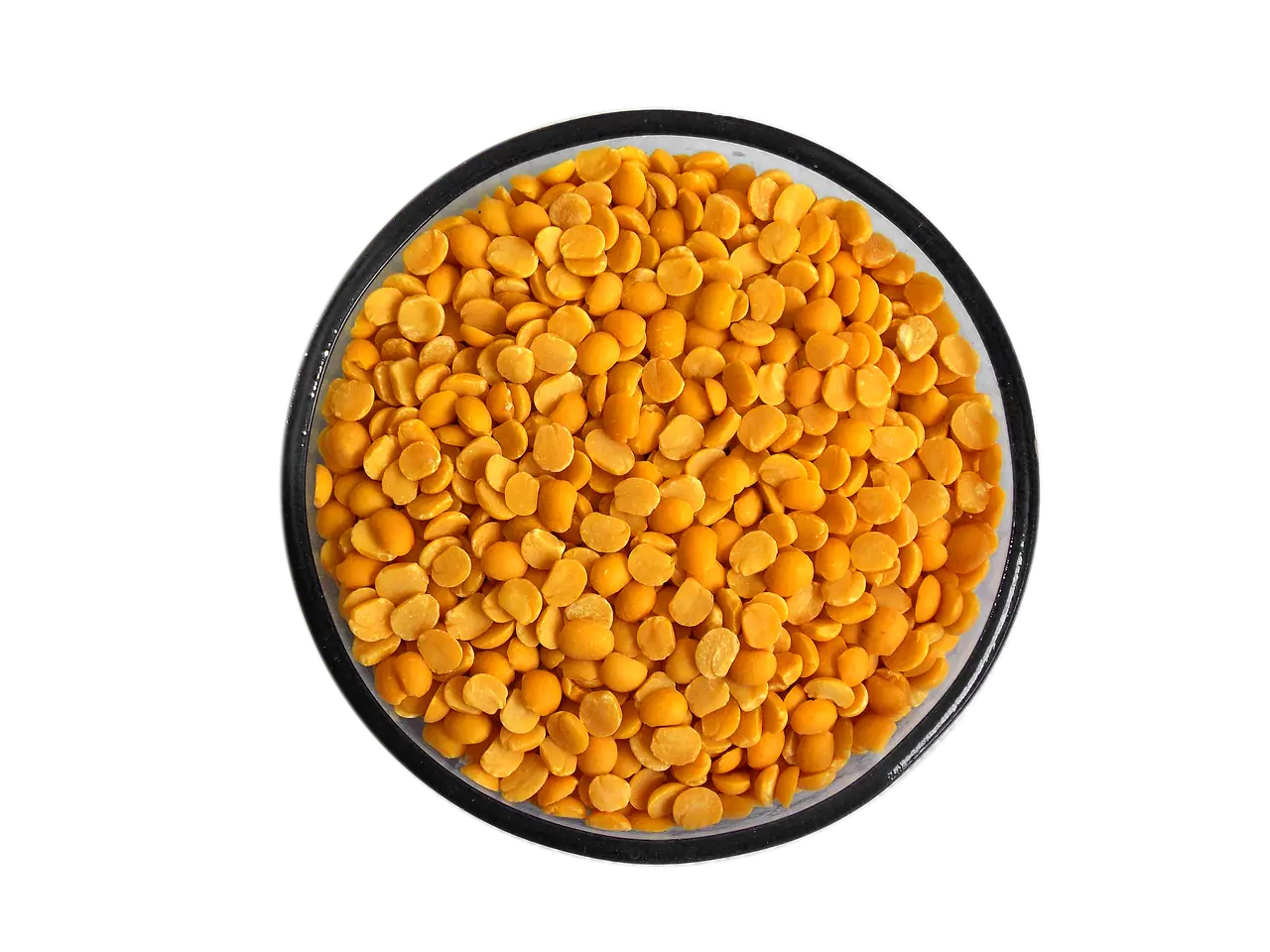
Dal is the bowl that feeds South Asia: split lentils, peas or beans simmered soft with turmeric and salt, then finished with a spoonful of sizzling spiced oil poured over the top 1. The word means both the dried split pulse and the soup you make from it 1. It is cheap, filling, endlessly varied, and in Nepal people swear by it so hard they have a slogan for it 4.
Background
"Dal" comes from a Sanskrit root, dal-, meaning "to split" 1. That is the whole trick: split a pulse, lose the tough skin, and it cooks faster and melts into the pot.
Most homes keep a few kinds on the shelf 1:
- Toor dal (split pigeon peas), the base of South Indian sambar.
- Chana dal (split chickpeas), nutty and firm.
- Moong dal (split mung beans), a favourite in Bengal and Bangladesh.
- Urad dal (split black gram), the secret behind fluffy idli and crisp dosa.
- Masoor dal (split red lentils), the quick-cook weeknight hero.
The finishing step goes by tadka or chaunk: cumin seeds, mustard seeds and a pinch of asafoetida crackling in hot fat, tipped into the pot with a satisfying hiss 1. Dal is eaten with rice, with flatbreads, or as dal bhat, dal and rice together 1.
India grows more pulses than any other country 1, and produces roughly a fifth of the world's lentils, while still importing more to keep up with demand 2.
History
Lentils are one of humanity's oldest farmed foods. The International Center for Agricultural Research in the Dry Areas (ICARDA) dates their domestication to about 12,000 years ago in the Fertile Crescent, alongside wheat and barley 2. ICARDA notes lentil-based dishes in India from the early Harappan period, which began around 2800 BC, and also says the lentil crop reached India and Pakistan around 2000 BC 2, so even the experts give more than one date.
The old texts are full of pulses. Food writers Salma Husain and Vijay Thukral, drawing on the food historian K. T. Achaya, list masha (urad) in the Rigveda, and masha, mansura (masoor) and mudga (moong) in the Yajurveda 3. Buddhist and Jain writings from around 400 BC add peas, pigeon peas and chickpeas, and rajmasha, kidney beans, appear later 3. Wikipedia puts split-dal cooking between 800 and 300 BC, and notes a mention in the Buddhist Laṅkāvatāra Sūtra 1.
Some old dal was humble. One early dish, kulmasha, was described as "a poor man's food", dressed with jaggery and oil 3. And a raw, soaked-lentil salad called kosumalli, with cucumber, coconut and lemon, is said to have been a favourite of Lord Rama 3.
Then dal travelled. In the 19th century, indentured labourers from India's Gangetic plain carried it to British and Dutch colonies in the southern Caribbean. There it turned into dal puri, a flatbread stuffed with ground split peas, which in the 1960s moved on again to Toronto and New York as "West Indian roti" 5. Dal is now a staple in Guyana, Trinidad, Fiji and Mauritius 1.
Customs, rules and rituals
Dal fits easily inside India's vegetarian traditions, and its most famous ritual is about sharing. At the Golden Temple in Amritsar, the Sikh community kitchen, or langar, serves about 100,000 people a day, and on a normal day cooks get through 1.5 tonnes of dal and 200,000 rotis 6. Everyone sits together on the floor and eats the same meal, whatever their caste, faith or wealth. The tradition goes back to Guru Nanak, founder of Sikhism 6.
Dal also marks the calendar. In South India, a chickpea dish called sundal belongs to festivals; Bengal saves cholar dal, made with chana dal, for special occasions 3.
In Nepal, the same dal bhat does for every meal of the day, and people call it "24 hour dal bhat power" 4. It is eaten with the fingers, scooping lentils up with balls of rice, which Nepalis treat as a small art of its own 4.
Place in human experience
Dal is the meal of farmers and the meal of temples. In Nepal it grew up in the fields, where people doing hard physical work needed cheap, filling food from first light 4. Rice and lentils together give both energy and protein 4. ICARDA goes further: legumes may have helped early hunter-gatherers settle down and farm, because dried pulses store well and see families through lean times 2.
It is also a dish of belonging. The langar turns a pot of lentils into a statement that everyone eats as equals 6. For Caribbean families, dal puri carries the memory of indenture, and filmmaker Richard Fung's 2012 documentary Dal Puri Diaspora follows it from home kitchen to street stall to restaurant chain, and from festival food to fast food 5.
Ask a hundred South Asian cooks how to make dal and you get a hundred answers. That is the point. It is a dish everyone owns.
Sources
- "Dal", Wikipedia. https://en.wikipedia.org/wiki/Dal
- "A Brief History of the Mighty Lentil in India", International Center for Agricultural Research in the Dry Areas (ICARDA). https://icarda.org/node/17326
- Salma Husain and Vijay Thukral, "When did dal become India's favoured food? And what was Rama's preferred preparation?", Scroll.in, 25 May 2018 (excerpt from Pull of Pulses: Full of Beans, Niyogi Books). https://scroll.in/magazine/880178/when-did-dal-become-indias-favoured-food-and-what-was-ramas-preferred-preparation
- Elisa Rimaila, "Nepal runs on the power of dal bhat", Finn Church Aid, 31 December 2024. https://www.kirkonulkomaanapu.fi/en/?p=151851
- Dal Puri Diaspora (dir. Richard Fung, 2012), Third World Newsreel. https://film.twn.org/products/dal-puri-diaspora
- "In Pictures: Kitchen that feeds 100,000 daily", Al Jazeera, 17 November 2013. https://www.aljazeera.com/indepth/inpictures/2013/11/pictures-kitchen-feeds-100000-daily-20131117124238293396.html