
Dumplings
Wrap something tasty in dough, cook it, eat it hot. That is the whole idea, and almost every cuisine with wheat has landed on it: Chinese jiaozi, Japanese…
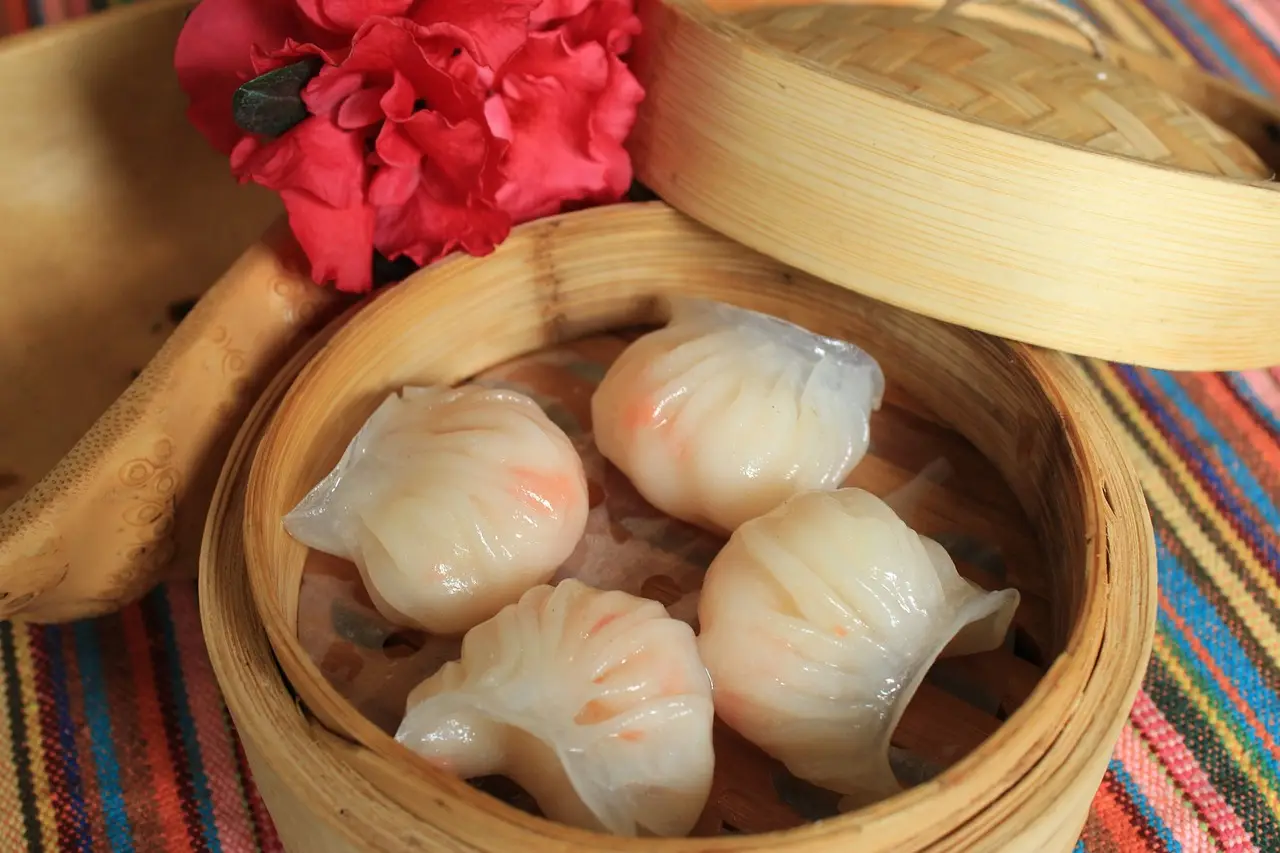
Wrap something tasty in dough, cook it, eat it hot. That is the whole idea, and almost every cuisine with wheat has landed on it: Chinese jiaozi, Japanese gyoza, Korean mandu, Polish pierogi, Central Asian manti, Italian ravioli 34. Dumplings are party food, festival food and leftovers food all at once, and they have a habit of bringing people to the table to fold them together 12.
Background
A filled dumpling is a parcel: a wrapper of flour and water around meat, vegetables, cheese or fruit, then boiled, steamed or fried 34. The shapes tell stories. Chinese jiaozi are crescents, which old writers compared to the moon 1. Polish pierogi come stuffed with potato, cheese, sauerkraut or mushrooms 4. Japanese gyoza tend to carry more garlic than their Chinese parents and sit in thinner, often machine-made wrappers 5.
The names are fun to trace. Jiaozi may come from the Chinese for "horn", after its shape, or from the Manchu word giyose 1. Gyōza probably came from that same Manchu word, picked up by Japanese settlers in north-east China 5. Pierogi goes back to a Proto-Slavic root meaning "feast" 4.
History
Who made the first dumpling? Nobody knows, and the stories are better than the certainty.
- The legend. A favourite Chinese tale credits Zhang Zhongjing, a doctor in the Eastern Han dynasty, about 1,800 years ago. Coming home one freezing winter, Zhang found villagers with frostbitten ears. He wrapped mutton, herbs and warming spices in dough folded to look like little ears, and called them "tender ears" 13. Sweet story; no hard evidence.
- The evidence. The hard evidence sits in the desert. Turpan, in Xinjiang, is so hot and dry that food survives in tombs. Between 1959 and 1975 archaeologists dug more than 500 tombs at the Astana Cemetery and found crescent-shaped dumplings of wheat dough stuffed with meat, from both the Six Dynasties (220–589) and the Tang dynasty (618–907) 2. They look much like the ones in your freezer. Mental Floss dates one Xinjiang tomb with dumplings to around AD 300 3.
- The written record. In the Northern Qi dynasty (550–577), scholar Yan Zhitui wrote that the crescent-moon jiaozi was "a common food in the world" 1. Dumplings were already ordinary.
- The Silk Road theory. Many food historians think filled dumplings began in Central Asia and that Turkic nomads carried them east and west 3. Mental Floss links the Turkic word manti to Korean mandu, Greek manti and Chinese mantou 3. Linguists may quibble; dinner guests rarely do.
- Europe. Pierogi have competing origin stories. One says Saint Hyacinth brought them to Poland from the east in the 13th century; another credits the Silk Road 4. The first written recipe sits in Poland's first cookbook, the Compendium ferculorum of 1682 34, which includes a filling of veal kidney 3. Ravioli show up in Lombardy about 500 years ago 3.
- Japan. Gyoza arrived late, and through war. After the Second World War, millions of Japanese returned from China, including Manchukuo. Many opened food stalls selling ramen and added gyoza as a side 5.
Customs, rules and rituals
In northern China, the big dumpling night is Chinese New Year's Eve. Families fold jiaozi together and eat them as midnight comes, marking the turn of the year 12. The crescent shape looks like old silver and gold ingots, so dumplings stand for wealth, and some cooks hide a clean coin inside one for a lucky diner to bite on 1. Mind your teeth.
Poland has its own feast. On Christmas Eve, Wigilia, the meal is meatless, so pierogi come filled with sauerkraut and dried mushrooms, and tiny mushroom dumplings called uszka, "little ears", float in clear beetroot soup 4. Pierogi even have a patron saint: Saint Hyacinth, whose name lives on in an old exclamation, "Święty Jacek z pierogami!", "Saint Hyacinth and his pierogi!" 4. At Kraków's pierogi festival in 2007, visitors ate about 30,000 a day 4.
Dumplings also travel with the dead. Ancient Chinese families buried food and household goods with loved ones, believing the afterlife resembled this one 2. That belief is why we have those 1,000-year-old dumplings at all.
Place in human experience
Dumplings are a social food. You can buy them, but they taste of company when you make them: a table, a bowl of filling, a stack of wrappers, everyone pleating badly and laughing about it. The New Year jiaozi ritual in China works exactly this way 12.
They are also the food of people on the move. Turkic nomads may have spread them across Asia 3; Polish and Ukrainian migrants carried pierogi to North America, where they are now a fixture in many towns 4; and Japanese families returning from China brought home gyoza and sold it from street stalls beside bowls of ramen 5. Every migration seems to leave a dumpling behind.
And they carry hope. A coin hidden in a New Year jiaozi 1, a "little ear" floating in Christmas Eve soup 4, a parcel tucked into a tomb for the journey ahead 2. Small, cheap, folded by hand, dumplings hold a surprising amount of meaning for a mouthful.
Sources
- "Jiaozi", Wikipedia. https://en.wikipedia.org/wiki/Jiaozi
- Becky Lao, "The Ancient Story of Dumplings in China", Archaeology Now. https://archaeologynow.org/blog/a-lucky-food-for-lunar-new-year
- Michele Debczak, "An International History of Dumplings", Mental Floss, 19 December 2023. https://www.mentalfloss.com/food/dumplings-food-history
- "Pierogi", Wikipedia. https://en.wikipedia.org/wiki/Pierogi
- "Gyoza", Wikipedia. https://en.wikipedia.org/wiki/Gyoza