
Hummus
Hummus is chickpeas blitzed smooth with tahini, lemon, garlic and olive oil, then scooped up with warm bread. In Arabic, ḥummuṣ simply means "chickpeas";…
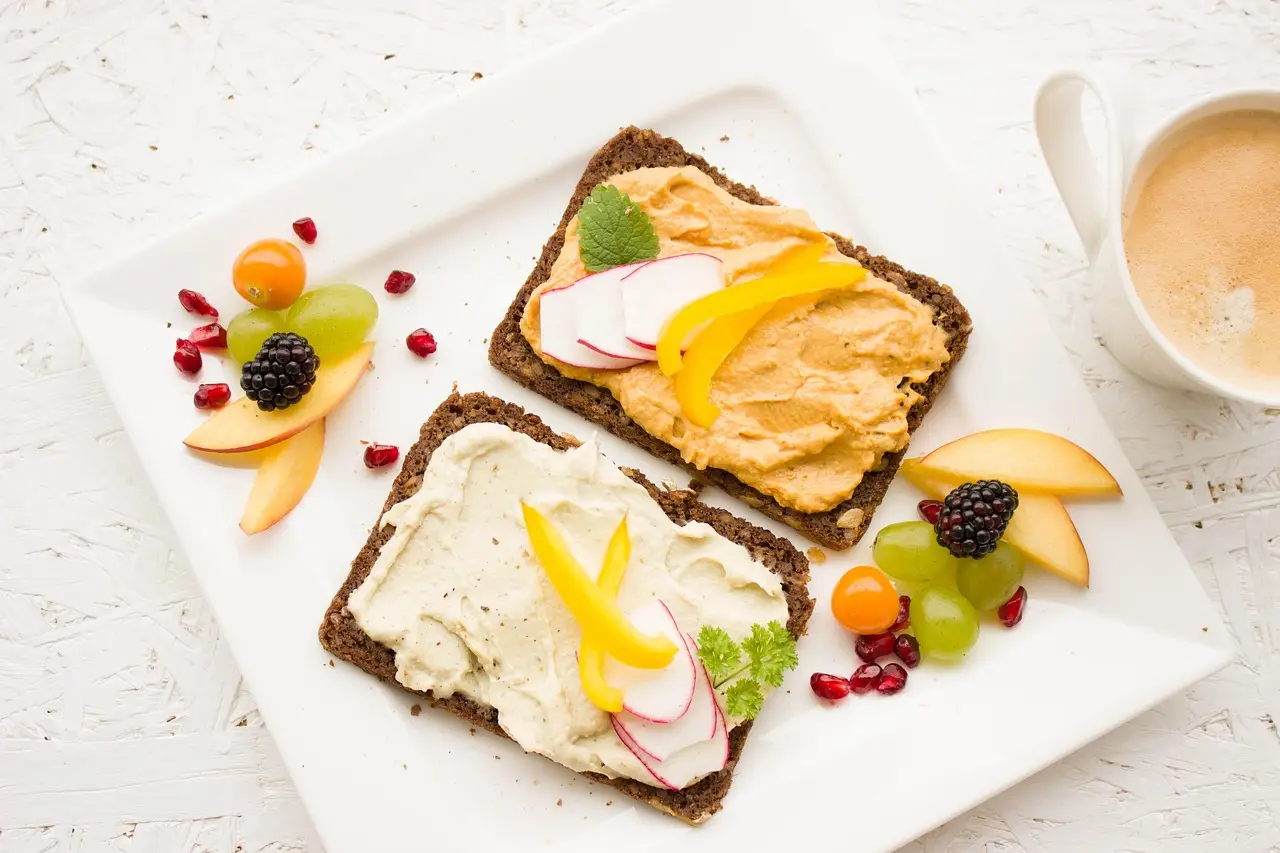
Hummus is chickpeas blitzed smooth with tahini, lemon, garlic and olive oil, then scooped up with warm bread. In Arabic, ḥummuṣ simply means "chickpeas"; the full name of the dish is ḥummuṣ bi ṭaḥīna, chickpeas with tahini 1. It belongs to the whole eastern Mediterranean, which is exactly why people fight over it. Few dips have had a world record war.
Background
Across the Levant, hummus is a warm dish, eaten with bread at breakfast, lunch or dinner, not just a fridge snack with carrot sticks 1. The classic finish is a swirl of olive oil, a few whole chickpeas, parsley and a dusting of paprika, sometimes with mint or pine nuts 1. Egyptian cooks often add cumin; Israeli versions go heavy on tahini for extra creaminess; in Syria and Lebanon it is a must on any mezze table 1. Msabbaha is a close variation 1.
Spelling is its own small skirmish. British supermarkets tend to write "houmous", American dictionaries prefer "hummus" 1.
History
The chickpea is one of humanity's first crops. It was domesticated about 10,000 years ago, alongside wheat, barley, peas and lentils 2. Its closest wild relative grows in a small patch of south-eastern Turkey and neighbouring Syria 2. Remains turn up at Syrian sites such as Tell Abu Hureyra in the 8th millennium BCE, and at Çayönü in Turkey around 7500 to 6800 BCE 2. From there chickpeas reached Greece, India by 1750 to 1500 BCE, and Ethiopia, and Spanish and Portuguese ships carried them to the Americas in the 16th century 2.
The dish is much younger than the bean, and its paper trail is patchy. The earliest known recipe sits in a 13th-century Syrian cookbook attributed to the Aleppo historian Ibn al-Adim: chickpeas with lemon, sesame and olive oil, but no garlic 1. Fourteenth-century Cairo cookbooks describe a cold chickpea purée with vinegar and pickled lemons, and a dish called hummus kasa, chickpeas and tahini sharpened with vinegar, with spices and nuts 1. Then the trail goes quiet. Food historian Nawal Nasrallah finds no recipes between the 14th century and an 1885 Lebanese cookbook, and by then garlic has become standard 1.
So who invented it? Nobody can say for sure. Boston University gastronomy scholar Ari Ariel notes the earliest recipe is 13th-century and that several countries claim the dish, leaving its true origin a mystery 3. That hasn't stopped anyone trying.
Customs, rules and rituals
Hummus is everyday food, served as a starter or a dip with pita 1. Under Jewish dietary law it is pareve, neither meat nor dairy, so it fits any kosher meal 1.
Then there are the records. In May 2008 an Israeli team made an 882-pound (400 kg) plate in Jerusalem 4. Fadi Abboud, head of Lebanon's industrialists' association, was annoyed to see hummus sold as Israeli at a French food fair, and in 2009 Lebanon answered with a 4,532-pound dish 4. In January 2010 Jawdat Ibrahim's restaurant in the Arab-Israeli village of Abu Ghosh hit back with roughly 9,000 pounds, served in a satellite dish 4. In May 2010, 300 cooks at al-Fanar near Beirut made about 10,450 kilograms, and Lebanon still held the record as of 2021 14. Lebanon's industrialists also asked the European Union in 2008 to protect hummus as a uniquely Lebanese food 13.
Place in human experience
Ari Ariel calls this gastro-nationalism: using food to stake a national claim. The record duel, in his telling, came wrapped in "a rhetoric of violence that turns cooks into combatants" 3. Case Western Reserve University billed his talk on the subject around three fights: the Guinness records, calls to boycott certain hummus brands in American shops, and the endless argument over who invented it 5. Food can bring people together, Ariel argues, but here it became a stage for the conflict itself 3.
The Israeli story is layered. Sociologist Dafna Hirsch shows that European Jewish immigrants took up hummus in the late 19th and early 20th centuries as a way of fitting into the Middle East, though it was already part of Mizrahi Jewish cooking 1. Over time, Hirsch argues, Arab-made hummus came to signal authenticity, which is why hummus lovers make pilgrimages to Arab villages such as Abu Ghosh 1. Critics call Israel's embrace of the dish appropriation of Palestinian, Lebanese and wider Arab heritage 1.
Meanwhile, hummus went global. Waitrose was the first British supermarket to stock it, in the 1980s; by 2013 Britons spent £60 million a year on it, and 41 per cent had a tub in the fridge 1. In the United States, the share of households buying hummus climbed from 12 per cent in 2006 to about 25 per cent in 2016, and some tobacco farmers switched to growing chickpeas to keep up 1. Syrian and Lebanese families in Canada kept it on the table for generations, alongside falafel, kibbeh and tabbouleh 1.
Even Hollywood weighed in. West Bank Story, a musical spoof about rival "Kosher King" and "Hummus Hut" restaurants, won the 2006 Academy Award for Best Live Action Short 1. Australian filmmaker Trevor Graham followed with the documentary Make Hummus Not War in 2012 1. Which may be the best advice anyone has given about this dish.
Sources
- "Hummus", Wikipedia. https://en.wikipedia.org/wiki/Hummus
- "Chickpea", Wikipedia. https://en.wikipedia.org/wiki/Chickpea
- "Dr. Ari Ariel's Talk on the Hummus Wars", Boston University Gastronomy Blog, 8 October 2015. https://sites.bu.edu/gastronomyblog/2015/10/08/dr-ari-ariels-talk-on-the-hummus-wars/
- "Operation Hummus", The Kitchen Sisters, Hidden Kitchens. https://kitchensisters.org/hidden-kitchens/operation-hummus/
- "Hummus Wars: Food, Identity and the Middle East Conflict", Case Western Reserve University. https://case.edu/news/hummus-wars-food-identity-and-middle-east-conflict