
Nasi Goreng
Picture a wok over a roaring flame, yesterday's rice hitting hot oil, a splash of sticky sweet soy, a dab of funky shrimp paste, and a fried egg sliding…
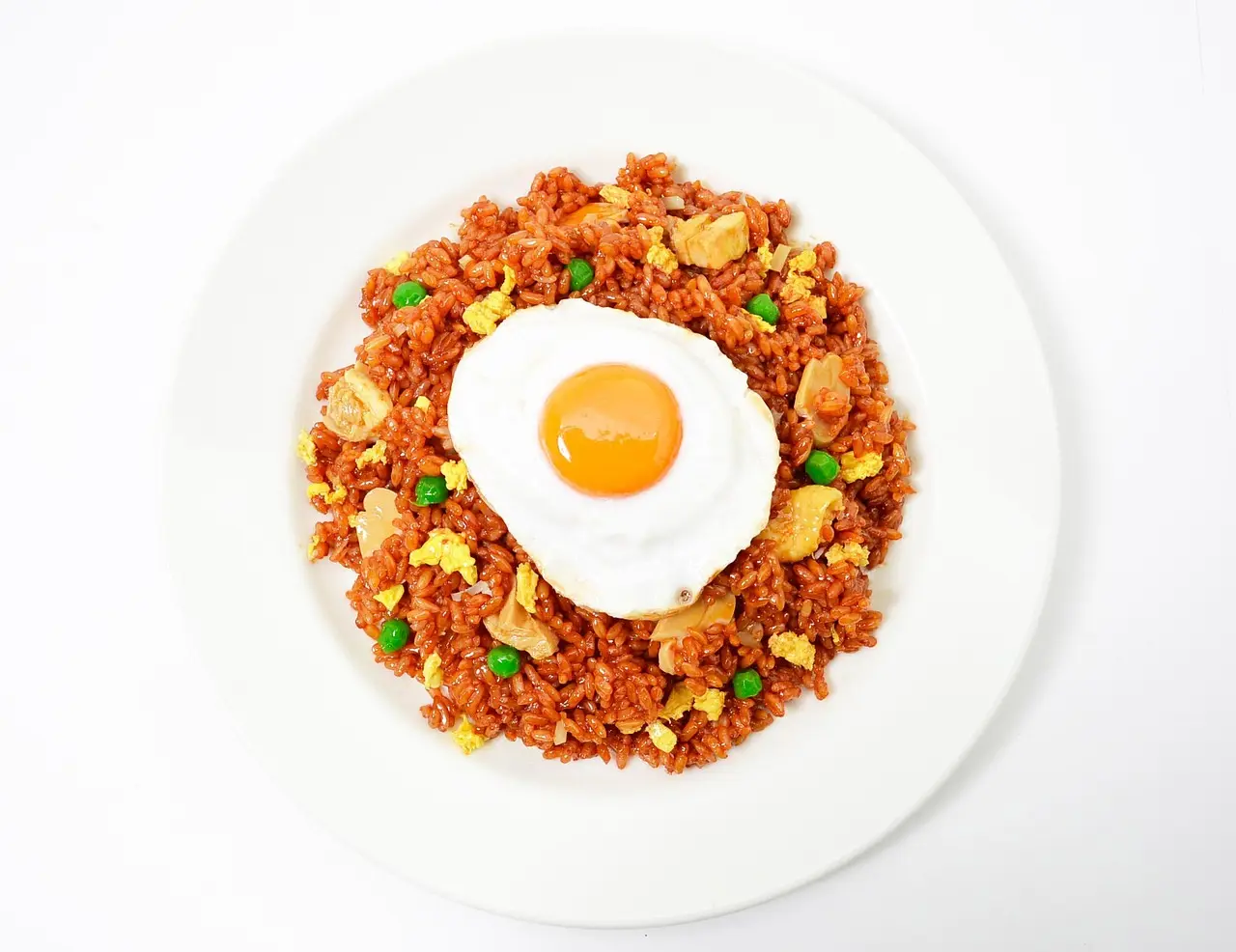
Picture a wok over a roaring flame, yesterday's rice hitting hot oil, a splash of sticky sweet soy, a dab of funky shrimp paste, and a fried egg sliding on top with crispy edges. That's nasi goreng, Indonesian for "fried rice", and it might be the most generous breakfast on earth. It turns leftovers into something you'd queue for, and Indonesia counts it among its national dishes.
Background
Nasi goreng starts with day-old rice, which fries without turning to mush 1. The flavour comes from three Indonesian stars: kecap manis, a sweet soy sauce thickened with palm sugar; terasi, fermented shrimp paste (Malaysians call it belacan); and sambal, a chilli relish 1. Krupuk, the puffy crackers, go on the side for crunch 1.
Together they give a darker colour, a stronger smell and that sweet–salty–hot balance which sets nasi goreng apart from Chinese fried rice 2.
And variety? A food scientist at Universitas Gadjah Mada, Dr Dwi Larasatie Nur Fibri, counted 104 kinds of nasi goreng across Indonesia 4. Some come from a known region; many are home-grown spins nobody can trace 4. Malaysia, Singapore and Brunei add their own, from nasi goreng kampung (village style) to versions wrapped in a thin omelette 1.
History
The family tree starts in China. The earliest records of fried rice come from the Sui dynasty (589–618 CE), around Yangzhou, where cooks stir-fried day-old rice with oil, egg, vegetables and scraps of meat so nothing went to waste 2. Rice-growing southern provinces such as Fujian and Guangdong developed their own styles, and those later shaped cooking across Southeast Asia 2. Chinese migrants carried the technique south between the 10th and 19th centuries, and local cooks swapped in local flavours 1.
Then came the Dutch. During colonial rule they staged the rijsttafel, or "rice table": a banquet of 40 or even 60 small dishes around a central mound of rice, carried out by lines of servants, meant to show off the "exotic abundance" of the Dutch East Indies 3. Nasi goreng was one of the regulars 3.
After independence in 1945, Indonesians turned away from the rijsttafel as a colonial show 3. Former colonials, exiled Indonesians and Indo-Europeans took it back to the Netherlands, where Indonesian restaurants have multiplied since about 1990 3. Javanese migrants took nasi goreng to Suriname, where it grew its own local flavour 1.
In 2018 Indonesia's Tourism Ministry named five national dishes: soto, rendang, satay, gado-gado and nasi goreng. Minister Arief Yahya said they represent Indonesia and are easy to make and find anywhere in the country 5. In 2011 a CNN reader poll placed nasi goreng second on its list of the world's 50 most delicious foods 1.
Customs, rules and rituals
Nasi goreng is traditionally a breakfast, made with the rice left over from the night before 1. Plenty of people never cook it at home at all: they buy it from street vendors and warungs, small family eateries 1.
The leftovers habit is the heart of it. Dr Fibri points out that the dish solves a very ordinary household problem: rice that didn't get eaten 4. Nobody throws out rice when breakfast is waiting.
Toppings change with the cook and the region: a handful of krupuk here, a turmeric-yellow rice there, an omelette parcel across the border in Malaysia 1. The 104-variety count shows how freely cooks play 4.
Place in human experience
Nasi goreng is a dish of thrift and of welcome at the same time. Families in Yangzhou fried leftovers 1,400 years ago for the same reason families in Jakarta do today: rice is precious and waste hurts 24.
It has also carried heavier history. At the colonial rice table it sat among dozens of dishes meant to dazzle Dutch guests 3. After independence it stepped out from that banquet and became plain, everyday Indonesian food, sold at every street corner and named a symbol of the nation 35.
Politicians know its power too. Former president Megawati Sukarnoputri used a plate of nasi goreng to ease tensions with a political rival, a gesture that inspired Singapore artist Chu Hao Pei's "Nasi Goreng Diplomacy" project. In each session a cook from a different Southeast Asian country makes their own nation's version and guests talk food and politics over the plates 6.
For Indonesian families in the Netherlands and Suriname, nasi goreng tastes of where they came from 13. Each wok is a little different, and that's the point: 104 versions, and your family's is the right one.
Sources
- "Nasi goreng", Wikipedia, Wikimedia Foundation. https://en.wikipedia.org/wiki/Nasi_goreng
- "Fried rice", Wikipedia, Wikimedia Foundation. https://en.wikipedia.org/wiki/Fried_rice
- "Rijsttafel", Wikipedia, Wikimedia Foundation. https://en.wikipedia.org/wiki/Rijsttafel
- "Pakar Kuliner UGM Sebut Indonesia Punya 104 Jenis Nasi Goreng", Universitas Gadjah Mada, 2021. https://ugm.ac.id/id/berita/21391-pakar-kuliner-ugm-sebut-indonesia-punya-104-jenis-nasi-goreng
- "Kemenpar Tetapkan 5 Makanan Nasional Indonesia, Ini Daftarnya", Kompas, 10 April 2018. https://travel.kompas.com/read/2018/04/10/171000627/kemenpar-tetapkan-5-makanan-nasional-indonesia-ini-daftarnya
- "Nasi Goreng Diplomacy", Practice Tuckshop, Singapore. https://www.practice.org.sg/series/tuckshop/nasi-goreng-diplomacy