
Sushi
Picture sushi and you probably see a glossy slice of tuna on a little pillow of rice. Here's the twist: that version is only about two hundred years old,…
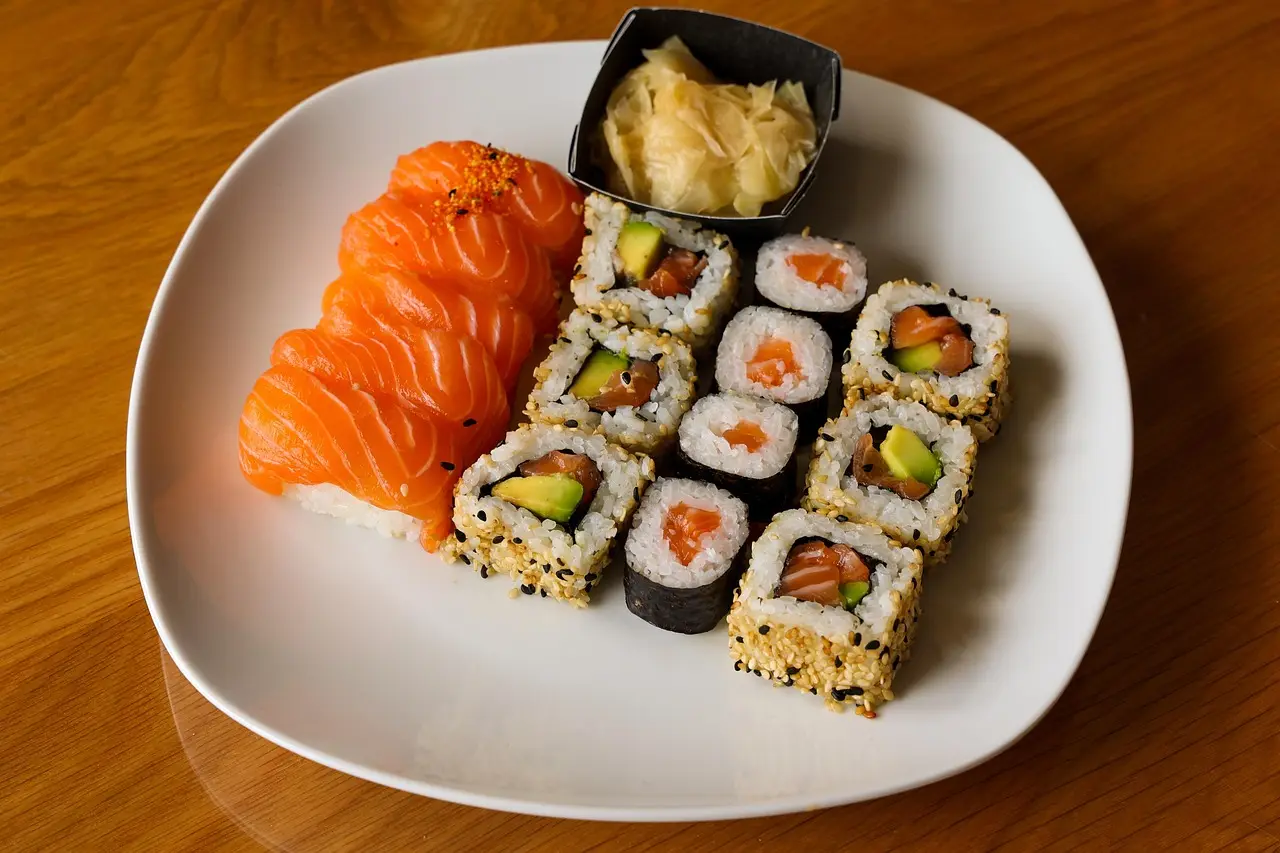
Picture sushi and you probably see a glossy slice of tuna on a little pillow of rice. Here's the twist: that version is only about two hundred years old, and for most of its life sushi wasn't really about the rice at all. It started as a way to stop fish going off, packed in rice and left to sour for months. Today it's one of the least "keepable" foods you can buy, best eaten the second it leaves the chef's hands 1. Quite the glow-up.
Background
The word sushi is said to come from the Japanese word for "sour" 2. That tang once came from fermentation; now it comes from a splash of vinegar in the rice.
Sushi has its own little language. Neta is the topping, shari the seasoned rice, gari the pickled ginger. Japanese speakers even say they've "run out of neta" when a chat dries up, borrowing the phrase from chefs who've sold out of fish 3.
And it's far more than nigiri. Western Japan loves box-pressed hako-zushi and inari-zushi, rice tucked into fried tofu pouches. Nara wraps fish and rice in persimmon leaves 2. The friendliest styles for home cooks are the ones Japanese families make themselves: chirashi-zushi scattered over a bowl, simple rolls, and temaki, where everyone rolls their own at the table 24.
History
Sushi wasn't born in Japan. Food historian Terutoshi Hibino traces it to southern China or Southeast Asia, where cooks salted fish from the rice paddies and buried it in cooked rice for months. Only the fish got eaten. The rice, by then a sour mush, went in the bin 1.
Nobody knows exactly when it arrived in Japan, but the written characters for sushi show up in documents from around the mid-eighth century 1. Records from the early tenth century mention funa-zushi, made with crucian carp in Shiga, and it's still made there today 1.
Then came centuries of people getting impatient. Around the fifteenth century, cooks cut the ferment to a month or two and started eating the rice too. Later they sped things up with koji, sake or vinegar. By the early nineteenth century they skipped fermenting altogether and simply soured the rice with vinegar. They called it hayazushi: "fast sushi" 1.
Nigiri arrived in Edo, now Tokyo, in the 1820s 1. The credit usually goes to Hanaya Yohei, who sold sushi from a street stall before opening a proper shop in Ryōgoku in 1824 5. Early nigiri was chunky (three pieces made a meal), and the fish was cured in salt, vinegar or soy sauce, or cooked, because there was no way to keep it cold 1. Tuna? A cheap, unloved fish. Hardly anyone wanted the fatty toro that now costs a fortune 3.
Fridges changed everything. Once they reached Japanese cities in the late 1920s and early 1930s, chefs could finally serve fish raw 3. After the war, a 1947 rule restricted selling rice in restaurants, so clever Tokyo chefs offered a deal: bring a cup of rice and we'll turn it into ten pieces of sushi. That portion stuck 1.
The first conveyor-belt sushi shop opened in 1958, the 1970 Osaka Expo made it famous, and by the 1980s it was everywhere 4.
Customs, rules and rituals
Long before it was dinner, sushi was a gift to the gods. At Miwa Shrine in Shiga, fermented loach and catfish sushi is still offered under strict local rules 2. In Japan's snowy north, families make fermented izushi for New Year 2.
Two festivals now call for sushi right across Japan. For Hinamatsuri, the girls' festival in March, families make chirashi-zushi. For Setsubun in February, people eat a fat ehomaki roll whole, uncut, for good luck 2. Both started as regional habits before shops turned them national 2.
Behind the counter, the craft has rules of its own. Apprentices traditionally start by washing dishes and making deliveries, wait at least three years before filleting a fish, and learn by watching rather than being told, which is called "stealing" the master's secrets. The saying goes: three years to cook the rice, eight to master nigiri 3.
And that dunk in soy sauce? It only became normal after the war, once raw fish took over 1.
Sushi also belongs to washoku, Japan's traditional food culture, which UNESCO recognised as intangible cultural heritage in 2013. UNESCO describes it as a way of eating rooted in respect for nature and handed down at family meals, especially at New Year 6.
Place in human experience
Sushi started life as Edo street food. People ate it standing at stalls, had it delivered in wooden boxes, and grabbed it at night alongside tempura 5. An Edo poem even compared the chef's hands to someone casting a spell 5.
Then it swung the other way. In Japan's boom years from the late 1950s to the early 1970s, sushi became an "ultra-luxury food", with elegant counters and prices that weren't even on the menu 4. Conveyor belts swung it back: clear prices per plate, and a parade of food that kids adore 4.
Abroad, it had a harder start. Americans once thought eating raw fish was "uncivilised" 4. Health-conscious eaters in the 1980s and trend-chasers in the 1990s changed that, and overseas chefs began sending ideas home. The inside-out California roll hid the nori from diners who found black seaweed off-putting. Salmon, once avoided in Japan for fear of parasites, became a favourite after Scandinavian imports proved safe 4.
The cost was the home kitchen. As cheap shop sushi spread, many families stopped making the festival sushi their grandparents made 24. Hibino sees that turning around now, with busy households rolling their own again and decorative futomaki from Chiba, rolls that reveal a flower when you slice them, spreading through workshops and social media 4. Which is a lovely invitation, really: grab a sheet of nori and have a go.
Sources
- Terutoshi Hibino, "Sushi No. 1: The History", Food Forum, Kikkoman Corporation. https://www.kikkoman.com/en/culture/foodforum/the-japanese-table/38-1_sushi.html
- Terutoshi Hibino, "Sushi No. 2: Regional Varieties and Traditions", Food Forum, Kikkoman Corporation. https://www.kikkoman.com/en/culture/foodforum/the-japanese-table/38-2_sushi.html
- Terutoshi Hibino, "Sushi No. 3: Sushi Toppings and Craftsmanship", Food Forum, Kikkoman Corporation. https://www.kikkoman.com/en/culture/foodforum/the-japanese-table/38-3_sushi.html
- Terutoshi Hibino, "Sushi No. 4: Transition and Diversification", Food Forum, Kikkoman Corporation. https://www.kikkoman.com/en/culture/foodforum/the-japanese-table/38-4_sushi.html
- "When Sushi Became a New Fast Food in Edo", Nippon.com (Nippon Communications Foundation), 22 December 2020. https://www.nippon.com/en/japan-topics/g00962/
- "Washoku, traditional dietary cultures of the Japanese, notably for the celebration of New Year", UNESCO Intangible Cultural Heritage. https://ich.unesco.org/en/RL/washoku-traditional-dietary-cultures-of-the-japanese-notably-for-the-celebration-of-new-year-00869