Avocado
Avocado: a 10,000-year-old berry, a postman's lucky seed and Australia's favourite toast topping. History, customs and how to pick a ripe one.
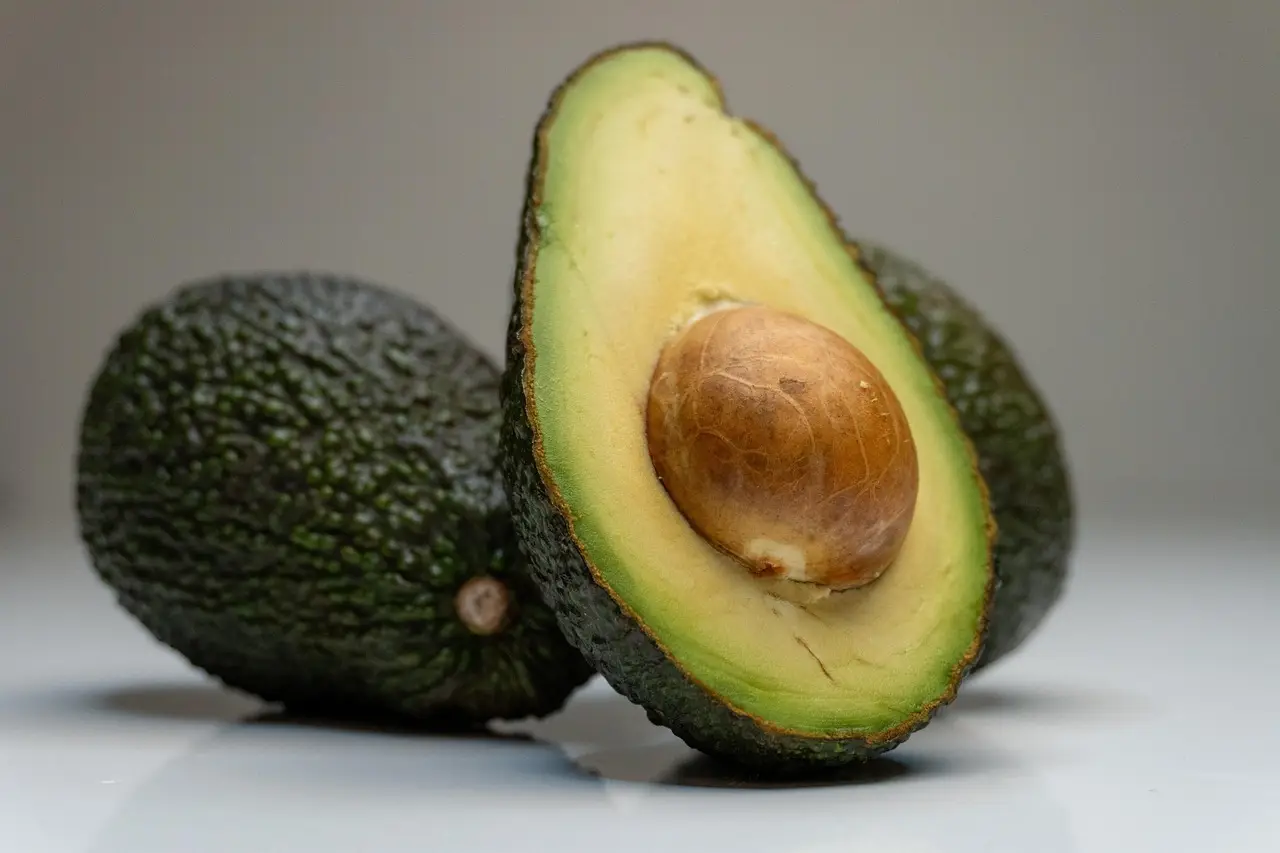
Slice an avocado in half, twist, and there it is: that buttery green flesh around one big glossy seed. Botanically it's a berry with a single seed, from an evergreen tree in the laurel family, Persea americana 1. People in what is now Peru were eating avocados around 10,500 years ago 1. Today it's on toast in every Australian cafe, in sushi rolls and in sandwiches, which is exactly where Australians and New Zealanders tend to put it 1.
Background
Avocados are "climacteric" fruit. They mature on the tree but ripen only once picked, usually within one to two weeks at room temperature 1. That's handy for growers, who can leave fruit hanging until they need it.
Mexico leads the world, with 2.76 million tonnes in 2024, about a quarter of the global harvest of 11.2 million tonnes. Colombia comes second 1.
In Australia, orchards grow in Queensland, New South Wales, South Australia, Victoria, Western Australia and Tasmania 3. The two varieties you'll see most are Hass and Shepard. Hass is in season from May to January and Shepard from February to May, so between them there's almost always a local avocado in the shops 3.
History
Genetic and language research points to three domesticated avocado types: Guatemalan, Mexican and West Indian 1. Mexico's Tehuacán Valley is the traditional home of domestication 1.
The name is older than Spanish. "Avocado" comes from the Spanish aguacate, from the Nahuatl (Aztec) word āhuacatl 1. You may have heard that āhuacatl meant "testicle". Wikipedia's article says the original meaning was simply "avocado", and the testicle sense came later as a euphemism 1. The same word, joined to molli (sauce), gave us ahuacamolli, which became guacamole 1.
Then there's the Hass story. In 1926 Rudolph Hass, a Southern California mail carrier and amateur gardener, planted three seeds he'd bought from a nurseryman at his grove in La Habra Heights 2. One tree turned out to be special. Hass patented it in 1935, and every Hass avocado since descends from that single tree 12. The original "mother tree" died at 76 and was cut down on 11 September 2002 2. Today Hass makes up more than 80% of the United States crop 2.
Customs, rules and rituals
Avocados don't carry the temple rules of garlic or the wedding role of almonds, but every culture that loves them has its own ritual.
- Mexico. Guacamole, the avocado sauce, keeps its Aztec name to this day 1.
- Brazil. Avocado is a sweet: mashed with sugar and lime and eaten as dessert or a snack 1.
- Vietnam and Indonesia. Avocado goes into a dessert drink blended with sugar and milk or water 1.
- Australia and New Zealand. Avocado goes on toast, sushi and sandwiches, or with chicken 1. Brunch here is practically a ritual.
Place in human experience
The avocado's story is a good reminder that one person's patience can feed millions. A postman planted a seed, noticed one tree was different, and that tree is the ancestor of most avocados sold today 2.
It also shows how the same food moves between categories. Mexico treats it as savoury, Brazil and Vietnam treat it as dessert 1. Neither is wrong. If you've only had it on toast, try it sweet once and see.
And it shows how a food can teach you patience. An avocado that's ripe today goes brown in the air within minutes once you cut it, through enzymatic browning 1. Avocados reward people who plan just a little.
How to buy, store and use it
Picking good ones. A ripe Hass turns from green to dark purplish-black and yields to gentle pressure 23. Shepard stays green when ripe, so you can only judge it by a gentle squeeze 3. Press near the stem end with your palm, not your fingertips, to avoid bruising.
Where to find them. Every Australian supermarket stocks avocados in the fruit and veg section, sold loose or in bags. Bags of smaller or "odd" avocados are often cheaper and fine for mashing.
Ripening. To speed things up, put hard avocados in a brown paper bag with an apple or banana for two to three days; the ethylene gas they give off helps 3.
Storage. A whole ripe avocado keeps at its best for two to three days in the fridge 3. For a cut half, sprinkle the flesh with lemon juice or vinegar, press cling wrap onto it to keep out air, and refrigerate 3.
Using them.
- Smash on toast with lemon, salt and chilli.
- Blend into dressings or pasta sauce for creaminess without cream.
- Swap for butter on a sandwich, or for mayonnaise in a vegan salad.
- No avocado? Hummus or mashed white beans with olive oil give a similar creamy spread.
Sources
- "Avocado", Wikipedia. https://en.wikipedia.org/wiki/Avocado
- "Hass avocado", Wikipedia. https://en.wikipedia.org/wiki/Hass_avocado
- "About avocados", Australian Avocados (Avocados Australia). https://www.australianavocados.com.au/about-avocados/