Lemon
Lemons: a citron-and-bitter-orange hybrid that sailed with navies, built Menton's festival and limoncello, plus how to pick, store and use them in Australia.
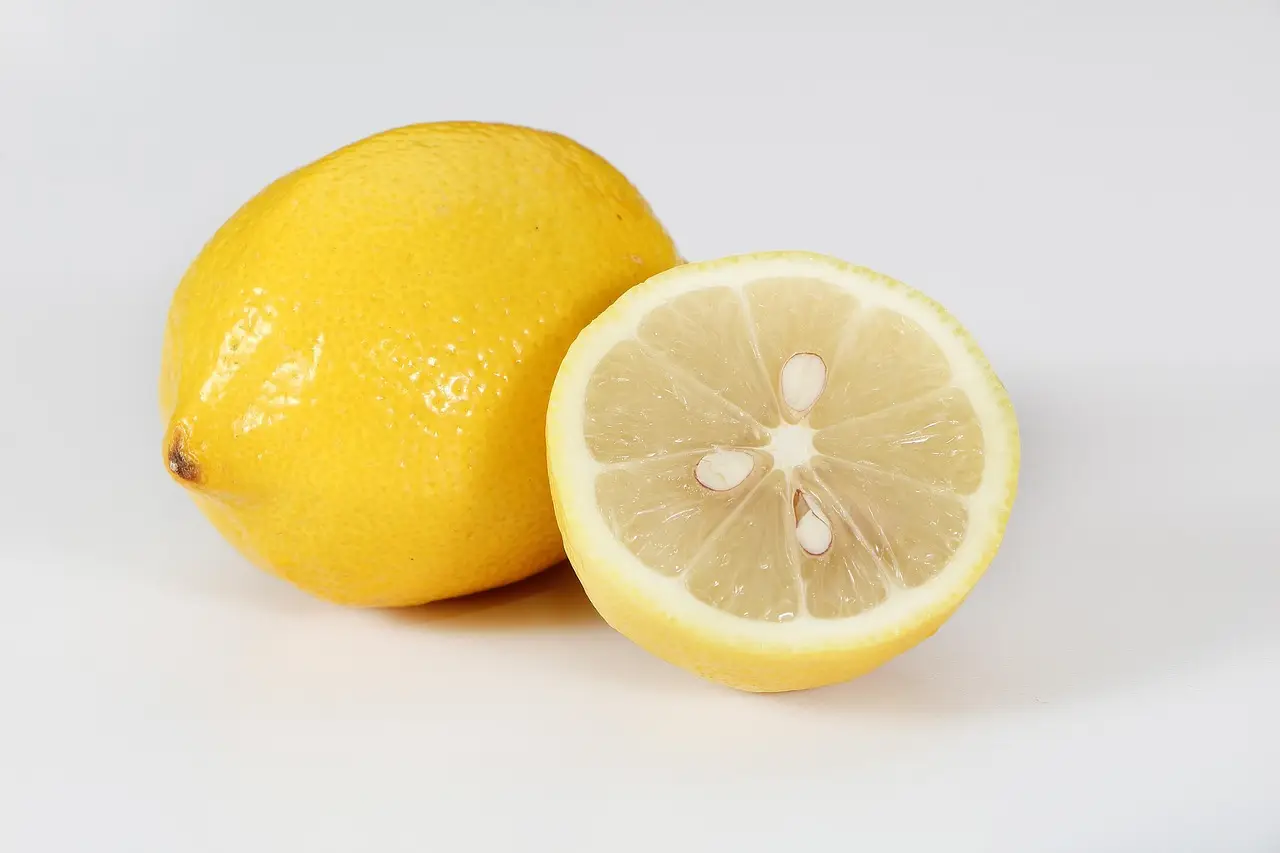
A squeeze of lemon is the cheapest way to make food taste brighter. Fish, salad, roast veg, a glass of water, a cake: add lemon and everything wakes up. The fruit itself is a bit of a mystery, born from two older citrus, carried across the world by traders and sailors, and now hung in doorways, paraded through French streets and poured into Italian liqueur.
Background
The lemon (Citrus × limon) is a hybrid of the citron and the bitter orange 1. Nobody knows exactly where it first appeared; north-west India is one proposal 1. Its name travelled with it, from Persian līmūn and Arabic laymūn 1.
The world grows about 23 million tonnes of lemons a year, and India and Mexico together produce 31% of them 1. Most supermarket lemons are one of two varieties, Eureka or Lisbon 1. The Meyer lemon is a different cross, citron with a mandarin-pomelo hybrid, rounder, deeper yellow and sweeter, with less acid 2.
In plain nutrition terms, 100 g of raw lemon provides 59% of the daily value of vitamin C 1.
History
Lemons reached southern Italy no later than the second century AD, in Roman times 1. Christopher Columbus brought lemon seeds to Hispaniola in 1493, starting the fruit's life in the Americas 1.
The lemon's most famous moment came at sea. In 1747, aboard HMS Salisbury, the Scottish naval surgeon James Lind split twelve sailors with scurvy into six pairs and gave each pair a different addition to the same diet. The pair given two oranges and one lemon a day recovered fastest; one was fit for duty within six days 3. It's often called one of the first clinical trials 3. The Royal Navy took a while to listen, but it adopted lemon juice rations in 1795 3.
The Meyer lemon has its own travel story. Agricultural explorer Frank Meyer collected it in China and introduced it to the United States in 1908 2.
Customs, rules and rituals
- India. In Hindu tradition, lemons turn up in rituals, and new car owners drive over lemons for protection 1.
- Menton, France. Every year in mid-February, the Riviera town of Menton holds the Fête du Citron, a lemon festival begun in 1875, when hoteliers wanted a carnival to liven up the winter 4. Floats and sculptures are covered in citrus, much of it imported from Spain, and the fruit is sold off cheaply when it's over 4.
- Southern Italy. Around the Amalfi Coast, the Gulf of Naples and Sicily, people steep lemon zest in spirit, add sugar syrup and drink the result, limoncello, chilled after dinner 5. It ranks as Italy's second most popular liqueur after Campari 5.
Place in human experience
Few fruits are eaten so rarely on their own and used so constantly. Lemon is a seasoning more than a snack: acid that balances fat, wakes up salt and stops cut apples browning.
It has also been a lifesaver at sea, a good-luck charm under car tyres and a carnival float. Lind's lemons changed how navies fed sailors 3, and his approach of testing treatments side by side changed medicine 3. Not bad for a fruit most of us keep in a bowl and forget about.
How to buy, store and use it
Picking. Choose lemons that feel heavy for their size, with glossy, fine-textured skin that gives a little when squeezed. Thick, bumpy skin usually means less juice. Meyer lemons have thinner, deeper-yellow skin and a sweeter juice 2.
Where to find them. Citrus Australia says lemons are available all year in Australia 6, so you'll always find them loose or bagged in the fruit section of Coles, Woolworths, Aldi and greengrocers. Bottled juice sits in the fruit section or near the vinegar; it's handy, but fresh tastes brighter.
Storage. A few days in a bowl is fine. For longer, keep them in the crisper drawer of the fridge. Juice and zest freeze well in ice-cube trays.
Using it. Zest goes in cakes, dressings, pasta and marinades; juice goes in at the end of cooking, where it stays fresh. Salt-preserved lemons add a deep, savoury note to tagines and salads.
Swaps. Lime is the closest swap. In a pinch, a little white wine vinegar or citric acid gives sourness, though not the perfume.
Sources
- "Lemon", Wikipedia. https://en.wikipedia.org/wiki/Lemon
- "Meyer lemon", Wikipedia. https://en.wikipedia.org/wiki/Meyer_lemon
- "James Lind", Wikipedia. https://en.wikipedia.org/wiki/James_Lind
- "Fête du Citron", Wikipedia. https://en.wikipedia.org/wiki/F%C3%AAte_du_Citron
- "Limoncello", Wikipedia. https://en.wikipedia.org/wiki/Limoncello
- "What's in season", Citrus Australia. https://citrusaustralia.com.au/buying-australian/season/