Mulled Wine
Mulled wine with orange, cinnamon, star anise and cloves. Boil the spices into a syrup with a splash of wine first, then warm the rest gently so it stays smooth and keeps its kick.
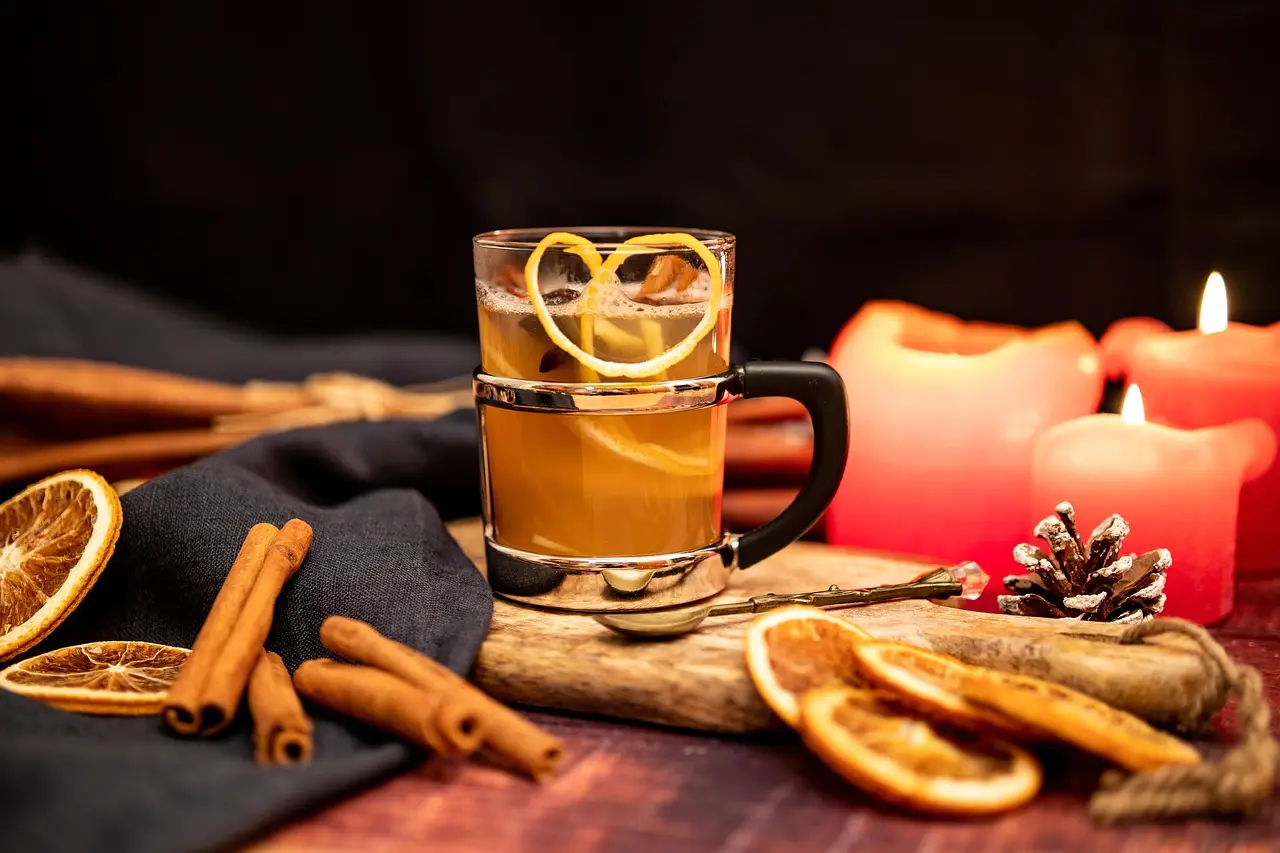
One cheap bottle of red, an orange and a handful of spices, warm in a pot in 15 minutes.
Recipe inspiration
People arriving out of the cold, and you want something in their hands before their coats are off. Mulled wine is the drink that hosts for you: a pot on the lowest flame, a ladle, a stack of mugs. It's the Christmas party drink, the bonfire night drink, the winter solstice drink, and in Australia, the June long-weekend drink when the nights finally get cold.
It also solves the bottle of red nobody liked. Thin, sharp or a little past its best, the spices and sugar round it out.
About this dish
People have heated wine with spices for over 2,000 years. The first record is in the Roman playwright Plautus's Curculio, from the 2nd century BC. The Forme of Cury, the English royal cookbook of 1390, spiced red wine with cinnamon, ginger, galangal, cloves and nutmeg. The oldest known Glühwein tankard, gold-plated, lockable silver, belonged to Count John IV of Katzenelnbogen around 1420. Victorian England drank Smoking Bishop, which Dickens put in A Christmas Carol.
Every cold country has its own. Germany's Christmas markets serve Glühwein; France, vin chaud; the Czech Republic, svařák; Hungary, forralt bor; the Netherlands, bisschopswijn; Poland, grzaniec. Sweden's glögg (from glödgat vin, "glowing wine") comes with raisins and blanched almonds in the glass, and gingerbread and saffron buns on the side.
Done right it tastes of orange and clove first, then cinnamon and a soft liquorice warmth from the star anise, sweet but not syrupy, with the wine still there underneath. It should be hot enough to steam, never hot enough to bubble.
Additions & substitutions
- Glögg: add 2 tbsp raisins and 2 tbsp blanched almonds to each glass, a thumb of sliced ginger to the syrup, and a splash of vodka or aquavit instead of brandy.
- White mulled wine: a dry, fruity white (riesling, pinot gris), with lemon peel, a vanilla pod and honey instead of star anise and cloves. Brandy or elderflower liqueur to finish.
- Sweetener: honey, maple syrup or brown sugar in place of caster sugar. Brown sugar gives a darker, toffee note.
- Alcohol-free: swap the wine for 750 ml unsweetened cranberry, red grape or cloudy apple juice, and halve the sugar; juice is already sweet. Add a splash of strong black tea for the tannin wine would bring.
- Extra spice: a bay leaf, a few black peppercorns, or a slice of fresh ginger in the syrup.
- Vegan: some wines are clarified with egg white, gelatine or milk protein. Pick a bottle labelled vegan; the rest is already plant-based.
Expert tips
Shopping
- Cheap, soft, fruity red. Merlot, grenache, a shiraz blend or a bag-in-box. Skip big oaky or tannic wines: heat and spice make the tannin taste bitter.
- Whole spices only. Ground spices cloud the wine and leave grit in the bottom of every mug.
- An unwaxed orange, or scrub a waxed one in hot water. Its peel goes into the pot.
Preparing
- Peel with a vegetable peeler, taking just the orange skin. The white pith underneath turns the wine bitter.
- Stud the clove into a piece of peel so you can fish them out. Loose cloves end up in someone's mouth.
- Watch the syrup, not the clock. It's done when big glossy bubbles rise and it coats a spoon, about 5 minutes. Any further and it starts to caramelise.
- Steaming, never bubbling. Once the wine is in, keep it at the lowest flame. Swedish glögg is heated to 60 to 70°C; alcohol boils at 78°C, so a bubble means it's leaving.
Make ahead, or for a crowd
- Make the syrup up to 3 days ahead, cool, and keep it in a jar in the fridge. Warm it with the wine when the guests arrive.
- For 12 to 20, multiply by the number of bottles and keep it on low or warm in a slow cooker, lid on, with a ladle beside it.
- Warmed wine sits happily for 2 hours with the lid on. Top up with a little more wine as it goes down.
- Leftovers: strain out the spices, then keep 3 days in a sealed jar in the fridge. Rewarm gently; never boil.
Serving suggestions
- In heatproof glasses or mugs, each with a slice of orange and a cinnamon stick.
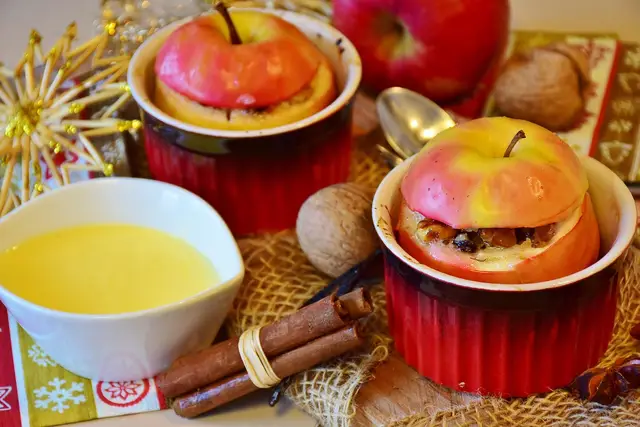
- With a slice of cherry pie, warm baked apples or apple pie for a Christmas table.
- The Swedish way: gingerbread biscuits and saffron buns, with raisins and almonds in the glass.
- More warm and cold drinks in Drinks.
Mulled Wine
Published 2 Oct 2026 · Updated 3 Oct 2026
Ingredients
- 750 ml bottle fruity red wine (3 cups), such as merlot, grenache or a shiraz blend
- 100 g caster sugar (½ cup), plus extra to taste
- 2 oranges, unwaxed (one to serve)
- 1 lemon, unwaxed (peel only)
- 6 whole cloves
- 2 cinnamon sticks, plus extra to serve
- 3 star anise
- 4 cardamom pods, lightly cracked
- 60 ml brandy, port or Cointreau (¼ cup), optional
Method
- Peel the citrus. Take 4 wide strips of peel from the orange and 2 from the lemon with a vegetable peeler, no white pith. Press the cloves into one strip of orange peel. Squeeze the juice from that orange. Slice the second orange into rounds for serving.
- Make the syrup. Put the sugar, peels, orange juice, cinnamon, star anise and cardamom in a large saucepan. Pour in just enough wine to cover the sugar, about 125 ml (½ cup). Stir over medium heat until the sugar dissolves.
- Boil it hard for 4 to 5 minutes, until it thickens into a glossy syrup that coats a spoon. The kitchen smells of oranges and Christmas.
- Add the rest of the wine. Turn the heat to its lowest and pour in the rest of the bottle. The syrup may seize into a lump for a moment; it dissolves as the wine warms.
- Warm it through for 5 to 10 minutes, until it steams and the pan is too hot to hold your palm against, but nothing bubbles.
- Taste and finish. Stir in more sugar a teaspoon at a time if it's sharp. Take the pan off the heat and stir in the brandy, port or Cointreau, if using.
- Serve. Ladle into heatproof glasses or mugs, leaving the spices behind. Add an orange slice and a cinnamon stick to each.
Notes
- Tastes bitter? It boiled, or the peel had pith on it. Fish out the peel, add a spoonful of sugar or honey and a splash of fresh wine or orange juice.
- Tastes thin or of nothing much? The syrup didn't boil long enough. Ladle out a cup, boil it with a spoonful of sugar and a cinnamon stick for 3 minutes, and stir it back in.
- Too sweet? A squeeze of lemon juice or a splash more wine.
- Too strong of clove? It sat too long with the spices in. Strain them out now; add a splash of orange juice.
- Cloudy or gritty? Ground spices. Pour through a sieve lined with a paper towel.
- Syrup caramelised and went dark? It's fine, just toffee-flavoured. If it smells burnt, start the syrup again; burnt sugar spoils the pot.
Sources
- "Mulled wine", Wikipedia, https://en.wikipedia.org/wiki/Mulled_wine
- "Glögg", Wikipedia, https://en.wikipedia.org/wiki/Gl%C3%B6gg
- "Jamie's mulled wine", Jamie Oliver, https://www.jamieoliver.com/recipes/fruit/jamie-s-mulled-wine/
- "Mulled wine", BBC Food, https://www.bbc.co.uk/food/recipes/mulled_wine_46955