Nuts
Nuts: what counts as one, the ancient stones used to crack them, baklava, wedding almonds, and how to buy, store and cook nuts in Australia.
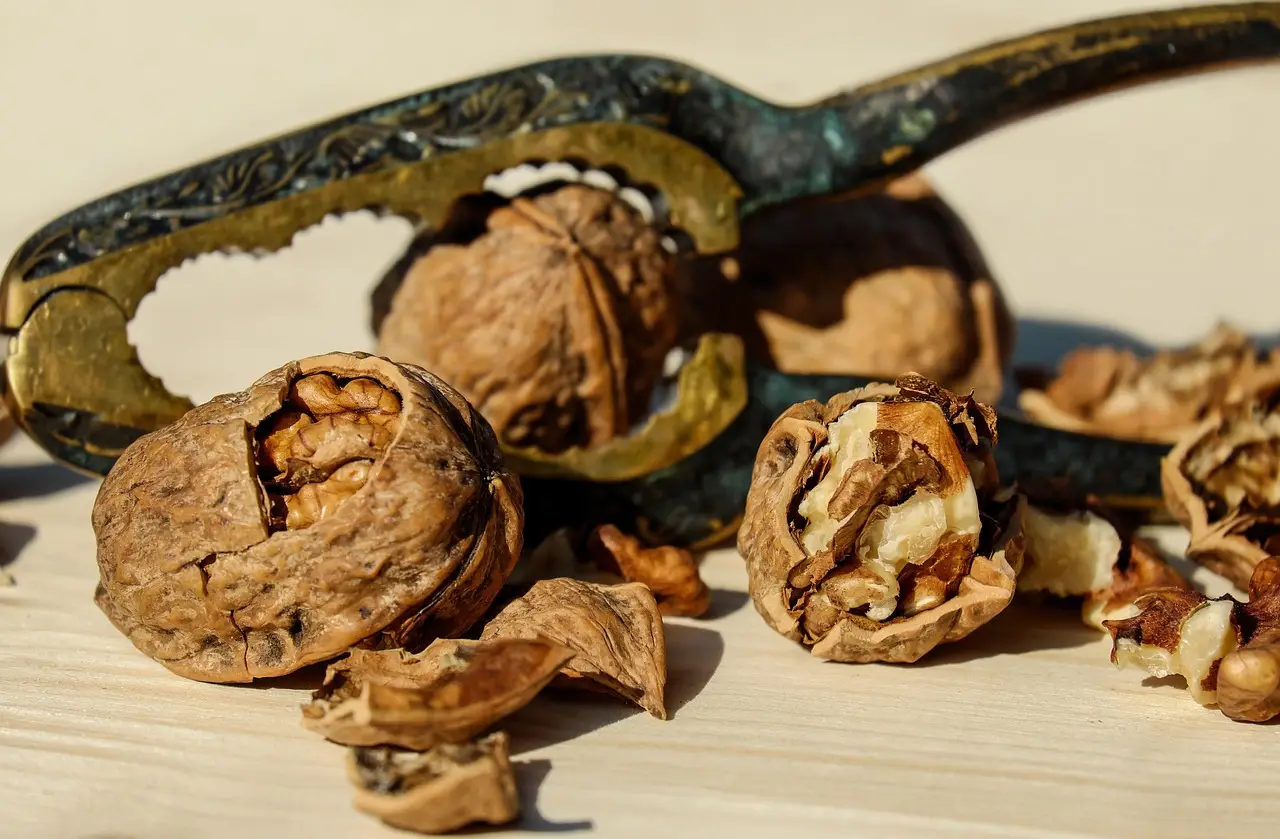
A handful of nuts is the oldest snack there is. No cooking, no plate, just a shell, a stone and a little patience. Today they crunch through baklava, pesto, satay and breakfast muesli, and Australia gave the world one of the most famous of all, the macadamia. Funny thing: most of the "nuts" in your pantry aren't nuts at all, at least not to a botanist 1.
Background
To a botanist, a nut is a hard-shelled fruit holding a single seed, and the shell doesn't open on its own to let the seed out 1. True nuts include hazelnuts, chestnuts and acorns 1.
Cooks are far more relaxed. In the kitchen, "nut" means almost any edible kernel in a hard shell, so almonds, pistachios and Brazil nuts all count 3. Almonds, cashews and macadamias are botanically drupes 1. Walnuts and pecans sit in a grey area 1. And peanuts are legumes, cousins of peas and beans 1. The Victorian Government's Better Health Channel notes peanuts get classed with nuts anyway because they behave so much like them 2.
By weight, the world's biggest "nut" crop in 2019 was coconut, at about 62.5 million tonnes. Peanuts came next at 49 million tonnes, followed by walnuts (4.5 million), cashews (about 4 million) and almonds (3.5 million) 3.
History
People have been bashing hard foods open with stones for a very, very long time. At Gesher Benot Ya'aqov, an archaeological site in Israel, early humans used basalt anvils and hammerstones at least 780,000 years ago. Starch grains left on those tools show they processed a wide range of wild plants 8. Researchers studying a special type of thin basalt anvil from the site list nut cracking among the jobs it may have done 7.
Australia's own contribution came much later to the world, and much earlier to the people who lived here. Macadamias are native to north-eastern New South Wales and central and south-eastern Queensland, and were an important bush food for Aboriginal peoples 4. Australians first grew them commercially in the late 1800s. Seeds sent to Hawaii in the 1880s took off there, planted at first as windbreaks for sugar plantations 4. South Africa has been the biggest grower since the 2010s 4.
That macadamia shell is no joke. It takes around 2,000 newtons of force to crack, it's five times harder than a hazelnut shell, and it behaves a bit like aluminium 4.
Customs, rules and rituals
- Sugared almonds at weddings. Guests at many weddings take home sugar-coated almonds as wedding favours 6. They often come in fives, for happiness, health, long life, wealth and fertility 6. In Portugal, sugared almonds are the classic Easter treat, more traditional than chocolate eggs 6.
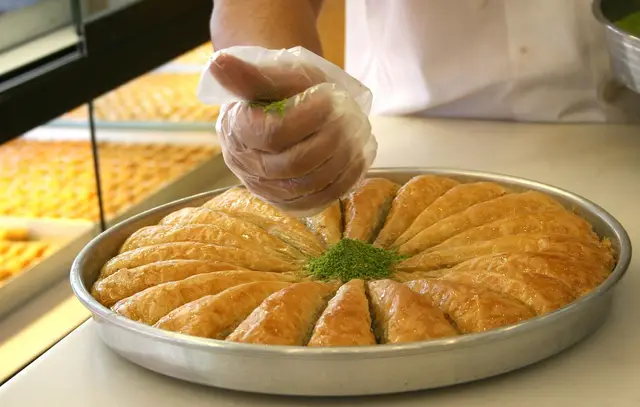
- Baklava for the army. In Ottoman Istanbul, the Sultan presented trays of baklava to the Janissaries, his elite soldiers, on the 15th day of Ramadan, in a ceremonial parade called the Baklava Alayı 5. The Turkish version was probably developed in the kitchens of Topkapı Palace 5.
- Every region, its own nut. Turkish baklava traditionally uses pistachios, walnuts or almonds, with hazelnuts common around the Black Sea 5. Greek cooks lean on walnuts in the north and almonds in the south, and Iranian baklava mixes four nuts with saffron and cardamom 5.
Place in human experience
Nuts are food built to last. A nut's job is to protect a seed until conditions are right to grow 3, which is exactly why people have prized them: they store well and travel well. That durability makes them gifts. A bag of sugared almonds says "remember this day" 6. A tray of baklava from a sultan said "thank you for your service" 5.
They also connect us to a deep past. Long before farming, someone sat with a stone and an anvil and worked out how to get at the good bit inside 78.
How to buy, store and use it
Picking good ones. Buy from busy shops, where stock turns over fast. Whole nuts keep better than chopped or ground ones. Smell them: fresh nuts smell sweet and mild. Anything that smells like paint or stale oil has gone off.
Where to find them. Every Australian supermarket stocks nuts in two places: the snack aisle (often salted and roasted) and the baking aisle (raw, flaked, slivered and ground). Look for Australian-grown macadamias and almonds.
Storing. Keep nuts in an airtight jar, away from heat and light. In a hot Australian summer, the fridge or freezer is your friend.
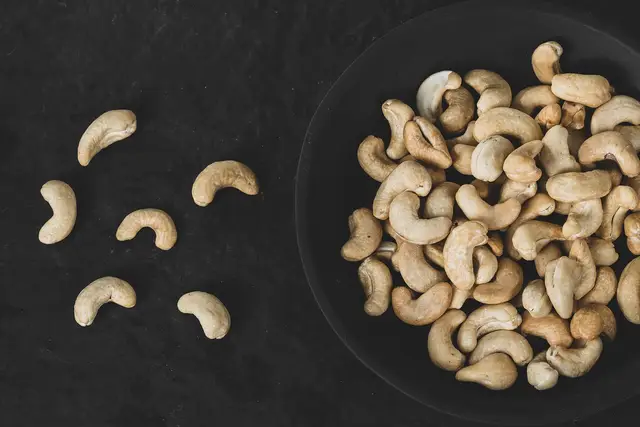
Serving size. The Australian Dietary Guidelines recommend about 30 grams of nuts on most days for adults, roughly a handful: about 30 almonds, 15 cashews or 10 Brazil nuts 2. Nuts contain protein, fibre and mostly unsaturated fats, plus vitamin E and minerals including magnesium, zinc and iron 2.
Allergies. Tree nuts and peanuts can trigger life-threatening allergic reactions in some people 2. Always tell guests when a dish contains them.
Prep tips. No need to soak nuts or peel them unless you want a different texture 2.
Swaps. For a nut-free version, try toasted sunflower or pumpkin seeds in pesto, muesli and crumbles, unless the eater has a seed allergy too 2.
Sources
- "Nut (fruit)", Wikipedia. https://en.wikipedia.org/wiki/Nut_(fruit)
- "Nuts and seeds", Better Health Channel, Victorian Department of Health. https://www.betterhealth.vic.gov.au/health/healthyliving/nuts-and-seeds
- "Nut (food)", Wikipedia. https://en.wikipedia.org/wiki/Nut_(food)
- "Macadamia", Wikipedia. https://en.wikipedia.org/wiki/Macadamia
- "Baklava", Wikipedia. https://en.wikipedia.org/wiki/Baklava
- "Dragée", Wikipedia. https://en.wikipedia.org/wiki/Drag%C3%A9e
- Goren-Inbar, N. et al., "A new type of anvil in the Acheulian of Gesher Benot Ya'aqov, Israel", Philosophical Transactions of the Royal Society B 370, 2015. https://europepmc.org/article/MED/26483531
- Ahituv, H. et al., "Starch-rich plant foods 780,000 y ago: Evidence from Acheulian percussive stone tools", PNAS, 2025. https://doi.org/10.1073/pnas.2418661121