Olive Oil
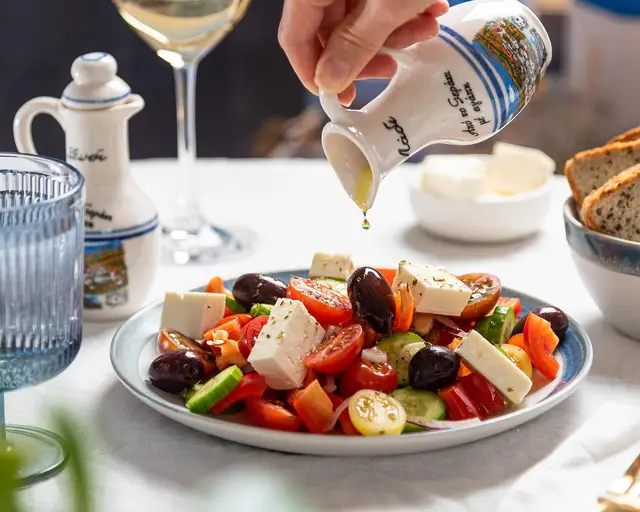
Pour a little good olive oil into a saucer and taste it on bread. Grassy, peppery, sometimes with a cough-inducing kick at the back of the throat. That…
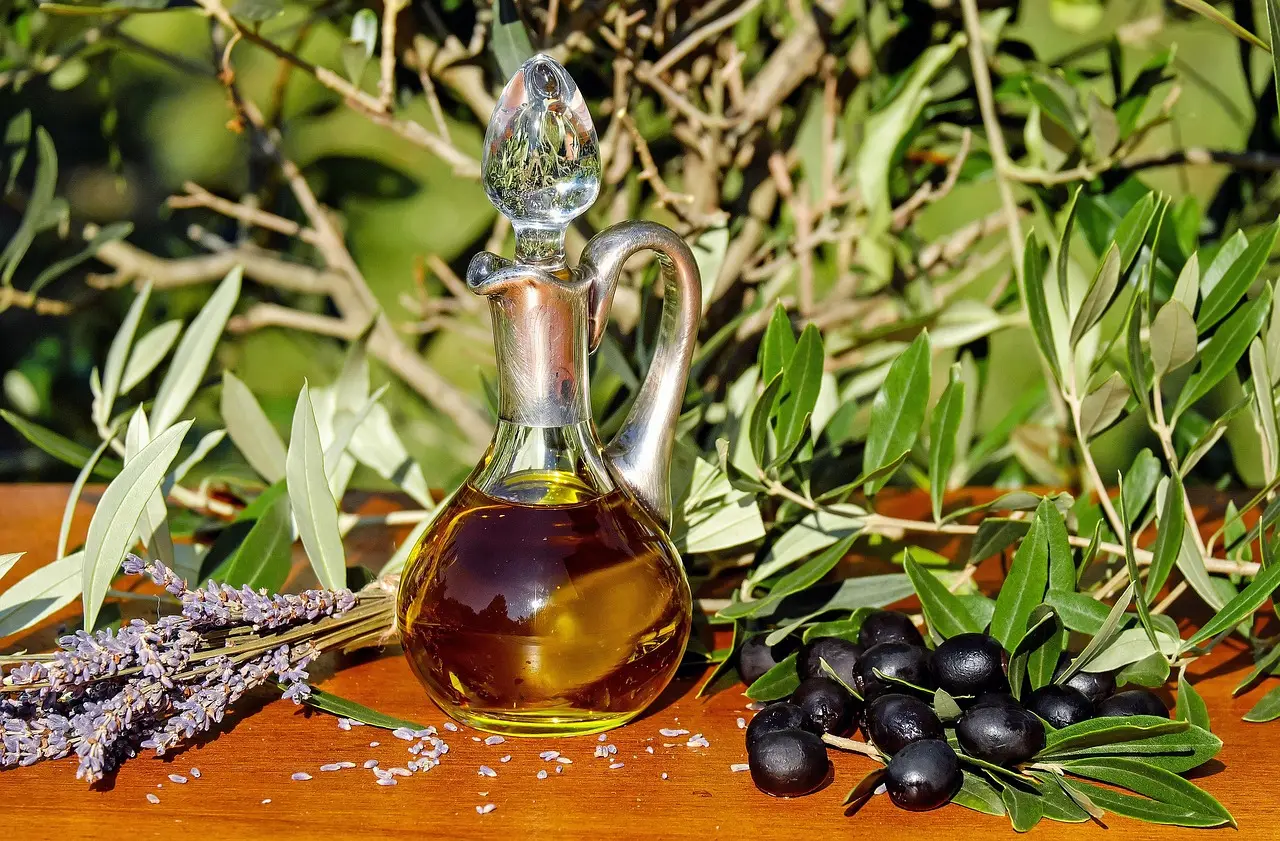
Pour a little good olive oil into a saucer and taste it on bread. Grassy, peppery, sometimes with a cough-inducing kick at the back of the throat. That green-gold liquid has lit temples, crowned athletes, anointed kings and dressed salads for eight thousand years. Olive oil is pressed from the fruit of the olive tree, and around the Mediterranean it's less an ingredient than a way of life.
Background
Spain is the giant of olive oil, producing about 24 per cent of the world's supply in 2022, with Italy, Greece and Türkiye close behind. Together those four make about 59 per cent of the world's 2.7 million tonnes 1.
Who drinks the most? Greeks, at about 9.3 kg each a year, then Albanians, Spaniards and Italians 4. Americans manage about 1.1 kg, and Japanese and Brazilians 0.4 kg 4. Plenty of room for more drizzling.
History
The oldest olive oil yet found sits in pottery sherds from Ein Zippori in Galilee, an Early Chalcolithic site uncovered by chance while widening a road. Excavators dated the residue to about 8,000 years ago and called it possibly the earliest evidence of olive oil anywhere 2. By about 4500 BC, people were making oil at a settlement south of Haifa that now lies under the sea 1.
Crete took olive oil to another level. The earliest surviving oil amphorae there date to 3500 BC, and production probably began even earlier 1. Egyptians before 2000 BC imported oil from Crete, Syria and Canaan; it counted as wealth 1.
The Greeks wove it into their founding myths. Athena and Poseidon competed to give Athens a gift: Poseidon offered a salt spring, Athena an olive tree, and the olive won the city its name 1. Winners at the Panathenaic Games took home oil from Athena's sacred grove in painted amphorae holding about 45 litres each, decorated with the goddess striding into battle and the words "one of the prizes from Athens" 6. After about 350 BC at least 1,450 of these jars were handed out every four years 6. Imagine winning a race and lugging home 45 litres of oil.
Rome turned oil into an empire-wide supply chain, planting olives right around the Mediterranean 1. The proof is a hill. Monte Testaccio, in Rome, is an artificial mound 35 metres high made of broken pottery from about 53 million amphorae, most of them oil jars shipped from Baetica, today's Andalusia 5. Why throw them away? The jars broke into big curved chunks, and leftover oil reacted with lime in concrete to make soap, so reusing them weakened buildings 5. Cheaper to dump them and build a mountain.
Customs, rules and rituals
Few foods carry this much sacred weight.
In Judaism, oil for the Temple menorah had to be pure olive oil from the first pressing. Hanukkah remembers one small jar of consecrated oil, enough for a day, that burned for eight 1.
Christian churches inherited anointing from Jewish tradition, where oil marked priests, kings and prophets 3. Each Holy Thursday the Catholic Church blesses three oils at the Chrism Mass: chrism (olive oil with balsam), oil of catechumens and oil of the sick 3. Catholic, Anglican and Orthodox churches use olive oil in baptism and in anointing the sick 3. "Christ" itself means "the anointed one" 3.
Islam honours the olive too. The Qur'an swears "by the fig and the olive" (95:1) and uses the glow of olive oil in the Light Verse (24:35) to picture divine light 7. A hadith in Ibn Majah advises: season your food with olive oil and anoint yourselves with it 7.
Place in human experience
Olive oil has always been about more than flavour. It lit the menorah, soothed the sick and polished the skin. Greek cosmetic use spread to every city-state from the 7th century BC 1. Pope Benedict XVI summed it up as "nourishment, medicine, beauty, strength" 3.
It was money too. Egyptians counted oil as wealth 1, Athenian athletes won it as prize money 6, and Rome's trade in it was so huge that its empties became a landmark 5.
And it marks identity. Three faiths that share a homeland all hold the olive sacred 137. Families who press their own oil, or who carry bottles home from a grandparent's village, are part of a chain that runs back to a jar in Galilee eight thousand years ago.
So when you splash some into a pan, you're cooking with the stuff of temples, trophies and empires. Not bad for a Tuesday dinner.
Sources
- "Olive oil", Wikipedia, Wikimedia Foundation. https://en.wikipedia.org/wiki/Olive_oil
- "8,000-year-old olive oil found in Galilee", Haaretz, 17 December 2014. https://www.haaretz.com/archaeology/2014-12-17/ty-article/.premium/8-000-year-old-olive-oil-found-in-galilee/0000017f-e09f-d7b2-a77f-e39fbbbd0000
- "Olive Oil in Christian Rites", North American Olive Oil Association. https://www.aboutoliveoil.org/olive-oil-christian-rites
- "Olive Sector Statistics, March 2025", International Olive Council. https://www.internationaloliveoil.org/olive-sector-statistics-march-2025/
- "Monte Testaccio", Wikipedia, Wikimedia Foundation. https://en.wikipedia.org/wiki/Monte_Testaccio
- "Panathenaic amphora", Wikipedia, Wikimedia Foundation. https://en.wikipedia.org/wiki/Panathenaic_amphora
- "Benefits of Olive Oil in Islam: Qur'an and Hadith", Muslim Hands. https://muslimhands.org.uk/islamic-resources/benefits-of-olive-oil-in-islam-quran-and-hadith