Rice Noodles
Soak a nest of dried rice noodles and watch them turn from brittle white sticks to soft, slippery ribbons. Fresh ones, sold in sheets or folded slabs, are…
Soak a nest of dried rice noodles and watch them turn from brittle white sticks to soft, slippery ribbons. Fresh ones, sold in sheets or folded slabs, are even better: silky, a little chewy, perfect for soaking up a sauce or a broth. Rice noodles are made from little more than rice flour and water, and they feed a huge stretch of Asia, from Guilin breakfasts to Sri Lankan string hoppers to Myanmar's national soup.
Background
The recipe is simple: rice flour and water, sometimes with tapioca or corn starch added for a clearer, chewier noodle 1. Fresh noodles last only a few days; drying makes them keep 1. Because they contain no wheat, rice noodles are a handy choice for people avoiding gluten 1.
The family is enormous. China has shahe fen, mixian, lai fun and rice noodle rolls. Vietnam has pho, bánh canh and bún bò Huế. Thailand has pad thai, khanom chin and khao soi. Malaysia and Singapore have char kway teow and laksa; the Philippines has pancit bihon; Myanmar has mohinga; Sri Lanka and southern India have idiyappam, better known in English as string hoppers 1.
History
Rice noodles are a story of migrants making do. Under the Qin dynasty, northern Chinese settled the south. The north grew wheat and the south grew rice, so cooks made their familiar noodles from rice flour instead 1.
Guilin tells a livelier version. When Qin soldiers marched into the region and fell ill with stomach trouble, a cook is said to have made gentle rice noodles to settle their digestion, and they've been the local breakfast ever since 2. It's a legend, not a record, but Guilin really did grow up around a Qin military administration 2.
South Asia worked out its own threads independently. Food historian K.T. Achaya, drawing on Sangam poetry, traced idi-appam, "strings of cooked rice", to the ancient Tamil country around the first century AD 1.
Thailand's khanom chin carries a hidden history in its name. "Khanom chin" sounds like "Chinese snack" in Thai, but the word probably comes from the Mon language, hanom cin, "boiled noodles" 3. The Mon, not the Chinese, gave Thailand this one. Traditional khanom chin is made from rice fermented for three days, boiled, and pushed through a sieve into boiling water 3.
Customs, rules and rituals
Rice noodles are, above all, breakfast.
In Myanmar, mohinga, a fish soup with rice vermicelli flavoured with lemongrass, turmeric and fish sauce, is the national dish 4. The earliest mention comes in a verse poem by U Ponnya in the Konbaung era. No royal recipe survives, which suggests it was always a commoner's dish 4. Once sold only in the early morning and at evening performances, mohinga spread through street hawkers and trishaw vendors from the 1960s and is now an all-day breakfast 4.
In Sri Lanka, string hoppers are an almost daily breakfast. Cooks press dough through a mould onto little mats in neat double circles and steam them for about five minutes, then serve them with fish curry and coconut sambol 6. Speed matters; the blog My Lankan Food Journal warns that "this has to happen quickly" 6.
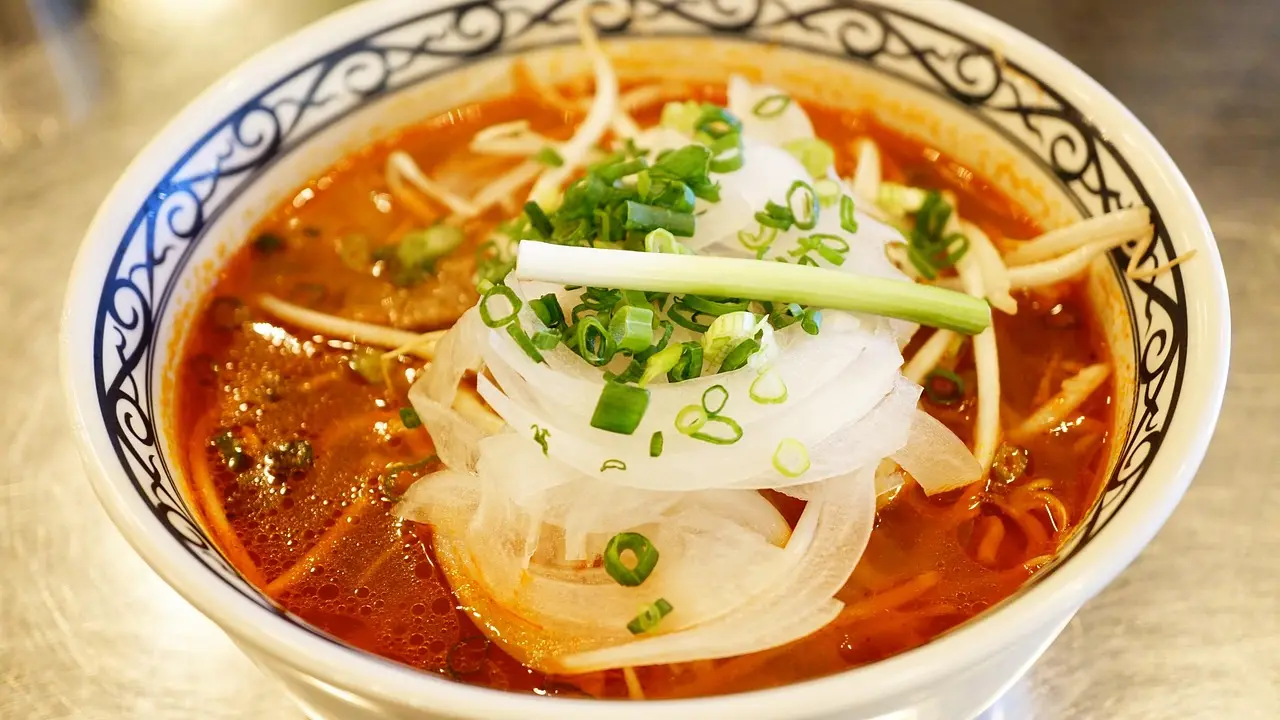
In Vietnam, Huế's beef noodle soup, bún bò Huế, became national intangible cultural heritage on 5 July 2025 5. Ninety-one-year-old culinary artisan Mai Thị Trà says it likely grew from xáo, a stew made from leftover sacrificial meat after village ceremonies, first eaten with sticky rice. Rice noodles later took over because they were easier and cheaper 5. Its signature is mắm ruốc, fermented shrimp paste, with lemongrass 5.
Thailand's khanom chin changes with the region: fish curry, coconut milk or chilli sauce, pickled cabbage up north, fresh vegetables such as parkia in the south, and the northern nam ngiao with pork blood 3.
Place in human experience
Rice noodles follow people. Northern settlers invented them to cook their old food with a new grain 1. Soldiers, in Guilin's telling, got them as medicine 2. Mon cooks passed them into Thai kitchens 3.
They also blur the line between everyday and sacred. Huế's soup began with meat offered in ceremony and shared afterwards 5. Mohinga rose from commoners' bowls to national dish without ever passing through a palace kitchen 4.
And they make breakfast a public, shared moment. Trishaw vendors in Myanmar, Guilin's morning stalls and Sri Lankan family kitchens all start the day with a tangle of rice noodles 246.
So the next time you soak a packet for a quick stir-fry, you're doing what cooks across Asia have done for two thousand years: turning a humble grain into something long, soft and comforting.
Sources
- "Rice noodles", Wikipedia, Wikimedia Foundation. https://en.wikipedia.org/wiki/Rice_noodles
- "Guilin rice noodles", Wikipedia, Wikimedia Foundation. https://en.wikipedia.org/wiki/Guilin_rice_noodles
- "Khanom chin", Wikipedia, Wikimedia Foundation. https://en.wikipedia.org/wiki/Khanom_chin
- "Mohinga", Wikipedia, Wikimedia Foundation. https://en.wikipedia.org/wiki/Mohinga
- "Bún bò Huế: từ món xáo dân gian thành di sản ẩm thực quốc gia", Thanh Niên, July 2025. https://thanhnien.vn/bun-bo-hue-tu-mon-xao-dan-gian-thanh-di-san-am-thuc-quoc-gia-185250715110825718.htm
- "String Hoppers", My Lankan Food Journal. https://www.mylankanfoodjournal.com/string-hoppers/