Pad Thai
Listen for the clatter of a spatula on a hot wok, then the hiss as tamarind and palm sugar hit the noodles. Out comes a tangle of rice noodles, slick and…
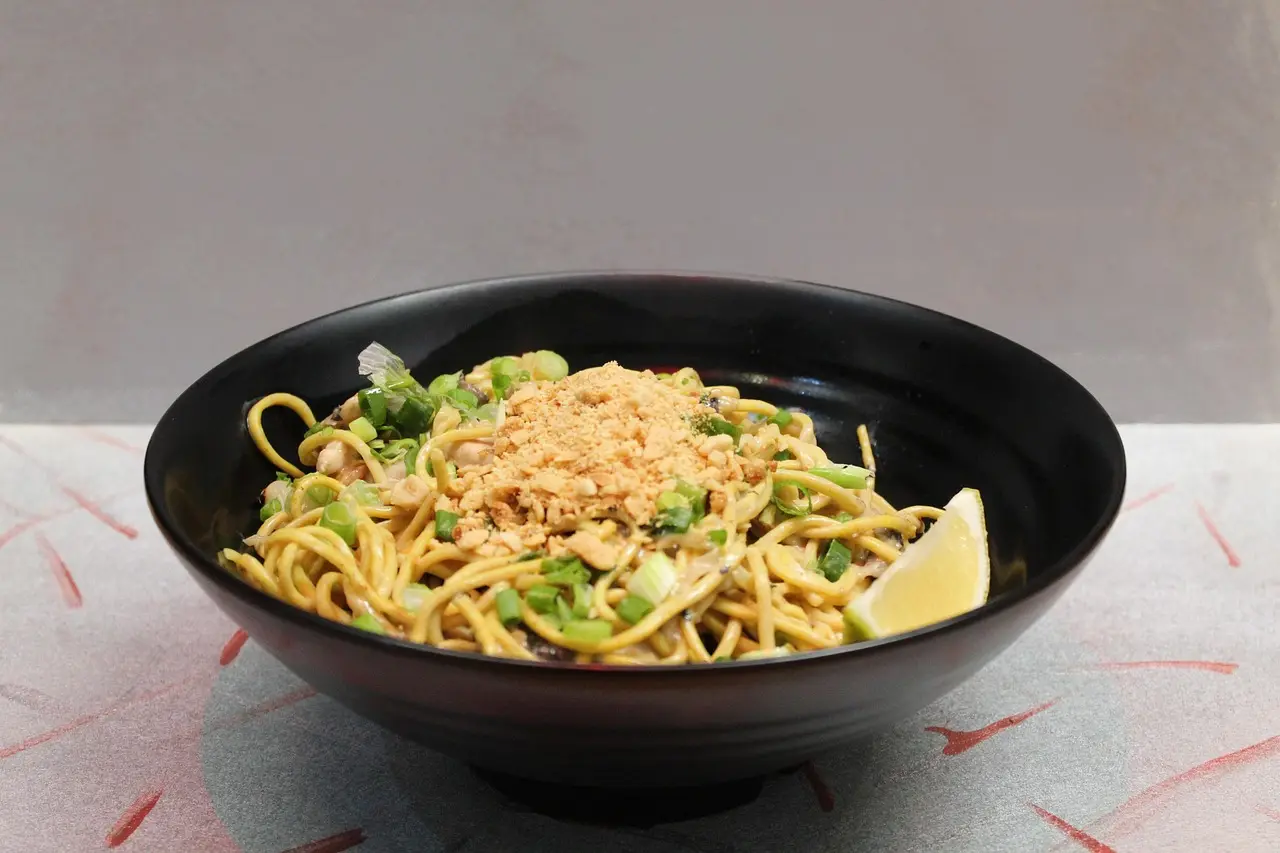
Listen for the clatter of a spatula on a hot wok, then the hiss as tamarind and palm sugar hit the noodles. Out comes a tangle of rice noodles, slick and chewy, with egg, tofu, prawns and a crunchy heap of bean sprouts. You squeeze lime over the top, shake on crushed peanuts and chilli, and make it exactly how you like it. Pad thai means "Thai-style stir-fried noodles", and it's younger than you might think. Its story involves a war, a rice shortage, a prime minister and a government plan to open thousands of restaurants abroad.
Background
Classic pad thai combines rice noodles, egg, tofu, tamarind, fish sauce, dried shrimp, garlic, shallots and palm sugar 1. On the side come lime wedges, crushed roasted peanuts, chilli, bean sprouts and garlic chives, so each diner tunes the plate 1. Vegetarians swap soy sauce for fish sauce and leave out the shrimp 1.
The flavour hits all four Thai corners: salty, sweet, sour and hot. Tamarind brings the sour, palm sugar the sweet 3.
History
Here's the surprise: pad thai probably dates only to the 1930s or 1940s. Author Mark Padoongpatt describes it as created in that period to rally national feeling 1.
The man behind it was Field Marshal Plaek Phibunsongkhram, usually called Phibun, prime minister and military ruler. Between 1939 and 1942 his government issued twelve cultural mandates to build a unified Thai identity. The first, on 24 June 1939, renamed the country from Siam to Thailand; others told people how to dress and to honour the Thai language 5.
Food joined the campaign. During the Second World War, floods and war caused rice shortages, and Phibun's government urged people to eat noodles instead of rice 14. The Nation adds that rice had become expensive to produce 4. Out of this push came kuai tiao pad thai, later shortened to pad thai 1.
Now for the twist. Those noodles aren't originally Thai. Kuai tiao comes from the Teochew Chinese word for flat rice noodles, and rice noodles arrived with Hokkien and Teochew immigrants 13. Stir-frying in oil also came with Chinese migrants: traditional Thai cooking of the Sukhothai, Ayutthaya and early Bangkok eras didn't fry in oil 3. Food writer Kasma Loha-unchit points out that a dish named "Thai" in its own country hints at a non-Thai origin, and suggests Thai Chinese cooks created it 1.
So who invented pad thai? The claims differ:
- A Thai government-backed site says Phibun created the dish to build nationalism from a Chinese one 3.
- Kasma Loha-unchit credits Thai Chinese cooks 1.
- Bangkok's Thipsamai restaurant, which started as an unnamed street stall on a charcoal stove and opened formally in 1966, is credited with the original recipe; the story goes that the prime minister ate there and praised the noodles 4.
Each tells part of the story. What's clear is that a Chinese technique met Thai flavours under a government campaign.
Customs, rules and rituals
Pad thai is street food at heart. Thipsamai still cooks over charcoal stoves using mangrove charcoal from Samut Songkhram, and wraps the noodles in a thin egg skin drizzled with shrimp oil 4. Its owner says real pad thai uses thin sen chan noodles, shrimp oil, prawns and fish sauce, unlike Chinese-style fried noodles with sweet black soy and pork 4. In 2018 the Michelin Guide gave Thipsamai a Bib Gourmand 4.
The condiment tray is the ritual. Nobody expects the cook to season your plate perfectly; you finish it yourself with lime, chilli, peanuts and a handful of sprouts 1.
Place in human experience
Pad thai shows how a nation can cook up an identity. Phibun's mandates told people what to wear, how to speak and what to call their country 5. A noodle dish with "Thai" in its name fitted neatly.
Then Thailand took the idea abroad. In 2001 the government launched Global Thai, aiming for at least 3,000 Thai restaurants worldwide. A deputy commerce minister called it "like the McDonald's of Thai food" 2. Agencies built restaurant prototypes, banks offered loans, and the Health Ministry published cooking training guides in 2002 2. Thai restaurants abroad grew from about 5,500 to more than 15,000, and in the United States from about 2,000 to over 5,000 2. South Korea, Taiwan, Peru and Malaysia later copied the approach 2.
It worked. CNN Go readers ranked pad thai fifth in their 2011 list of the world's 50 most delicious foods 1.
For Thai Chinese families, though, the dish also carries an older story of migrants whose noodles and woks became so Thai that the nation named a dish after itself with them 13. Every plate is a little history lesson, best eaten with extra peanuts.
Sources
- "Pad thai", Wikipedia, Wikimedia Foundation. https://en.wikipedia.org/wiki/Pad_thai
- "The Surprising Reason That There Are So Many Thai Restaurants in America", Vice. https://www.vice.com/en/article/the-surprising-reason-that-there-are-so-many-thai-restaurants-in-america/
- "Pad Thai: From Foreigner-cum-Resident to the Thai Root", Thailand NOW. https://www.thailandnow.in.th/arts-culture/pad-thai-from-foreigner-cum-resident-to-the-thai-root/
- "Phad Thai", The Nation Thailand. https://www.nationthailand.com/life/30345187
- "Thai cultural mandates", Wikipedia, Wikimedia Foundation. https://en.wikipedia.org/wiki/Thai_cultural_mandates