Walnuts
Walnuts: Jupiter's nut, the royal nut and baklava's best friend. History, customs and feasts, plus how to buy and store walnuts in Australia.
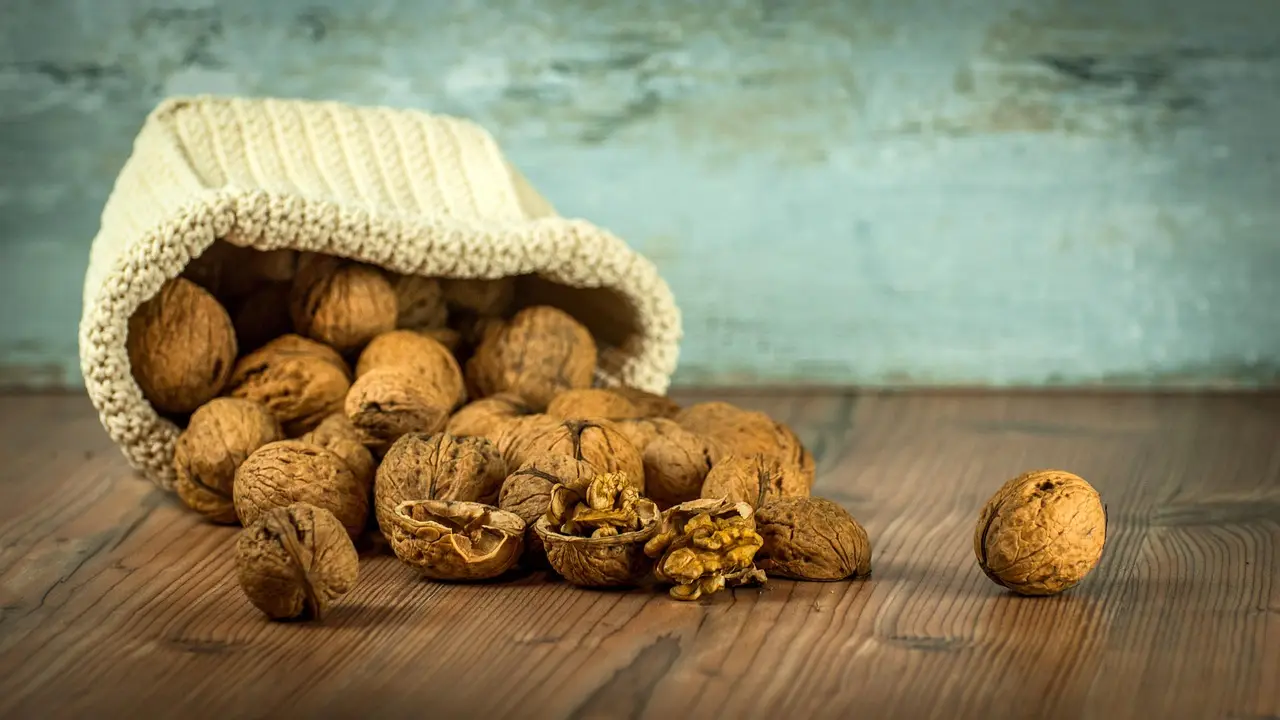
Crack a walnut and you get a little wrinkled brain in a wooden box. Kids love that bit. Cooks love what comes next: toasty, buttery, slightly bitter crunch that turns a cake, a salad or a bowl of porridge into something special. The common walnut (Juglans regia) came out of Persia and Central Asia, and the Romans named it after their king of the gods 12. It has been royal ever since.
Background
Walnuts grow on trees in the genus Juglans. The one in your supermarket is almost always the Persian walnut, Juglans regia, which Americans call the English walnut 1. Its cousins include the black walnut of eastern North America and the Japanese heartnut 1.
The Latin name is a compliment twice over. Juglans joins jovis, Jupiter, and glans, an acorn or nut, while regia means royal 2. The tree probably first grew wild across south-west and Central Asia and south-east Europe, though centuries of planting have blurred its natural range 2.
China grew 1.4 million tonnes of walnuts in 2023, followed by the United States, Iran and Turkey 1. Australia grows them too: in the Riverina near Griffith and Leeton, on Tasmania's east coast, and in Victoria's Goulburn Valley and Murray region 3.
History
Alexander the Great brought the "Persian nut" to Macedonia in the fourth century BC, and the Romans spread walnut trees through southern Europe and North Africa 2. In Ottoman and Byzantine times, people called it the "royal nut" 1. A twelfth-century farming book by Ibn al-'Awwam explained how to grow walnuts in Spain 1.
The English name is less flattering. The "wal" in walnut comes from an old Germanic word for "foreign", the same root behind German Walnuss and Dutch walnoot 1. In Chinese, the walnut is hú táo, literally the "Hu peach", after the northern peoples who brought it east 2. Everyone, it seems, knew this nut came from somewhere else.
And "English walnut"? Probably because English sailors once shipped so many of them. Botanist Alan Mitchell called the name "plainly an error by the early settlers" 2.
Customs, rules and rituals
- Nocino on St John's Day. In Emilia-Romagna, families traditionally pick unripe green walnuts on 24 June, the feast of St John the Baptist, to steep in alcohol and syrup for nocino, a dark, bittersweet liqueur 4. Warmer seasons now push some harvests to mid-June 4.
- Yalda Night. Iranian families serve fesenjan, a sweet-sour stew of ground walnuts and pomegranate paste, at Yalda Night dinners. Persian Jews serve it at weddings and Rosh Hashanah 5.
- Georgian winter feasts. Satsivi, chicken or turkey in a cold walnut sauce with garlic and fenugreek, is a staple of winter holiday tables. Eggplant and cauliflower versions make it vegetarian 6.
- Skopelos. On this Greek island, legend says whoever plants a walnut tree will die once the tree can "see" the sea, a nod to how slowly walnuts grow 2.
Place in human experience
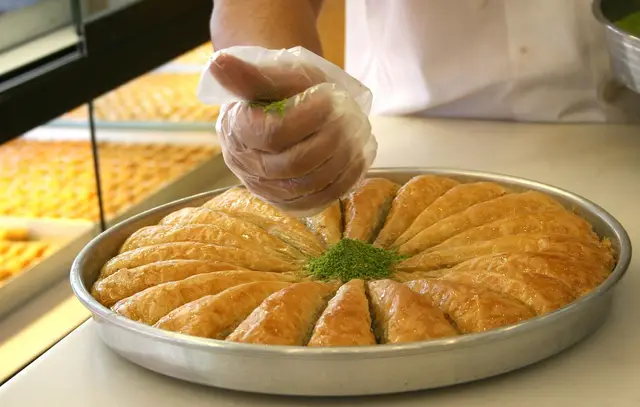
Walnuts carry a lot of celebration. They go into baklava, Circassian chicken, satsivi and Iranian stews 1. In Iran, fesenjan counts as "a rich man's dish"; to act as if you've "had partridge and fesenjan" means to show off 5.
There's patience in them, too. A tree you might not live to see bear fruit, a liqueur that starts on a saint's day and waits months in a jar 24. Walnuts reward people who plan ahead, which might be why they turn up so often at feasts.
How to buy, store and use it
- Buy them. Look for Australian-grown walnuts in the baking or nut aisle at Coles, Woolworths and Aldi, or in-shell at greengrocers and farmers' markets. Halves and pieces suit baking; whole halves look best on top of things.
- Store them. Take them out of the plastic bag and put them in an airtight container in the fridge for up to four months, or the freezer for up to six 3. Bring them back to room temperature before eating and they taste nuttier 3. Heat above 30°C and humidity above 70% can bring mould, so throw out any musty batch 1.
- Serve size. A 30 g serve is about 10 whole walnuts and gives 871 kJ, 4.3 g protein, 20.8 g fat and 1.9 g fibre 3.
- Swap them. Pecans and hazelnuts step in nicely in baking and baklava. For a nut-free table, toasted sunflower or pumpkin seeds give the crunch.
Sources
- "Walnut", Wikipedia. https://en.wikipedia.org/wiki/Walnut
- "Juglans regia", Wikipedia. https://en.wikipedia.org/wiki/Juglans_regia
- "Walnuts", Nuts for Life (Australian nut industry). https://www.nutsforlife.com.au/walnuts/
- "Nocino", Wikipedia. https://en.wikipedia.org/wiki/Nocino
- "Fesenjan", Wikipedia. https://en.wikipedia.org/wiki/Fesenjan
- "Satsivi", Wikipedia. https://en.wikipedia.org/wiki/Satsivi