Creamy Mashed Potatoes
Fluffy, buttery mashed potatoes with no lumps and no glue. Dry the potatoes, beat in the butter first, then the warm milk. Easy vegan swaps.
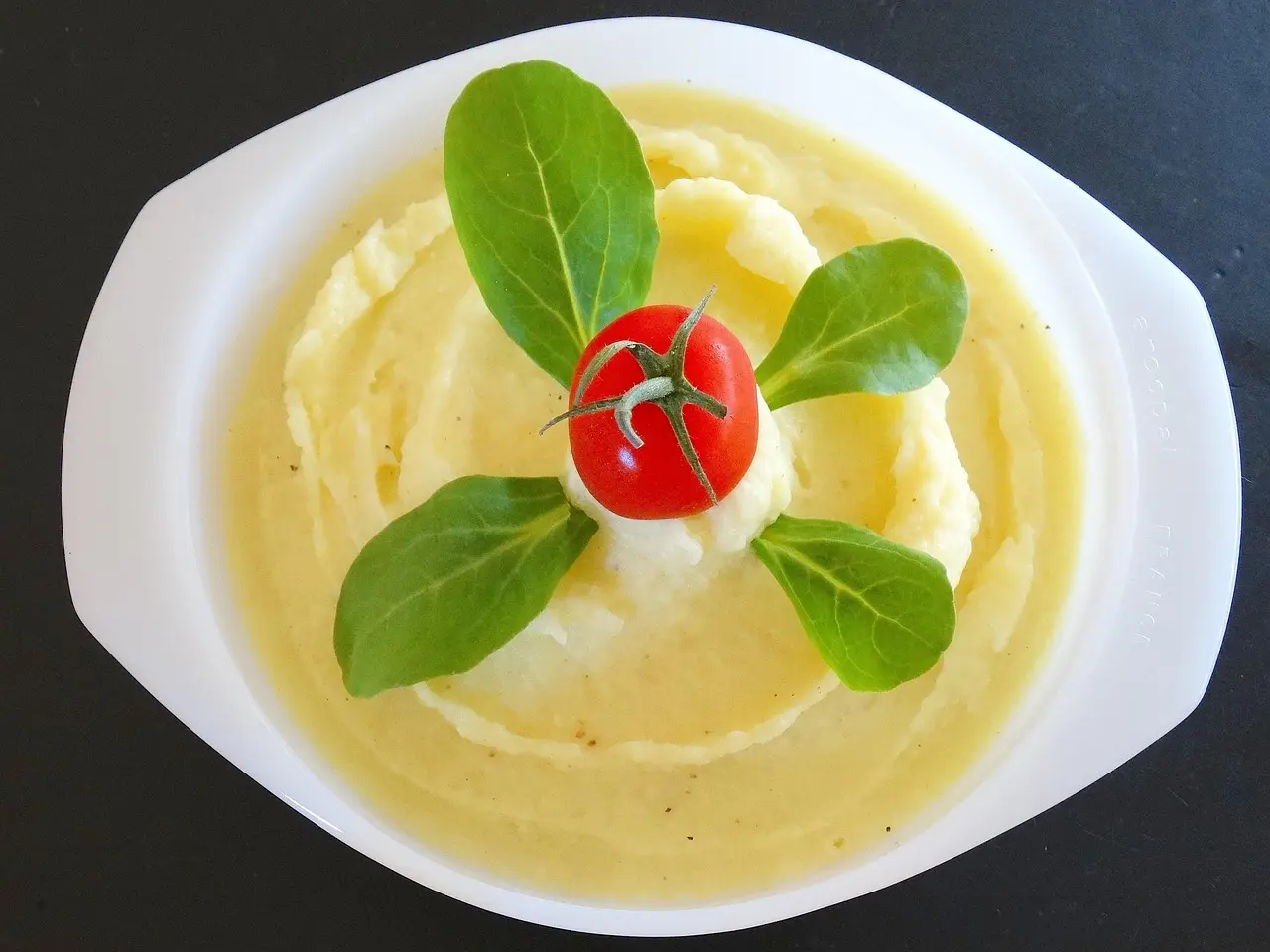
Floury potatoes, cooked until they crumble, dried, then butter, then warm milk: smooth, light and never gluey.
Recipe inspiration
Robuchon's purée is the most famous mash in the world, and it's four ingredients: potatoes, butter, milk, salt. What made it his was the order and the drying, not a secret ingredient. His ratio, 250 g butter to 1 kg potatoes, is restaurant food. This is the home version: the same order and the same drying, a third of the butter, and a masher instead of a food mill.
It's the side that saves a weeknight. Sausages, a roast chicken, a pot of stew: put a bowl of this beside it and dinner is done.
About this dish
Hannah Glasse printed one of the first English recipes in The Art of Cookery in 1747: potatoes "mashed in a saucepan with milk, salt, and butter". Nearly three centuries on, that's still the recipe. Ireland folds in cabbage for colcannon or spring onions for champ; the Dutch mash in kale for stamppot; France beats in cheese until it stretches for aligot, or egg yolk to pipe and bake pommes duchesse; India's aloo bharta gets onion, mustard oil and green chilli.
What you get: a soft, pale-gold mash that holds a swirl on the spoon, smells of warm butter, and goes down without a single lump. Light, not heavy; creamy, not sticky.
Additions & substitutions
- Garlic: simmer 4 peeled cloves with the potatoes and mash them in. Soft and sweet, not sharp.
- Champ: warm 4 sliced spring onions in the milk for 5 minutes before adding it.
- Colcannon: fold in 2 cups shredded cabbage or kale, softened in a knob of butter.
- Extra rich: swap half the milk for cream, or go toward Robuchon and double the butter.
- Cheesy: 80 g grated Gruyère or cheddar after the milk, beaten hard until it strings. A shortcut aligot.
- Vegan: plant butter (the block kind, not a spread) and unsweetened oat or soy milk, warmed. Same order, same result.
- Sour cream or crème fraîche: 60 g at the end for tang.
- Potatoes: Dutch cream or Désirée make a denser, more buttery-tasting mash. Waxy salad potatoes (Kipfler, Nicola) turn sticky.
Expert tips
Shopping
- Floury potatoes are the whole game: Sebago (the cheap dirt-brushed ones), Coliban or King Edward in Australia; Russet in the US; Maris Piper in the UK. Their cells fall apart into fluff.
- Unsalted butter, so you control the salt.
- Full-cream milk. Skim makes a thinner, sadder mash.
Preparing
- Even pieces, cold water start. 4 cm chunks, covered by 3 cm of cold, salted water. Dropped into boiling water the outsides go to mush before the middles cook.
- Cook them further than you think. A knife should slide in with no resistance and the edges should crumble. Underdone potato is the only cause of lumps.
- Dry them. Back in the hot pan for a minute or two over low heat, shaking, until the surface looks floury and the steam stops. Water left in the potato dilutes the butter and thins the mash.
- Butter before milk. Once the fat has coated the starch, the milk only makes it softer, not stickier.
- Masher or ricer, never a blender. Blades burst the starch cells and the mash goes gluey. A ricer gives the smoothest result with the least work.
- Warm the milk. Cold milk chills the mash and soaks in unevenly.
Make ahead, or for a crowd
- Up to 2 hours: keep the bowl covered over a pot of barely simmering water. Stir in a splash of warm milk before serving.
- Up to 2 days: press plastic wrap onto the surface and refrigerate. Reheat in a pan over low heat with a splash of milk and a knob of butter, stirring, or in the microwave in 1-minute bursts.
- For 12: double everything in two pots. Mashing 3 kg in one pot leaves lumps at the bottom.
Serving suggestions
- Under sticky ribs to catch the glaze.
- Sausages and onion gravy, the classic.
- A slow beef or lentil stew, spooned into a well in the middle.
- Beside winter vegetable soup leftovers for a cheap two-course dinner.
Creamy Mashed Potatoes
Published 2 Oct 2026 · Updated 3 Oct 2026
Ingredients
- 1.5 kg floury potatoes, such as Sebago, Coliban or King Edward (about 8 medium)
- 1 tbsp salt, for the cooking water
- 100 g cold unsalted butter, cubed (7 tbsp), plus extra to serve
- 185 ml (¾ cup) full-cream milk
- ½ to 1 tsp salt, to taste
- White or black pepper
- Chopped chives, to serve
You need a large saucepan and a potato masher or ricer.
Method
- Cut. Peel the potatoes and cut into even 4 cm pieces.
- Boil. Put them in the saucepan, cover with cold water by 3 cm and add the tablespoon of salt. Bring to the boil, then simmer 15 to 20 minutes, until a knife meets no resistance and the edges crumble into the water.
- Warm the milk. Meanwhile, heat the milk in a small pan or the microwave until it steams. Don't let it boil.
- Dry. Drain the potatoes well, tip them back into the hot pan and set over low heat 1 to 2 minutes, shaking now and then, until the surfaces look dry and floury and the steam dies down.
- Mash. Take the pan off the heat. Mash until no lumps remain, or push the potatoes through a ricer back into the pan.
- Butter. Add the cold butter a few cubes at a time, beating with a wooden spoon, until each lot disappears and the mash looks glossy.
- Milk. Pour in the warm milk a splash at a time, beating, until the mash is soft enough to hold a swirl. You may not need all of it.
- Season and serve. Season with salt and pepper, tasting as you go. Spoon into a warm bowl, top with a knob of butter and the chives.
Notes
- Lumpy? The potatoes were underdone. Push the mash through a sieve or ricer; next time cook them until they crumble.
- Gluey or sticky? Overworked, often in a blender or mixer, or a waxy potato. It can't be undone; spread it in a dish, top with cheese and bake it into a gratin.
- Watery or thin? The potatoes weren't dried, or too much milk went in. Stir over low heat a few minutes to drive some off.
- Bland? Mash needs more salt than you think. Add it a pinch at a time and taste.
- Stiff after standing? The starch sets as it cools. Beat in warm milk, a tablespoon at a time.
Sources
- "Mashed potato", Wikipedia, https://en.wikipedia.org/wiki/Mashed_potato
- "Joël Robuchon made the world's best mashed potatoes: here's the recipe", Fine Dining Lovers, https://www.finedininglovers.com/article/joel-robuchon-made-worlds-best-mashed-potatoes-heres-recipe
- "Creamy Buttery Mashed Potato", RecipeTin Eats (Nagi Maehashi), https://www.recipetineats.com/mashed-potato/
- "Best Mashed Potatoes Recipe", Love and Lemons (Jeanine Donofrio), https://www.loveandlemons.com/mashed-potatoes/