Milk
Milk: 9,000 years of dairying, why most adults can't digest it, milk in worship and Exodus, and how to buy, store and swap it in an Australian kitchen.
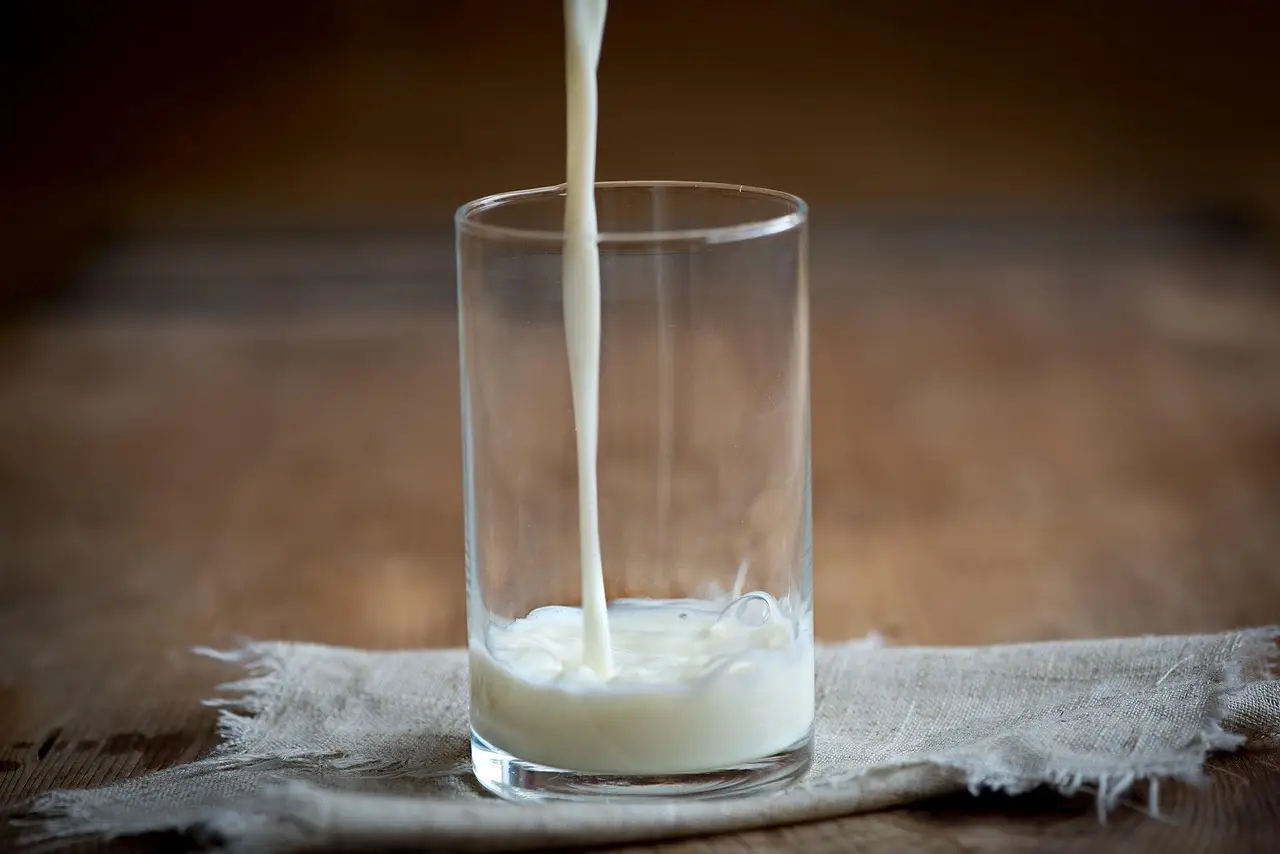
Milk is the quiet workhorse of the kitchen. It goes in tea and coffee, white sauce and custard, pancakes and scones, and most of us never think about it until the carton's empty. Yet it carries one of the strangest stories in food: a drink most adults on Earth weren't built to digest, which people kept drinking anyway, and which ended up poured over gods and promised as a reward.
Background
The world produces about 952 million tonnes of milk a year. India leads by a wide margin, followed by the United States and Pakistan 1. Cows supply most of it, around 85% in 2011, with buffalo, goats, sheep and camels making up much of the rest 1.
Here's the strange part. Babies everywhere digest milk sugar, lactose, but most adults lose the ability. Lactase persistence, the genetic trait that keeps it going, runs at 80 to 100% in northern and central Europe but 5% or less in East Asia and among Native Americans 2. Africa has several separate versions of the trait, which suggests different peoples arrived at the same solution independently 2.
History
Dairy animals were domesticated in the Neolithic, as early as 9000 to 7000 BC in Mesopotamia 1. Fat residues soaked into ancient pottery show people were dairying in south-west Asia by at least the seventh millennium BC 1.
That raises a puzzle: why drink milk if your body can't handle it? A 2022 study in Nature by Richard Evershed and colleagues found that people used dairy long before lactase persistence spread widely 2. Early farmers likely ate fermented dairy, such as yoghurt and cheese, which have far less lactose 2. The genetic trait only reached noticeable levels in the last 10,000 years 2.
Modern milk owes a lot to two inventions. Louis Pasteur developed heat treatment in 1863 while trying to stop wine spoiling, and pasteurisation reached commercial dairies in Germany in the 1880s 1. Homogenisation, which breaks fat into tiny droplets so cream no longer rises to the top, was shown off by Auguste Gaulin at the 1900 World's Fair in Paris 1.
Customs, rules and rituals
- Judaism. The Bible promises "a land flowing with milk and honey" (Exodus 3:8) 3, and the phrase still means abundance.
- Hinduism. Cow's milk is one of the five ingredients of panchamrita, with honey, sugar, curd and ghee. During the abhisheka ritual, ghee is poured over a deity's image, then milk, curd, honey and sugar, and the mixture is shared as prasad 4.
- The 1995 "milk miracle". On 21 September 1995, word spread from a New Delhi temple that statues of Ganesha were drinking milk offered on a spoon 5. Reports came in from India, Nepal, Kenya, Fiji, Europe and North America, and milk sold out in parts of New Delhi 5. Scientists explained it as capillary action: surface tension drew the milk off the spoon and down the front of the statue 5.
Place in human experience
Milk is the first food every mammal knows, so it's no surprise people link it with care, plenty and home. "Milk and honey" has meant a good life for thousands of years 3.
It's also a reminder that food culture shapes bodies. Herding peoples who relied on dairy through hard seasons passed on the genes to digest it 12. Elsewhere, milk was mostly turned into yoghurt, cheese and ghee. These days the conversation has moved again, to oat, soy, almond and rice milk, so nearly anyone can pour something creamy into their tea.
How to buy, store and use it
Picking. Australian supermarket milk comes as full cream, light or reduced fat, skim, lactose free and long-life (UHT). Full cream gives the richest sauces and custards. Lactose-free milk tastes slightly sweeter and suits most recipes.
Where to find it. Fresh milk is in the dairy fridge. Long-life dairy milk and most plant milks sit on the shelf, usually in the tea and coffee or health food aisle; barista versions froth better in coffee.
Storage. Keep fresh milk in the coldest part of the fridge, not the door, and close the lid straight away. Check the use-by date. Unopened long-life milk lives in the pantry; once opened, refrigerate it like fresh.
Using it. Warm milk gently; it scorches fast. Add a squeeze of lemon to a cup of milk, wait five minutes and you have a quick buttermilk swap for pancakes.
Swaps. Soy milk behaves most like dairy in baking. Oat suits sauces and coffee. Choose unsweetened, calcium-fortified plant milk for savoury cooking.
Sources
- "Milk", Wikipedia. https://en.wikipedia.org/wiki/Milk
- "Lactase persistence", Wikipedia. https://en.wikipedia.org/wiki/Lactase_persistence
- Exodus 3:8, New International Version, Bible Gateway. https://www.biblegateway.com/passage/?search=Exodus%203%3A8&version=NIV
- "Panchamrita", Wikipedia. https://en.wikipedia.org/wiki/Panchamrita
- "Hindu milk miracle", Wikipedia. https://en.wikipedia.org/wiki/Hindu_milk_miracle