Frying Pan
A frying pan is just a shallow pan with a handle, and it might be the hardest-working object in your kitchen. Eggs, pancakes, a steak, a quick stir of…
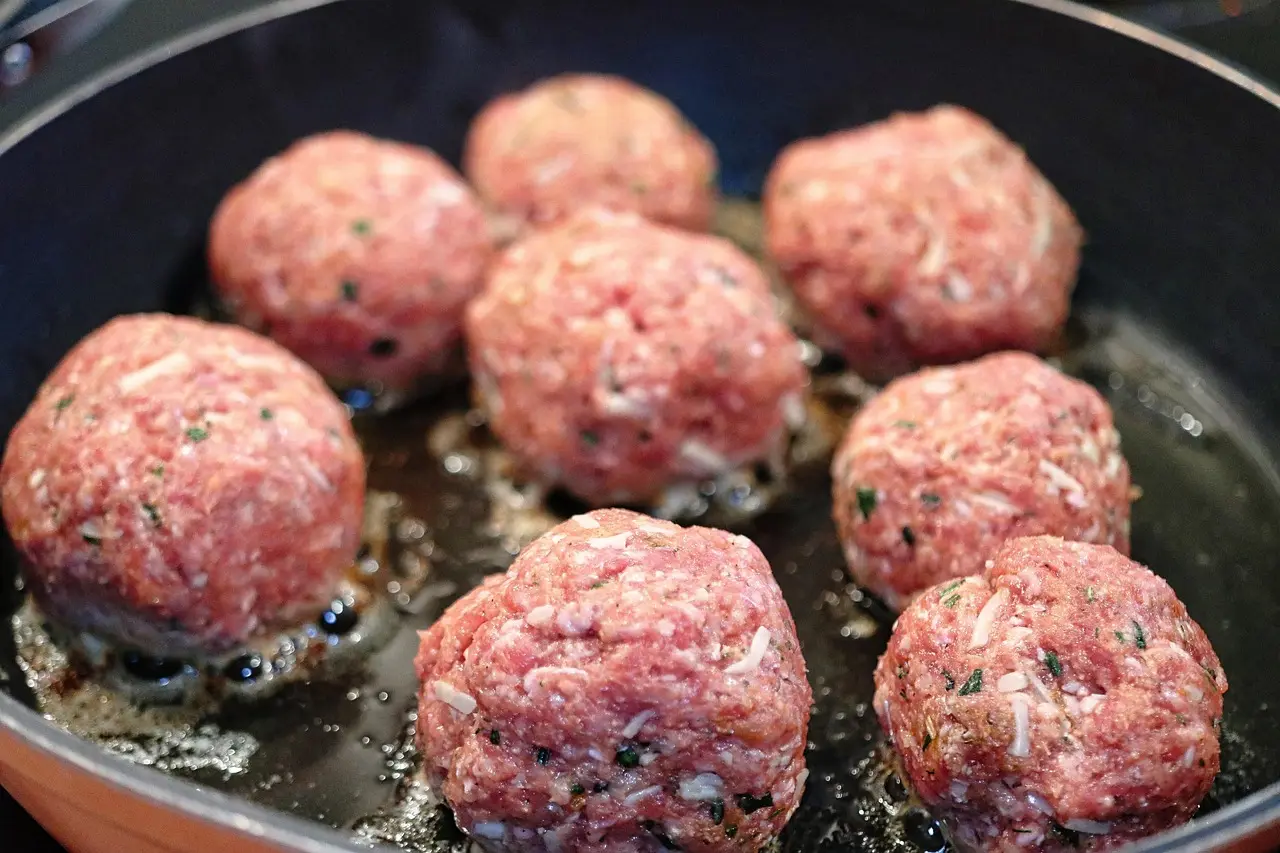
A frying pan is just a shallow pan with a handle, and it might be the hardest-working object in your kitchen. Eggs, pancakes, a steak, a quick stir of onions: most weeknight dinners pass through one. Cooks have used it for thousands of years, from copper pans in ancient Mesopotamia to the non-stick pan bought last month 1. Along the way it picked up a festival, a religious rulebook and at least one famous race.
Background
The design barely changes: a flat base, low sloping sides, a long handle for keeping hands away from the heat 1. What changes is the metal. Cooks have used cast iron, carbon steel and tin-lined copper; today most pans are aluminium, stainless steel, a sandwich of both, or coated with a non-stick layer 1. Bare cast iron and carbon steel go non-stick on their own over time. Oil heated onto the surface again and again polymerises into a slick black skin cooks call seasoning 12.
A small bonus: a cast-iron pan can add useful iron to food, good news for anyone short of it and worth knowing for anyone with the iron-overload condition haemochromatosis 2.
History
Mesopotamian cooks already used copper frying pans 1. The Greeks called theirs tēganon; the Romans had the patella and the sartago 1. That Roman patella never really left the kitchen. It lives on in Spanish paella and Italian padella 1. The English word "pan" comes from Old English panna 1.
Non-stick is older than you think. At Cumae, near Naples, archaeologists found a dump of around 50,000 fragments of pots, pans and lids from the reigns of Augustus and Tiberius (27 BCE–37 CE). Many pans had a thick red coating inside to stop food sticking 3. These "pans from Cumae" sold across the Roman world, from Spain to Britain, and the Roman cookbook De Re Coquinaria recommends them for chicken stew 3.
For centuries cooking happened on an open hearth, so pans grew legs. In America the three-legged frying pan was called a spider 1. Spiders stood over a heap of coals raked onto the hearth, and wrought-iron ones from the 1700s and early 1800s often had hearts or punchwork on their handles 6. When enclosed kitchen stoves arrived in the mid-19th century, the legs came off and the flat-bottomed cast-iron skillet was born 12. In the United States, Griswold (from 1865), Wagner (1891) and Lodge (1896) made the skillets many families still use 2.
The next big shift came from a laboratory accident. In 1938 the DuPont chemist Roy Plunkett opened a gas cylinder that should have been full and found a waxy white powder instead. It was slippery, resisted heat and almost nothing stuck to it 4. The new material, later sold as Teflon, went first to the Manhattan Project, not the kitchen 4. In France, the engineer Marc Grégoire found a way to bond it to aluminium. The best-known story says his wife, Colette, challenged him to coat a pan. He patented the method in 1954, and in 1956 the couple launched Tefal, which was selling three million items a year by 1960 15. Cheap non-stick pans then pushed cast iron aside in the 1960s and 70s, until cooks rediscovered heavy iron pans in recent years 2.
Customs, rules and rituals
The frying pan has its own holy day: Shrove Tuesday, the day before Lent. Christian households used up their eggs, milk and sugar before the forty days of fasting, and pancakes were the obvious answer 8. In Olney, Buckinghamshire, legend says a woman making pancakes in 1445 heard the shriving bell and ran to church still holding her pan 78. The town still runs that sprint, pans in hand, flipping pancakes as they go 8. It stopped during the Second World War, and the vicar, Canon Ronald Collins, revived it in 1948 with thirteen runners 7. Since 1950 the women of Liberal, Kansas, have raced the same day, and the two towns compare times and swap prizes 7.
Jewish dietary law turns pans into a matter of rules too. A kosher kitchen keeps separate pots, pans, dishes and cutlery for meat and for dairy, because hot food is held to absorb taste from the vessel 9. A pan used the wrong way needs a special koshering process before it can be used again 9.
Place in human experience
The frying pan sits at the centre of domestic life, which is why so many stories about it involve home and family. The Olney race puts an ordinary household tool, and the ordinary woman holding it, at the centre of a town's identity, and has done so since, legend says, 1445 78.
The pan also tracks how people lived. Legs for the open hearth, flat bottoms for the iron stove, then a space-age coating once kitchens filled with plastic and chemistry 124. Each version fits the home of its time.
And cast iron, which can outlast whoever bought it, carries memory. A pan seasoned over decades holds the polymerised oil of every meal cooked in it 2. Look after one and it can outlast the cook who bought it.
Sources
- "Frying pan", Wikipedia, https://en.wikipedia.org/wiki/Frying_pan
- "Cast-iron cookware", Wikipedia, https://en.wikipedia.org/wiki/Cast-iron_cookware
- "Fragment of antique non-stick pan has been discovered in Italy", Imperium Romanum, https://imperiumromanum.pl/en/discoveries/fragment-of-antique-non-stick-pan-has-been-discovered-in-italy/
- "Roy J. Plunkett", Science History Institute, https://www.sciencehistory.org/education/scientific-biographies/roy-j-plunkett/
- "Marc Grégoire", Wikipedia, https://en.wikipedia.org/wiki/Marc_Gr%C3%A9goire
- Paul Locher, "Spiders and salamanders were denizens of early fireplaces", Farm and Dairy, https://www.farmanddairy.com/?p=896986
- "History and Tradition", Olney Pancake Race, https://olneypancakerace.org/?p=5
- "Shrove Tuesday", Wikipedia, https://en.wikipedia.org/wiki/Shrove_Tuesday
- "The Kosher Kitchen", Chabad.org, https://www.chabad.org/library/article_cdo/aid/113425/jewish/Kosher-Kitchen.htm