Almonds
Almonds: not really nuts, buried with Tutankhamun and grown by the tonne along the Murray. History, customs and how to buy and store them.
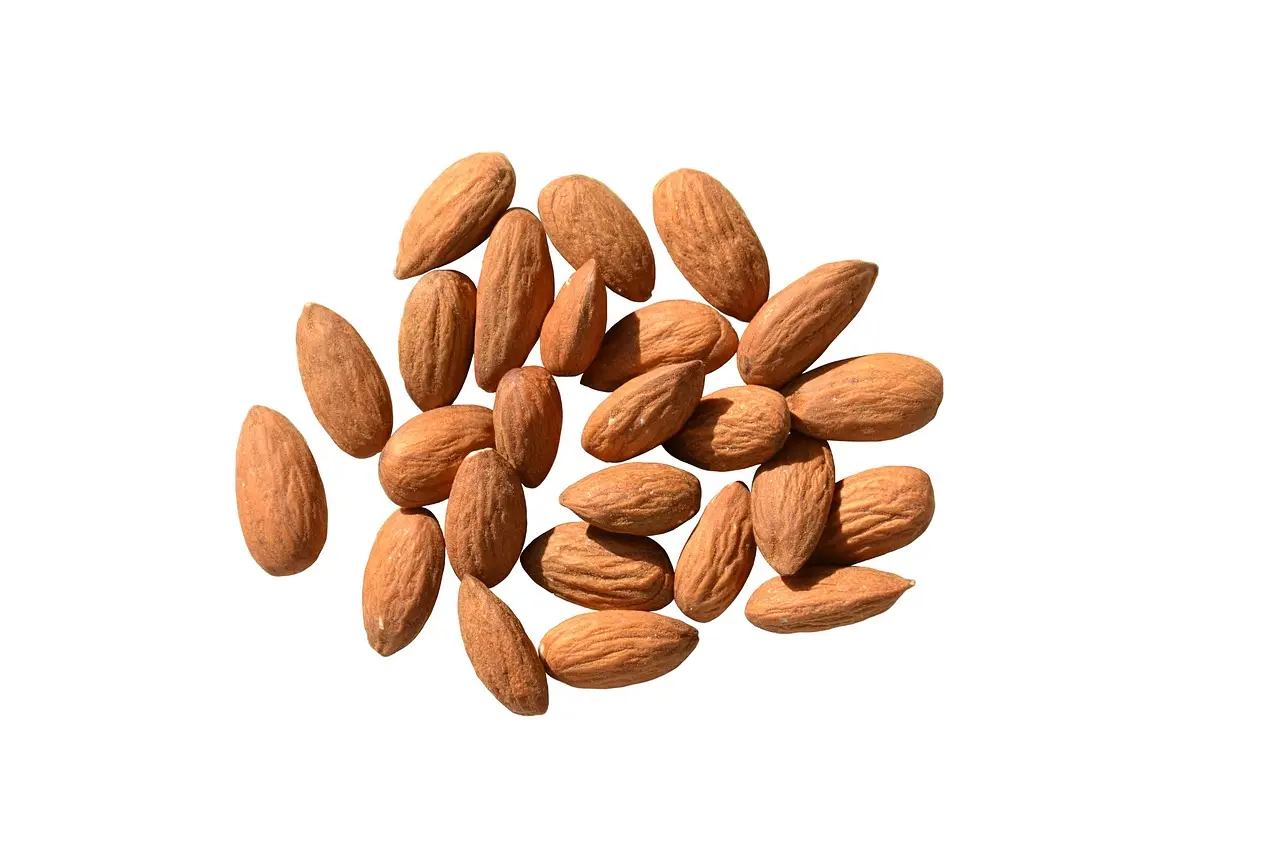
Crack an almond and you're holding a seed, not a nut. The almond tree (Prunus amygdalus) is a cousin of peaches and plums, and its "nut" is the stone inside a fruit 1. People have eaten almonds since the Bronze Age, carried them into tombs, carved their flowers into holy lamps and sugared them for weddings. And here's a fun one for trivia night: Australia grows more almonds than anywhere outside the United States 1.
Background
Botanists call the almond a drupe: an outer hull, a hard shell, and the seed inside, "which is not a true nut" 1. The tree flowers in white to pale pink before its leaves appear in early spring 1.
There are two kinds. Sweet almonds are the ones we eat. Bitter almonds are a different story: they can yield 4 to 9 milligrams of hydrogen cyanide per almond, about 42 times the trace amounts in sweet ones 1. That's why the almonds in your shopping trolley are always sweet.
The world grew nearly 4 million tonnes of almonds in 2024. The United States grew about half, Australia came second with 370,000 tonnes, and Spain sat just behind 1. Most of California's crop relies on more than a million beehives trucked into the orchards each February, the biggest managed pollination event on earth 1. Back home, around 10,000 people work in the Australian almond industry 4.
History
Almonds probably first grew across Iran, Anatolia and Central Asia, with Iran the main centre 1. Domesticated almonds turn up in the Early Bronze Age, between 3000 and 2000 BCE, and Tutankhamun went to his tomb around 1325 BCE with almonds, probably imported from the Levant 1.
The name has travelled too. "Almond" comes from Old French almande, from Late Latin amandula, from the Greek amygdálē 1.
Sugar-coated almonds may descend from honey-coated almonds eaten in ancient Rome. A popular legend credits a Roman confectioner called Julius Dragatus, who supposedly served them at weddings and births, but nobody has proved he existed 2. Marzipan, the sweet almond paste, came along in the Middle Ages 1.
Customs, rules and rituals
- The Bible. Almonds appear ten times. Aaron's rod sprouts almond flowers in Numbers 17, and the golden menorah had cups shaped like almond blossoms 1. In Jeremiah, God plays on two Hebrew words, shaqed (almond) and shoqed (watching) 1.
- Weddings. Sugared almonds, often called Jordan almonds or, in Greece, koufeta, are classic wedding favours. They often come in fives for happiness, health, long life, wealth and fertility 2. Many Sephardic Jews give each guest five almonds before weddings and other special occasions 1.
- Christmas in Scandinavia. Danish families serve risalamande, a rice pudding with whipped cream and chopped almonds. On Christmas Eve one whole almond hides in the bowl, and whoever finds it wins a small prize, often a marzipan pig 3. In Sweden, tradition says the finder will marry within a year 3. The almond present probably began in Denmark around 1800, when an almond replaced the bean hidden in French Epiphany cakes 3.
Place in human experience
Few foods have meant so much to so many households. An almond blossom carved into the menorah, five sugared almonds at a Greek wedding, a hidden almond turning a Danish Christmas into a game: in each case one small seed marks a big moment 123.
There's also a sneaky joy in the Scandinavian rule that the winner can hide the almond so everyone else keeps eating 3. Any dessert that makes people eat more of it on purpose is a good dessert.
And almonds have stretched to fit modern kitchens. Ground almond meal stands in for wheat flour in gluten-free baking, and almond milk works as a dairy swap for people avoiding lactose and for vegans 1.
How to buy, store and use it
Picking good ones. Look for almonds that are whole, evenly coloured and dry. Skip packets with lots of broken bits or dust if you want them for snacking; save those for baking.
Where to find them. Australian almonds come mainly from the Murray River corridor across New South Wales, Victoria and South Australia 1. In Coles, Woolworths, Aldi and IGA you'll find them in the nut aisle (whole, roasted, salted), in the baking aisle (flaked, slivered, blanched and almond meal), and in the fridge or long-life section as almond milk.
Storage. Almonds keep for around a year in the fridge, and they turn rancid faster in the heat 1. In an Australian summer, the fridge or freezer beats the pantry. Use an airtight container so they don't pick up other smells.
Using them.
- Toast flaked almonds for salads, curries and cakes.
- Swap up to a third of the flour in a cake for almond meal for a moist crumb.
- Blend soaked almonds with water and strain for homemade almond milk.
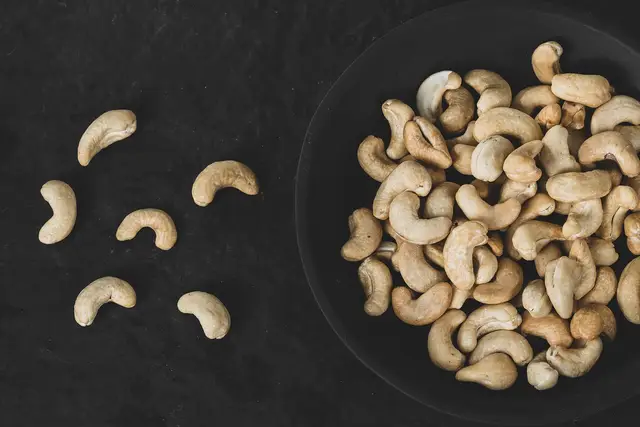
- Swaps: cashews for creamy sauces, hazelnuts for baking, sunflower seeds for a nut-free lunchbox.
Sources
- "Almond", Wikipedia. https://en.wikipedia.org/wiki/Almond
- "Dragée", Wikipedia. https://en.wikipedia.org/wiki/Drag%C3%A9e
- "Risalamande", Wikipedia. https://en.wikipedia.org/wiki/Risalamande
- Almond Board of Australia. https://www.almondboard.org.au/