Fish Sauce
Open a bottle of fish sauce and the smell hits like low tide. Then splash a teaspoon into a curry, a dressing or a pot of soup and something magic…
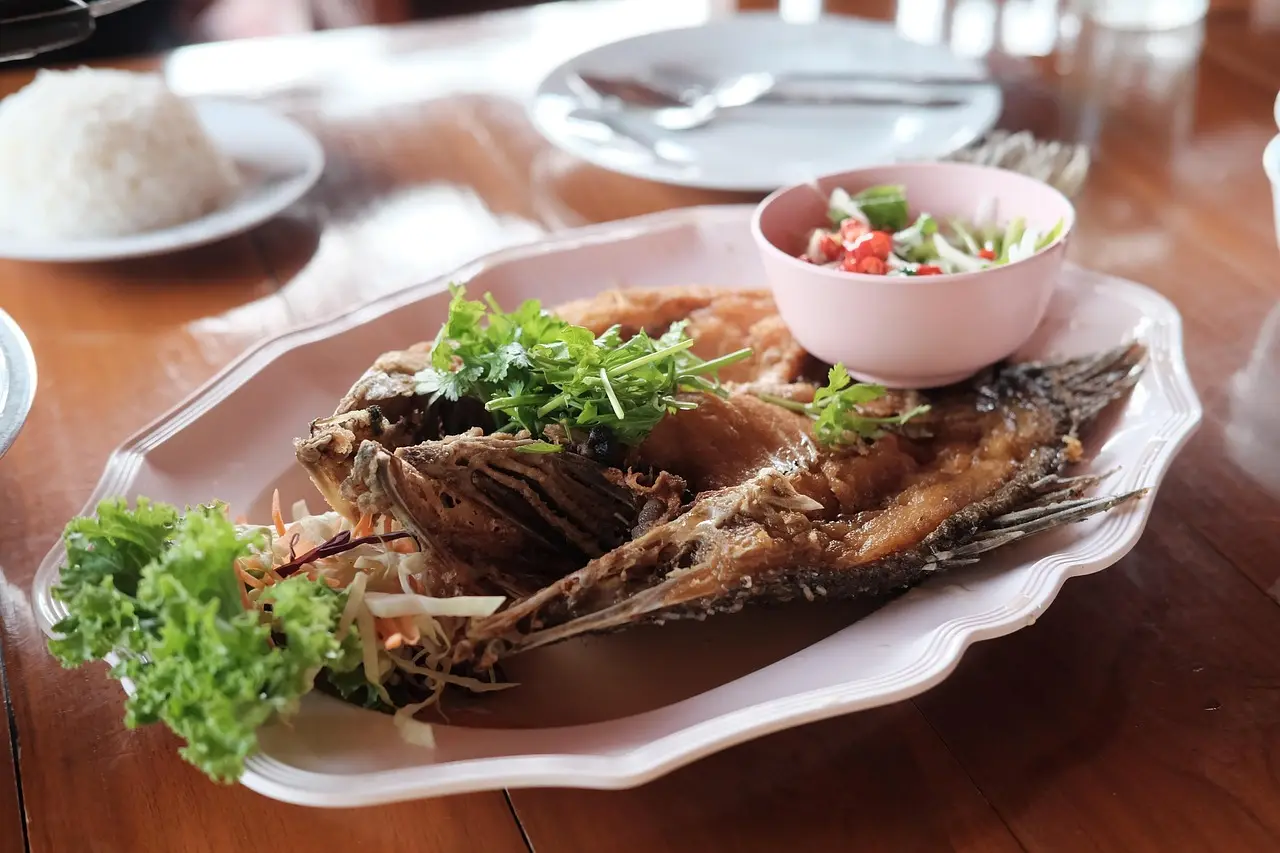
Open a bottle of fish sauce and the smell hits like low tide. Then splash a teaspoon into a curry, a dressing or a pot of soup and something magic happens: the fishiness vanishes and the whole dish tastes deeper and more like itself. Fish sauce is just fish or krill packed in salt and left to ferment, sometimes for up to two years 1. Its savoury punch comes from glutamates, the source of umami 1. Southeast Asia runs on it, and ancient Rome did too.
Background
The recipe could fit on a sticky note. Layer small fish with salt, somewhere between 10 and 30 per cent salt by weight, seal it up, and wait 1. The fish break down into an amber liquid. Time is the chef: a long ferment knocks back the fishy edge and leaves a rounder, nuttier, more savoury flavour 1.
On Vietnam's Phu Quoc island, makers still pack black anchovies with salt at about three parts fish to one part salt, in huge wooden barrels that can stand two to four metres tall and last up to 60 years. The fish ferment for six to twelve months before bottling 5.
When you shop, look at the label for "first press" and a nitrogen number written as °N. Higher means more protein from the fish and, usually, a better sauce 1. On Phu Quoc, 30°N counts as high quality and 40°N as premium 5. Cheaper brands sometimes add caramel, molasses or roasted rice to a second extraction to fake the colour and depth 1.
History
The Greeks got there early. By the fourth or third century BC they were making garos from fish scraps 1. National Geographic traces the idea further, to Greek and Phoenician cooks, with garum residue turning up in amphorae from fifth-century BC shipwrecks 2.
Then Rome went all in. Romans called it garum or liquamen, and made it by layering fish guts from anchovies, mackerel, whitebait and tuna with salt and herbs, then leaving the lot in the sun for months 2. Get the salt wrong and it rots; get it right and it ferments 2. Strain off the liquid and you have garum. The sludge left behind, allec, went to cheaper tables 2.
The smell was so bad that factories, called cetariae, sat outside towns 24. Spain's Andalusian coast was the powerhouse, with Baelo Claudia near the Strait of Gibraltar catching tuna as they migrated 2. The best stuff, garum sociorum made from mackerel at Carthago Nova, cost a fortune, and Pliny the Elder compared its scent to fine perfume 2. Seneca was less charmed and called it an "expensive bloody mass of decayed fish" 4. Amphorae have turned up from Monte Testaccio in Rome all the way to Hadrian's Wall 2.
The best garum story comes from Pompeii. Aulus Umbricius Scaurus, a freed slave who grew rich on fish sauce, laid a mosaic floor in his atrium showing jars of his product, a Roman billboard you walked across 2. When Vesuvius buried his house, jars of garum went with it. Scientists led by Annamaria Ciarallo studied the fish bones left in seven jars and found bogue, a fish caught in July and early August. With a month to ferment, that pointed to the traditional eruption date of 24 August 79 AD 3.
After Rome fell, garum faded in the West, though Byzantine and Arab cooks kept using it 4. Its closest living relative in Europe is colatura di alici, an anchovy sauce from Italy's Campania coast 4.
In Asia, Chinese records from about 2,300 years ago describe fermented fish condiments, some mixed with soybeans 1. By around 50 to 100 BC fish sauce had taken off in Southeast Asia while China moved towards soy 1. Food scholars call this the "bean-fish divide": fermented beans in the north-east, fermented fish in the south-east 1. In Vietnam the tradition traces back some 300 years to the Champa kingdom, and Phu Quoc and Phan Thiet are the famous names 1.
Here is the fun bit. The Hokkien word for a fish brine, kê-tsiap or kôe-chiap, may be the root of "ketchup" 17. British traders met it in the 1600s and 1700s; the word first shows up in English in 1682, and British cooks made it from mushrooms long before tomatoes took over 7. Your burger sauce has a fishy family tree.
Customs, rules and rituals
Every country has its own name and style. Thailand's nam pla tends to be milder than Vietnamese nuoc mam 1. In the Philippines, patis is a by-product of making bagoong, a fermented fish paste 1.
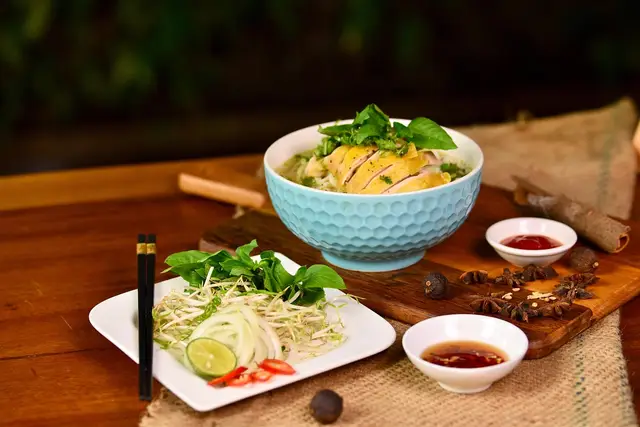
In Vietnam, fish sauce often comes to the table as nuoc cham: fish sauce, lime juice or vinegar, sugar and water, with raw garlic and bird's eye chilli 6. It goes with spring rolls, noodle bowls and crisp pancakes, and every region tweaks it. The north adds pork and shrimp broth, the centre keeps it strong with fresh chilli, and the south sweetens it with palm sugar and coconut water 6. Vegetarians swap in soy sauce or Maggi seasoning to make nuoc cham chay 6.
Rome had a dietary twist too. Pliny mentions a garum that Jewish Romans may have used, since ordinary garum might not have used only kosher seafood, and jars labelled as kosher garum have turned up at Pompeii 4.
Place in human experience
Fish sauce gets into everything. Romans dressed nearly every dish with it, mixing it with pepper, vinegar, wine or oil, and Pliny even prescribed it for dog bites and earaches 2.
It also carries pride of place. In 2012 Phu Quoc fish sauce became the first food from Southeast Asia to win the EU's Protected Designation of Origin, and in 2021 Vietnam listed its traditional making as national intangible cultural heritage 5. Fakes are common and anchovy stocks are falling, so that heritage is under pressure 5.
Learn to love that low-tide whiff and a big slice of the world's cooking opens up, from a Roman feast to a Hanoi noodle bowl.
Sources
- "Fish sauce", Wikipedia, https://en.wikipedia.org/wiki/Fish_sauce
- "What is garum?" (feature on Rome's fish sauce), National Geographic History, https://www.nationalgeographic.com/history/history-magazine/article/what-is-garum-rome-fish-sauce
- "Fish sauce used to date Pompeii destruction", NBC News, https://www.nbcnews.com/id/wbna26947215
- "Garum", Wikipedia, https://en.wikipedia.org/wiki/Garum
- "Phu Quoc fish sauce", Wikipedia, https://en.wikipedia.org/wiki/Phu_Quoc_fish_sauce
- "Nước chấm", Wikipedia, https://en.wikipedia.org/wiki/N%C6%B0%E1%BB%9Bc_ch%E1%BA%A5m
- "Ketchup", Wikipedia, https://en.wikipedia.org/wiki/Ketchup