Fresh Herbs
A handful of fresh herbs is the cheapest magic trick in the kitchen. Tear some basil over pasta, scatter coriander on a curry, stir dill through rice, and…
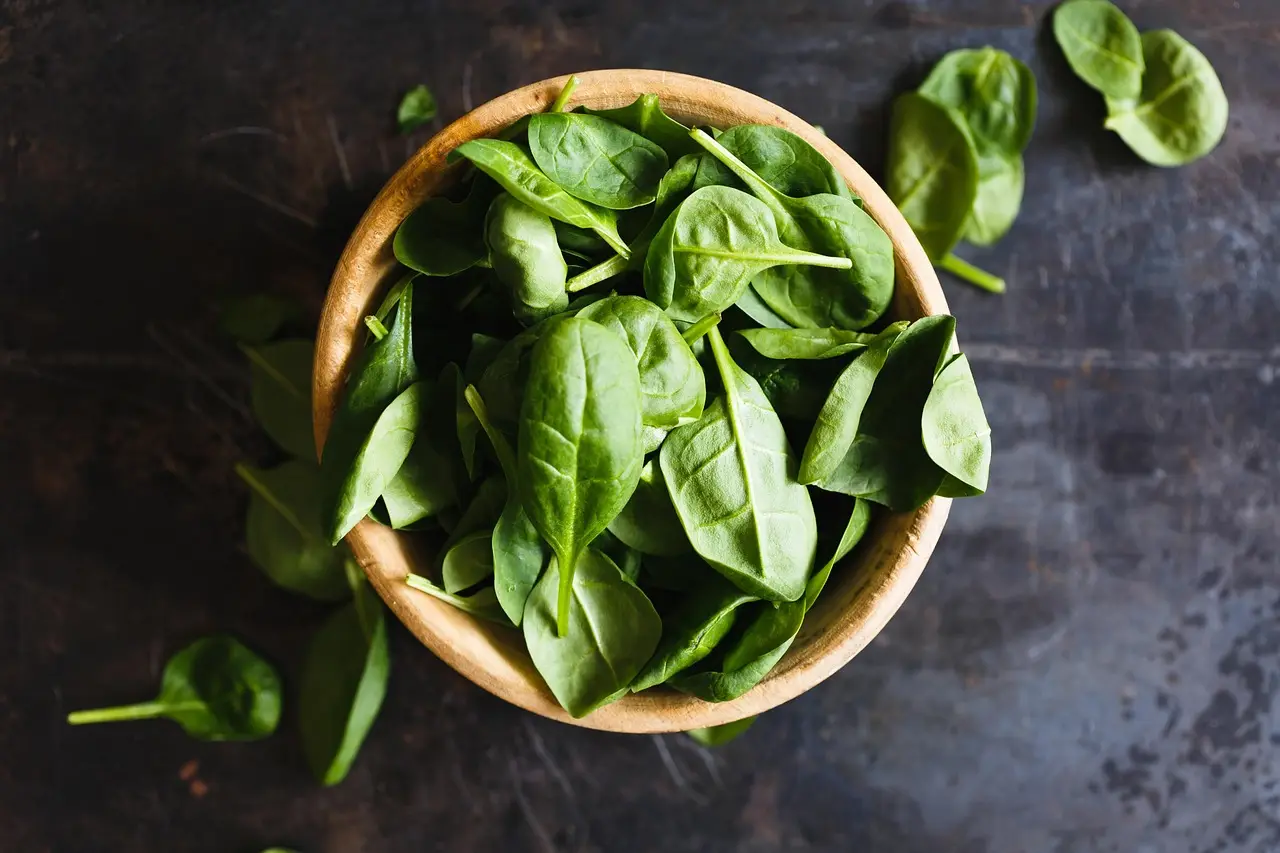
A handful of fresh herbs is the cheapest magic trick in the kitchen. Tear some basil over pasta, scatter coriander on a curry, stir dill through rice, and a plain dish suddenly smells like a garden. Cooks call the leafy green or flowering parts of a plant "herbs", fresh or dried; seeds, bark, roots and fruit, usually dried, count as spices 1. People have grown, eaten and prayed with herbs for at least seven thousand years, and nearly every cuisine on earth has a favourite green bunch.
Background
The word comes from the Latin herba, meaning grass or herb 1. That is a nice reminder of how ordinary herbs once were: things that grew by the door, free for the picking.
Fresh herbs split roughly into two camps. The tender ones, like parsley, chervil, chives and tarragon, lose their perfume fast with heat, so they go in at the end. The robust, pungent or resinous ones, the sort tied into a French bouquet garni, release their flavour slowly over long cooking 3. Knowing which camp an herb sits in is half the skill of cooking with it.
History
The oldest records are medical. Around 5000 BC, Sumerians wrote herbal remedies on clay tablets 1. The Greek philosopher Theophrastus later sorted the whole plant world into three groups: trees, shrubs and herbs 1.
In Europe, monasteries kept the knowledge alive. Around the end of the eighth century, a royal decree for running Charlemagne's estates, the Capitulare de villis, set out how they should be managed 2, and it included a list of 74 herbs to be planted in the royal gardens 1. Historians think the decree was more wish list than reality, but it shows how much a ruler cared about a well-stocked garden 2.
For a peek at what those gardens held, visit the Met Cloisters in New York. Its Bonnefont Cloister, built partly from stone of a Cistercian abbey in southern France, grows more than 250 plants known in the Middle Ages, in raised beds behind wattle fences 4. The beds are sorted by use: kitchen and seasoning plants, medicinal herbs, salad plants, plants for artists, plants for love and marriage, even magic plants 4. Medieval people did not draw sharp lines between a cooking herb, a cure and a charm against evil 4.
French cooks later turned herb use into a rulebook. The classic fines herbes blend is parsley, chives, tarragon and chervil, chopped fine for eggs, fish, chicken and light sauces 3. In 1903 Auguste Escoffier grumbled that an "omelette aux fines herbes" flavoured only with parsley did not deserve the name 3. Even in 1938, Larousse Gastronomique admitted plenty of cooks still cheated with parsley alone 3.
Customs, rules and rituals
Herbs turn up in faith as well as food. At the Passover Seder, Jewish families eat maror, bitter herbs, following Exodus 12:8 5. The bitterness recalls the hard labour of slavery in Egypt 5. Many families use romaine lettuce, which turns bitter as it matures; Ashkenazi Jews in colder northern lands, where leafy greens did not grow readily, adopted horseradish 5. The rules are firm: eat it raw, with no vinegar or cooking, and at least an olive-sized portion, dipped in sweet charoset 5.
In Iran, herbs are the meal's best friend. Sabzi khordan, a platter of fresh basil, mint, parsley, tarragon, coriander, leek and radish, sits on the table with almost any meal, across Iranian, Armenian, Azerbaijani and Kurdish kitchens 6. Diners roll the herbs into bread with cheese and walnuts to make little bites 6. At Nowruz, the Persian New Year, families sit down to sabzi polo: rice green with coriander, dill, chives, fenugreek and parsley, served with white fish 7.
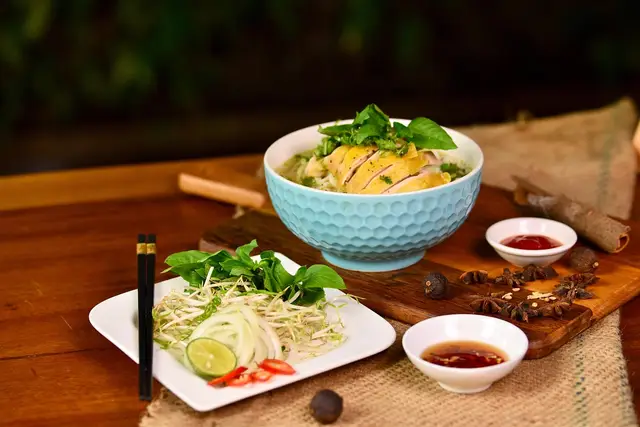
In Vietnam, a plate of raw greens and herbs, rau sống, is a must with dishes such as the crisp pancake bánh xèo and hot pot 8. Expect Thai basil, Vietnamese mint (rau răm), perilla, coriander, dill and spearmint, matched to the food: perilla with crab and shellfish, spearmint with strongly fishy dishes 8.
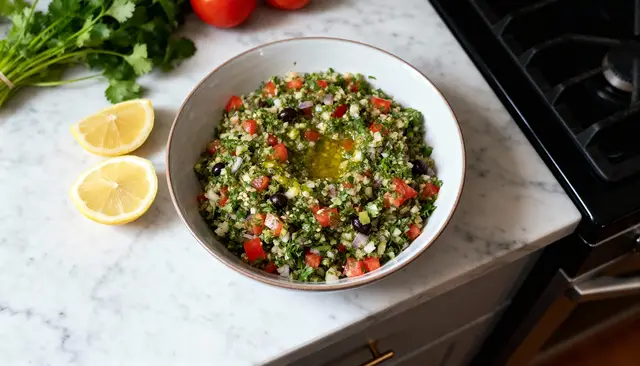
In Lebanon and Syria, parsley is not a garnish but the main event. Tabbouleh comes from the mountains there, and a Palestinian version is described as 80 per cent parsley 9. Western versions usually flip the ratio and pile in the bulgur 9.
Place in human experience
Herbs sit where food, medicine and belief overlap. They appear in the rites of Hellenistic religion, Anglo-Saxon paganism and Hinduism 1, and on the Seder plate as a taste of history 5. Few other foods have been asked to heal a cough, flavour a stew, ward off evil and tell a story about slavery and freedom.
They also mark the seasons and the start of things. A new year in Iran tastes of green rice 7. Lebanon has celebrated a National Tabbouleh Day on the first Saturday of July since 2001 9. Vietnamese cooks talk of balancing five colours on the plate, and fresh green herbs supply the green 8.
There is something democratic in a bunch of herbs, too. A pot of mint on a windowsill costs very little, yet it can make the humblest bowl of rice or lentils feel generous. Grow one, and you join one of the oldest kitchen habits there is.
Sources
- "Herb", Wikipedia, https://en.wikipedia.org/wiki/Herb
- "Capitulare de villis", Wikipedia, https://en.wikipedia.org/wiki/Capitulare_de_villis
- "Fines herbes", Wikipedia, https://en.wikipedia.org/wiki/Fines_herbes
- Sarah McGowan, "The Bonnefont Cloister Herb Garden", Internet Medieval Sourcebook, Fordham University, https://sourcebooks.fordham.edu/medny/herbgdn1.asp
- "Maror", Wikipedia, https://en.wikipedia.org/wiki/Maror
- "Sabzi khordan", Wikipedia, https://en.wikipedia.org/wiki/Sabzi_khordan
- "Sabzi polo", Wikipedia, https://en.wikipedia.org/wiki/Sabzi_polo
- "Vietnamese cuisine", Wikipedia, https://en.wikipedia.org/wiki/Vietnamese_cuisine
- "Tabbouleh", Wikipedia, https://en.wikipedia.org/wiki/Tabbouleh