Lemongrass
Lemongrass is a tall, tough tropical grass that smells like someone just zested a lemon in the room. Snap a stalk and you get it straight away. It…
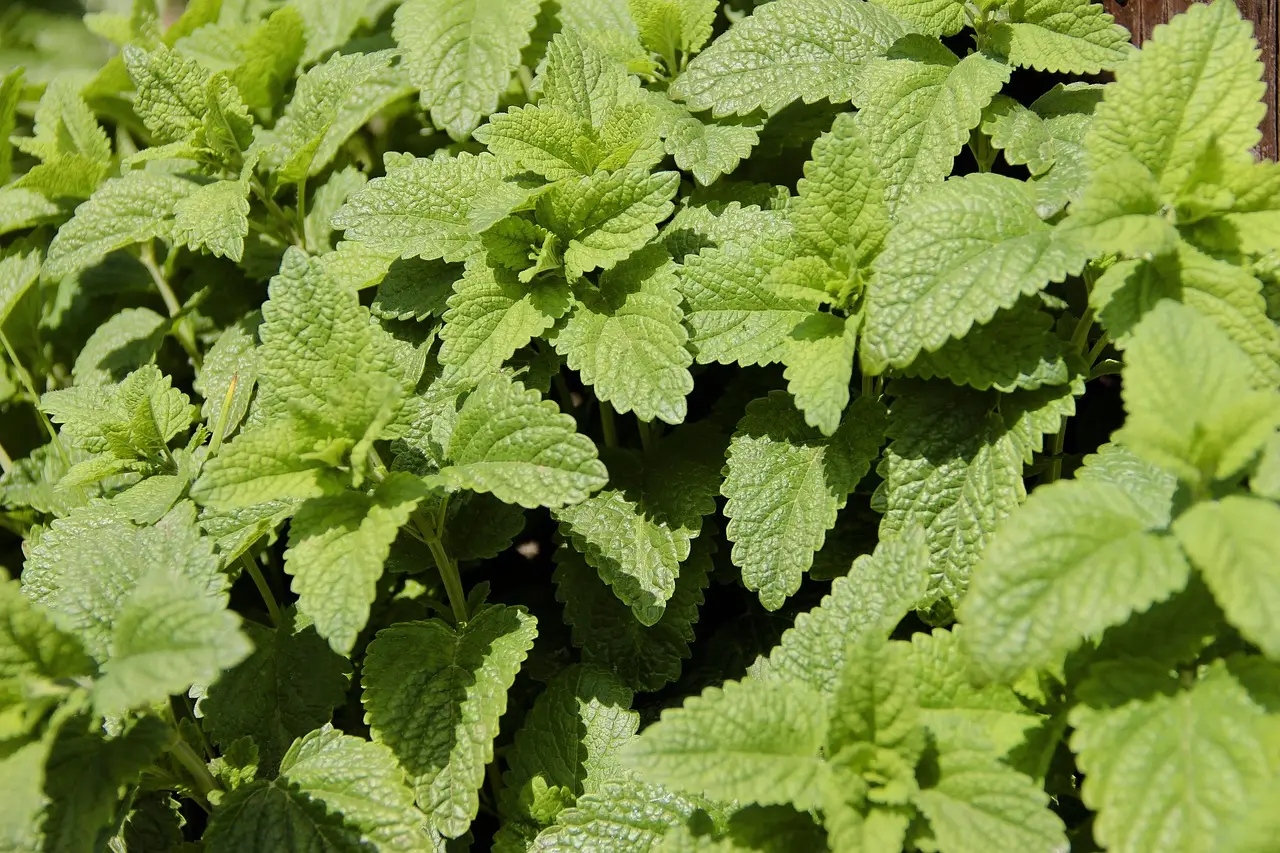
Lemongrass is a tall, tough tropical grass that smells like someone just zested a lemon in the room. Snap a stalk and you get it straight away. It flavours soups in Thailand, curry pastes in Malaysia, teas in Brazil and soaps and perfumes almost everywhere. It started out in South Asia, travelled the world on the back of its fragrant oil, and now grows across the tropics 123. For a humble grass, it has been busy.
Background
There are two main lemongrasses, and the difference matters more to perfumers than to cooks. West Indian lemongrass, Cymbopogon citratus, is the one you usually find in shops. East Indian lemongrass, Cymbopogon flexuosus, also called Cochin or Malabar grass, is prized mainly for its oil 12. They belong to a genus of about 80 species of aromatic grasses 1.
That lemony hit comes from citral, the main compound in the oil 1. Citral is also used to flavour food and soft drinks, to scent perfumes and soaps, and even in making vitamin A 12.
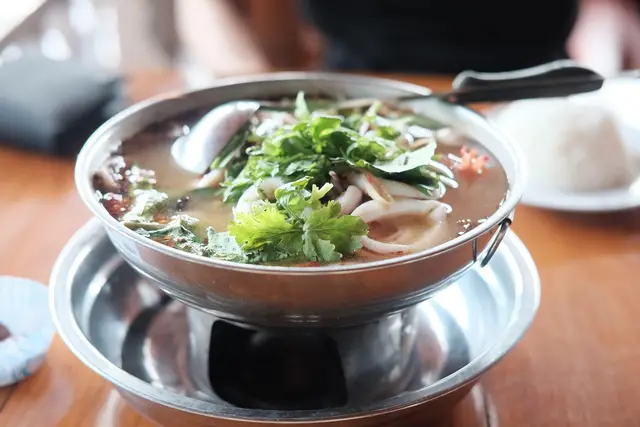
In the kitchen, lemongrass goes into teas, soups and curries, and suits poultry, fish and seafood 3. In the Malay and Peranakan kitchen it is one of the building blocks of laksa's spice paste, pounded with galangal, turmeric, chillies, dried shrimp and candlenuts 4.
History
Where it came from. Sources agree on South Asia. One pharmacology review says C. citratus is native to Sri Lanka and South India 3; Purdue University's crop factsheet places it in southern India and Ceylon, and the East Indian type in India 2. A Sri Lankan scientific monograph notes the plant still grows wild in Sri Lanka 1.
An old medicine, a newer industry. People in India have used lemongrass as medicine for more than 2,000 years 1. Turning it into oil came much later: the first recorded distillation happened in the Philippines in the 17th century 1.
Crossing oceans. In 1799 lemongrass reached Jamaica 1. It was grown in the United States for the first time in 1917, and around the First World War Julia Samayoa grew it in Guatemala 1. Kerala in India, where the East Indian type is thought to have originated, only began cultivating and distilling the grass systematically about a century before that 1999 report, and after the Second World War lemongrass became a full plantation crop 1.
Boom and slow fade. For a long time lemongrass oil was a main source of natural citral. Synthetic citral and citral from another plant, Litsea cubeba, cut into that trade, though growers were still producing more than 1,000 tonnes of oil a year in the late 1990s 1.
Today C. citratus turns up in a long list of countries, from Argentina, Brazil and Cuba to Kenya, Tanzania, Indonesia, the Philippines and Thailand 1. Commercial crops grow in Guatemala, India, China, Paraguay, Sri Lanka and parts of Africa and the Americas 2.
Customs, rules and rituals
Lemongrass is less about strict rules and more about everyday habits.
Names tell the story. Thai cooks call it ta-khrai, Indonesians sereh, Hindi speakers sera, Mexicans zacate limón and Ethiopians tej-sar 3. Brazilians have two names, capim-cidrão and capim-santo 3; the second translates as "holy grass", which tells you how highly people rate it.
The cup of tea. Across many cultures the simplest way to use lemongrass is to steep it in hot water. Purdue lists herbal teas and other non-alcoholic drinks among its main food uses, alongside baked goods and sweets 2.
The home remedy. Lemongrass has a long folk reputation as a digestive aid and an insect repellent 2. Traditional healers across Southeast Asia, Brazil and Ethiopia use it in decoctions and remedies 3. Lab studies have found its oil acts against some microbes and insects 12, though a kitchen herb is not a cure, and anyone with a health problem should still see a doctor.
Safe to eat. In the United States it is generally recognised as safe as a plant extract or essential oil 2, so cooks can use it freely.
Place in human experience
Lemongrass is one of those plants that slips between the kitchen, the medicine cabinet and the bathroom shelf. The same stalk that perfumes a soup ends up, as oil, in soaps and creams 2. Few ingredients lead such a double life.
Its journey also mirrors the age of empires and plantations. A grass that families in India and Sri Lanka knew for millennia became, within a few centuries, a crop distilled and planted from the Philippines to Jamaica, Guatemala and Kerala 1. Stills in factories turned fresh-cut grass into the lemon scent of the world's soaps and perfumes 12.
Yet in home kitchens it stays personal. A bruised stalk in the pot is a small daily ritual for cooks from Bangkok to Belém, and a smell that can fill a whole house. In laksa it is one quiet voice in a loud paste 4; in a cup of capim-santo, it is the whole song. If you have never cooked with it, start simple: slice the tender lower part thinly, or bash a stalk and drop it into a broth, and let your nose tell you when it is right.
Sources
- Purnima Jayasinha, Dilmani Warnasuriya and Harshani Dissanayake, Lemongrass (Cymbopogon citratus): a literature survey, Medicinal and Aromatic Plant Series No. 9, Industrial Technology Institute and National Science Foundation, Colombo, Sri Lanka, 1999. https://dl.nsf.gov.lk/bitstreams/7b656991-fdde-46f5-888d-e257d71bcf7b/download
- "Lemongrass", Center for New Crops and Plant Products factsheet, Purdue University. https://hort.purdue.edu/newcrop/med-aro/factsheets/LEMONGRASS.html
- G. Shah, R. Shri, V. Panchal, N. Sharma, B. Singh and A. S. Mann, "Scientific basis for the therapeutic use of Cymbopogon citratus, Stapf (Lemon grass)", Journal of Advanced Pharmaceutical Technology & Research 2(1), 2011, pp. 3–8 (via PubMed Central). https://pmc.ncbi.nlm.nih.gov/articles/PMC3217679/
- Michael Raffael, "Deconstructing laksa, the fusion dish of Malaysia and Singapore", National Geographic Traveller (UK), updated 16 May 2023. https://www.nationalgeographic.com/travel/article/deconstructing-laksa-fusion-dish-malaysia-singapore