Sesame Oil
Unscrew a bottle of toasted sesame oil and the whole kitchen knows about it: a deep, nutty, almost smoky smell that makes plain rice or blanched greens…
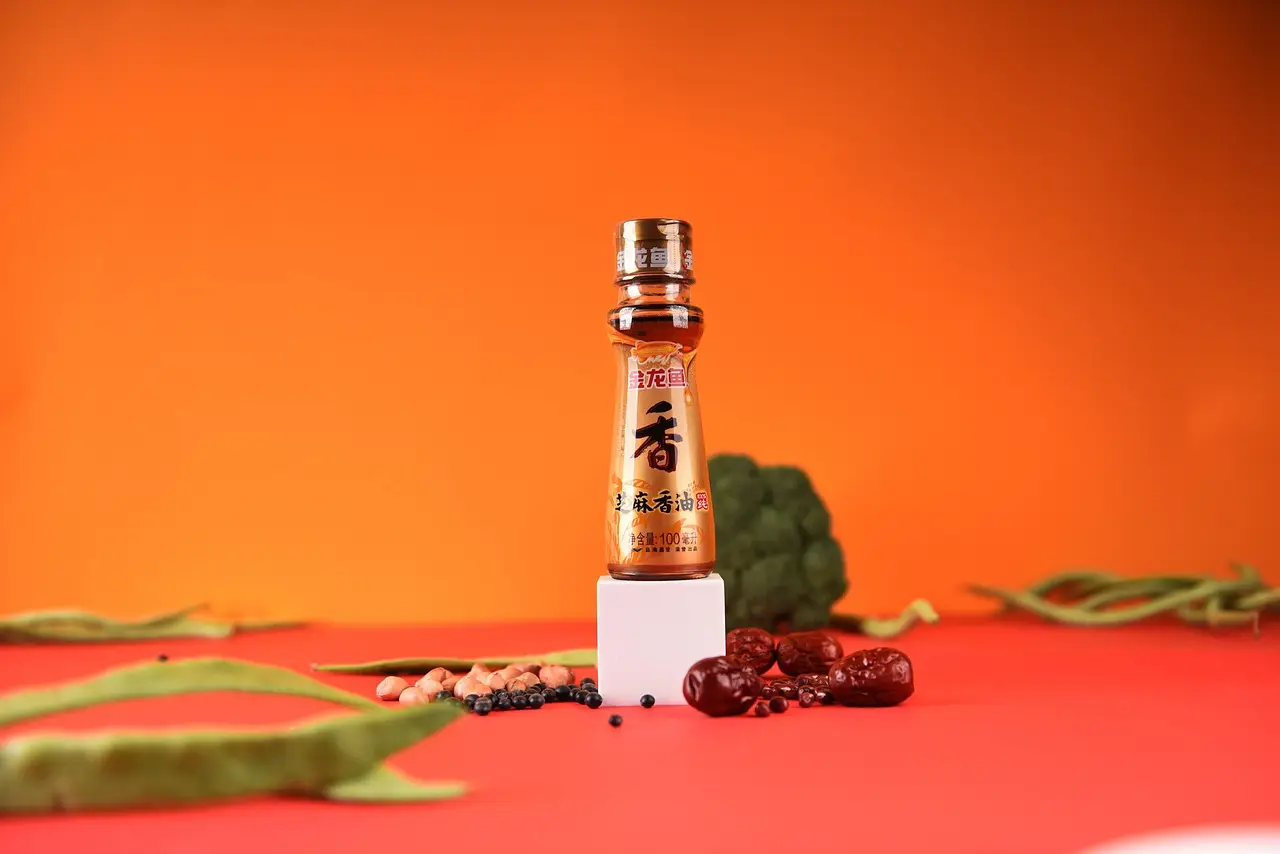
Unscrew a bottle of toasted sesame oil and the whole kitchen knows about it: a deep, nutty, almost smoky smell that makes plain rice or blanched greens taste finished. A few drops go a long way. Sesame oil is pressed from the tiny seeds of one of humanity's oldest crops, and it has lit lamps, oiled skin and seasoned dinners for thousands of years. It even gave us a magic password.
Background
There are really two sesame oils. Light, untoasted oil is a cooking oil, used in South Indian kitchens in states such as Tamil Nadu and Karnataka for curries and gravies 1. Dark, toasted oil is a seasoning, prized in Chinese, Korean and Japanese cooking for dressings and dipping sauces 1. Fry with the first; finish with the second.
The world made about 1.2 million tonnes of sesame oil in 2023, and India and Myanmar together produced about a third of it 1.
History
Sesame earned its reputation as a survivor. It tolerates drought and grows where other crops fail 1. A 1990 Purdue University paper calls it the oldest oilseed crop known, and notes the view that it first came from Africa 3. Archaeology points firmly to the Indian subcontinent for domestication: charred sesame there dates to about 3500–3050 BC 2.
From the Indus Valley it went west. By about 2500–2000 BC the Indus civilisation was likely exporting sesame oil to Mesopotamia, where Sumerians called it ilu and Akkadians ellu, words close to Dravidian names for the plant 12. Egyptians listed sesame seeds as medicine in the Ebers Papyrus (about 1550 BC), and sesame turned up among Tutankhamun's grave goods 2.
Making oil was always hard work. India's traditional press is the ghani, also called kolhu or chekku: an animal-powered stone or wooden mortar with a rotating pestle 4. Sanskrit writings mention oil pressing from about 500 BC 4. Even in the early 20th century, some 500,000 ghanis crushed about 97 per cent of India's oilseeds, and sesame is still partly pressed this way 4. Ghanis also turn in Afghanistan, Sri Lanka, Myanmar and Sudan 4.
Sesame also crossed the Atlantic in a painful chapter. Enslaved West Africans carried knowledge of the plant to colonial America in the 17th century, where it became a subsistence crop and survives in dishes such as Bahamian benny cakes 2.
Customs, rules and rituals
In Korea, sesame oil (chamgireum) sits at the heart of everyday cooking. Blanched vegetable side dishes, namul, are seasoned with soy sauce, sesame oil and garlic, and the oil also goes into japchae noodles and marinades for grilled meat 5. Korean cooks use perilla oil too, a close cousin in the pantry 5.
In India, sesame oil belongs to the body as much as the plate. Ayurveda uses it for abhyanga, a warm oil massage, and for oil pulling, swishing oil around the mouth 1.
And in Babylon it belonged to magic. Babylonian magical practice used sesame oil, which is one theory for a famous phrase 6.
Place in human experience
"Open sesame!" is how Ali Baba's thieves open their treasure cave in Antoine Galland's French translation of the One Thousand and One Nights, published 1704–1717 6. Why sesame? One theory points to the pod, which splits open when ripe 6. Another points to Babylonian sesame-oil magic 6. Others suggest the word isn't the plant at all but a twist on the Hebrew šem, "name" 6. Whatever the reason, a tiny seed became the world's best-known password.
Sesame oil also tells a story about labour and value. The slow ghani, turned by animals, pressed oil for India for more than two thousand years 4. Oil traded from the Indus to Mesopotamia was wealth on the move 12. And the "survivor crop" fed farmers on land too dry for anything else 12.
For many families it's simply the taste of everyday food: the seasoning on Korean namul and japchae 5, and in Tamil Nadu and Karnataka the oil that cooked curries before factory-made oils arrived 1.
Next time you drizzle a few drops over noodles, remember: you're using the oil that crossed from the Indus to Babylon, slid into a pharaoh's tomb and opened a cave full of treasure.
Sources
- "Sesame oil", Wikipedia, Wikimedia Foundation. https://en.wikipedia.org/wiki/Sesame_oil
- "Sesame", Wikipedia, Wikimedia Foundation. https://en.wikipedia.org/wiki/Sesame
- "Sesame", Advances in New Crops (1990 proceedings), Purdue University Center for New Crops and Plant Products. https://www.hort.purdue.edu/newcrop/proceedings1990/v1-225.html
- "Ghani" in Small-scale vegetable oil extraction (Technical Report), Food and Agriculture Organization of the United Nations. http://www.fao.org/4/t4660t/t4660t0b.htm
- "Korean cuisine", Wikipedia, Wikimedia Foundation. https://en.wikipedia.org/wiki/Korean_cuisine
- "Open sesame", Wikipedia, Wikimedia Foundation. https://en.wikipedia.org/wiki/Open_sesame