Star Anise
Star anise looks like something a child would draw: a rusty brown star with eight points, each one cradling a glossy seed. Drop one in a pot and the…
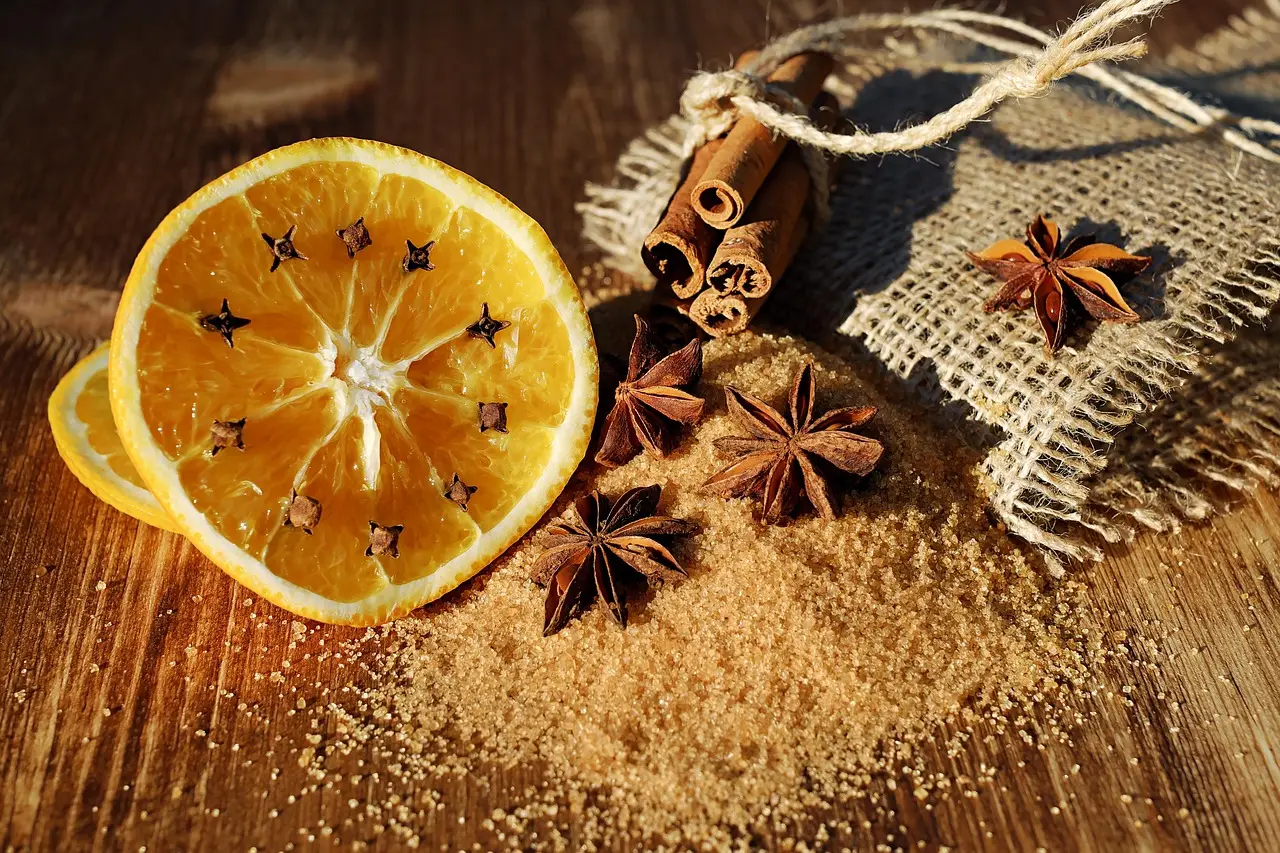
Star anise looks like something a child would draw: a rusty brown star with eight points, each one cradling a glossy seed. Drop one in a pot and the kitchen smells of liquorice and warmth within minutes. It grows on an evergreen tree native to southern China and northern Vietnam, and it carries the backbone flavour of Chinese five-spice and the beef broth of Vietnamese pho 12. It has also, at one point, helped fight a flu pandemic. Not bad for a dried fruit.
Background
The star is the tree's fruit, picked before it ripens and dried until it turns that familiar rusty brown 2. Most have eight points; now and then you find one with more, a small lucky prize in the jar 2. The flavour sits in the husk, not the seeds, and comes mainly from anethole, the same compound that makes aniseed and fennel taste the way they do 2. Star anise simply delivers it louder.
China grows most of the world's crop, with Guangxi province in the south leading the way, and Vietnam close behind 3. Mandarin speakers call it ba jiao and Cantonese speakers baat gok, both meaning "eight corners" 2. The botanical name, Illicium, comes from a Latin word for "to allure", a fair description of that scent 23.
One warning every cook should know. A close cousin, Japanese star anise, looks almost identical once dried but is poisonous 14. In 2003 the US Food and Drug Administration told people to steer clear of star anise teas after about 40 people, 15 of them babies, fell ill with symptoms that included seizures and vomiting; all recovered 4. The agency suspected the toxic Japanese species had crept into the tea 4. Buy your stars from a trusted spice seller and you are fine.
History
In China, star anise turns up as a seasoning in the Song dynasty (960 to 1279) and as a medicine by the Ming dynasty, when a herbal text from 1505 lists its healing uses 3. Traditional Chinese medicine still describes it as warming, used to "disperse cold" and ease pain, and since 2002 China officially classes it as both food and medicine 3.
Its journey west shows in its names. English once called it "badian", borrowed from the Persian badiyan; the spice writer Gernot Katzer thinks that word may come from Chinese ba jiao, though the origin is uncertain 2. Russian and several other languages still use a form of badian 2. In Iran the flavour became the reference point: ordinary European aniseed there gets the name "Roman star anise" 2.
The strangest chapter is a modern one. Star anise is rich in shikimic acid, the starting material for the flu drug Tamiflu 15. When swine flu struck in 2009, NPR reported that it took 30 pounds of pods to make one pound of shikimic acid, and that 90 per cent of the world's star anise came from China 5. Until 2012, Roche used up to 90 per cent of the annual crop for the drug, before switching to a process using fermented bacteria 1.
Customs, rules and rituals
Across China, star anise belongs in five-spice powder alongside cassia, cloves, fennel and Sichuan pepper, usually in equal parts 2. Cooks rub it on meat, stir it into marinades, and use it in slow-steamed pork belly, where its scent works especially well 2. In northern Vietnam it flavours beef soups 2. Thai cooks put it in long-simmered northern stews and in that famous orange iced tea, sweet with condensed milk 2. In Kerala, broken star points show up in biryani and garam masala 2. Further west it hides in anise liqueurs such as pastis and anisette, and in mulled wine 2.
Its poisonous Japanese cousin has its own rituals. Writing in 1881, J. F. Eykman described Japanese shikimi as a sacred plant, grown near Buddhist temples, set in vessels at religious feasts and placed on graves 6. Its powdered bark and leaves went into stick incense for temples, and these sticks burned so steadily that people used them to measure time 6. One plant feeds the living; its look-alike honours the dead.
Place in human experience
Star anise lives in the space between food and medicine, and people move it back and forth when frightened. In May 2009, with swine flu spreading, star anise prices in a Shanghai market jumped about 30 per cent 5. China's health minister suggested cooking pork with star anise as a good way to deal with swine flu; NPR noted there was no scientific proof of this 5. One spice seller, remembering a vinegar craze during the bird flu scare four years earlier, admitted to thinking about stockpiling a little, just in case 5.
There is something touching in that. A familiar spice from the family kitchen becomes, in an anxious moment, a kind of comfort. The dried star in your soup has been seasoning, medicine, temple incense's twin and pharmaceutical raw material. Next time you fish one out of a braise, give it a second look.
Sources
- "Illicium verum", Wikipedia, https://en.wikipedia.org/wiki/Illicium_verum
- Gernot Katzer, "Star Anise (Illicium verum Hooker fil.)", Gernot Katzer's Spice Pages, http://gernot-katzers-spice-pages.com/engl/Illi_ver.html
- "A Comprehensive Review of the Pharmacology, Chemistry, Traditional Uses and Quality Control of Star Anise (Illicium verum Hook. F.)", Molecules 28(21), 2023, via PubMed Central, https://pmc.ncbi.nlm.nih.gov/articles/PMC10648513
- "FDA warning on star anise teas", NutraIngredients, 11 September 2003, https://www.nutraingredients.com/Article/2003/09/11/FDA-warning-on-star-anise-teas/
- Louisa Lim, "Swine Flu Bumps Up Price Of Chinese Spice", NPR, 18 May 2009, https://www.npr.org/transcripts/104191227
- J. F. Eykman, "The Botanical Relations of Illicium Religiosum, Sieb., Illicium Anisatum, Lour.", American Journal of Pharmacy, 1881, via Henriette's Herbal, https://henriettes-herb.com/eclectic/journals/ajp/ajp1881/08-illicium.html