Turmeric
Turmeric is the knobbly orange root that turns curries gold, stains every wooden spoon it touches, and has been part of life in South Asia for thousands…
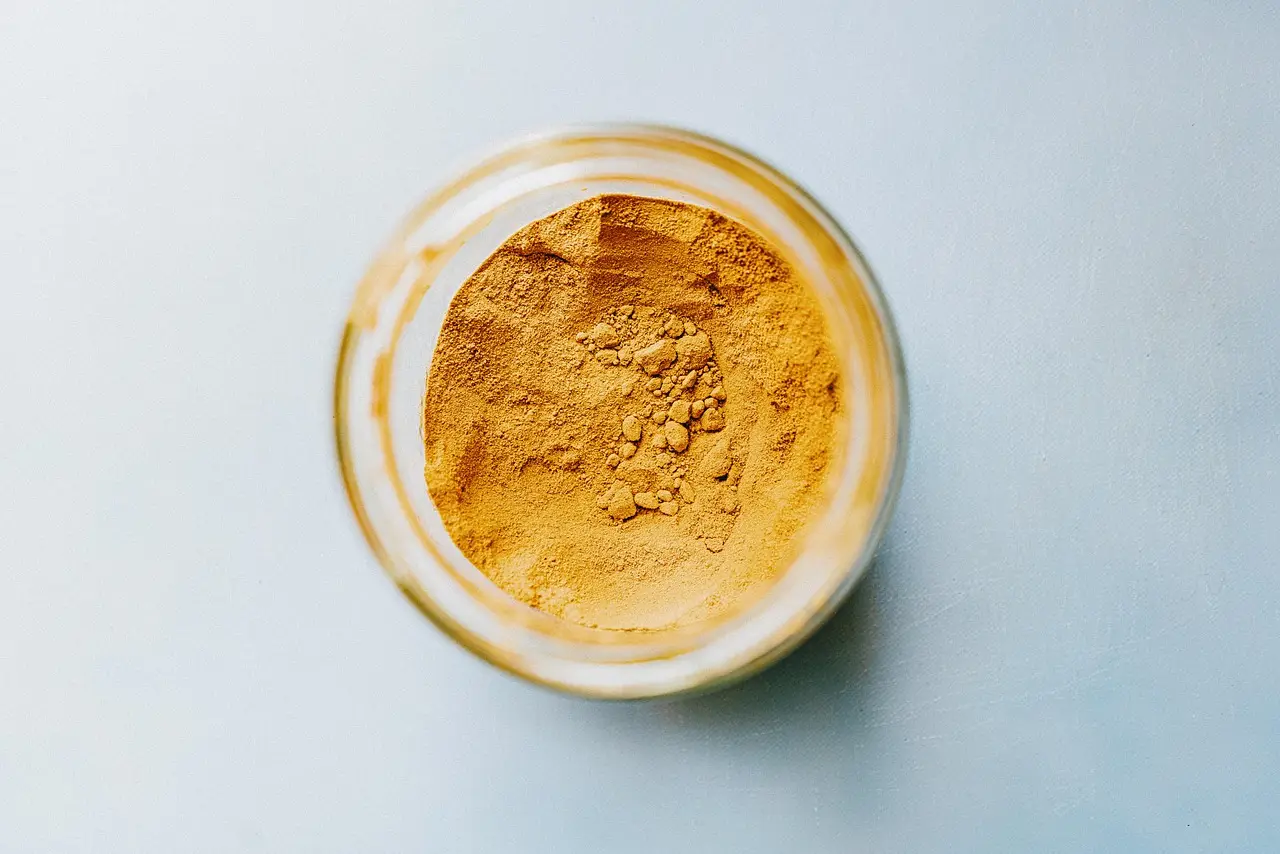
Turmeric is the knobbly orange root that turns curries gold, stains every wooden spoon it touches, and has been part of life in South Asia for thousands of years. A cousin of ginger, it shows up in cooking pots, wedding rituals, medicine cabinets and, more recently, very expensive lattes. Ask an Indian grandmother about that last one and she might just laugh 3.
Background
Turmeric (Curcuma longa) grows in warm climates across the tropics and subtropics 2. India grows more than 75% of the world's supply, and is also its biggest exporter and its biggest eater 3. Its colour is so strong that it's been called "Indian saffron", and in India it goes by haldi in Hindi and manjal in Tamil 23.
In the kitchen, turmeric is mostly a colouring spice, the reason so many curries and gravies glow yellow 3. Mumbai chef Thomas Zacharias calls it a "background ingredient", one most cooks add out of habit 3. But fresh, it can be the star: in a Kerala fish curry, made into a pickle, or its leaves used as fragrant wrappers for steaming. In Goa, cooks steam a sweet of rice and jaggery between two turmeric leaves, which gives it a floral flavour 3.
History
Turmeric's story is written in starch grains and old teeth.
At Farmana, a Harappan site in present-day Haryana, India, archaeologists found turmeric starch in cooking pots and on human teeth dated to 2600–2200 BCE 1. So people of the Indus civilisation were cooking with it more than four thousand years ago.
It also travelled a long way, early. By the middle of the second millennium BCE, turmeric protein turned up in the dental plaque of a person buried at Megiddo, in what is now Israel, evidence of trade between South Asia and the Mediterranean 1. Imagine: someone in the Bronze Age Levant eating a spice grown thousands of kilometres away.
Around 2,000 years ago it reached Southeast Asia. At Oc Eo, an old trading port in southern Vietnam, researchers found turmeric, ginger, galangal, clove, nutmeg and cinnamon on grinding stones of South Asian design. They describe it as the earliest curry in Southeast Asia, probably brought by South Asian migrants or visitors trading across the Indian Ocean 1. Before this find, no one had recovered ancient turmeric in the region at all 1.
Turmeric kept moving. In China it appears in classic medical texts such as the Compendium of Materia Medica, and it's still grown in Sichuan, Yunnan, Fujian and Guangdong 2. Ancient Hawaiians used it as medicine 2. By the sixteenth century it had reached Turkish kitchens, where cooks used it to colour a saffron rice dessert 2.
Food writer Marryam Reshi points out that most of India's spices came from elsewhere (chilli from South America, cumin from the eastern Mediterranean), but turmeric is native. "It is our spice, as no other spice is," she says 3.
Customs, rules and rituals
In India, turmeric has long been food, medicine, dye, cosmetic and sacred substance all at once 2. In Hinduism and Buddhism it stands for fertility, prosperity and purity, and the saffron-coloured robes of Buddhist monks were traditionally dyed with it 2.
Weddings are where it really shines. Before many Hindu weddings comes the haldi ceremony: family elders smear turmeric paste on the faces of the bride and groom, part blessing and part beauty treatment 3. The sacred thread the groom ties around the bride's neck is often dipped in turmeric water, and clothes for special days may carry a touch of turmeric in one corner 3. In Bangladesh, the pre-wedding gaye holud does much the same: brides are scrubbed with turmeric and fragrant herbs, and touching turmeric and smearing it on the forehead is part of the ceremony 4. Expect yellow fingers all round.
At Pongal, the Tamil harvest festival in mid-January, families tie fresh turmeric leaves and roots to the mouth of the pot where milk boils over, a sign of abundance 3. The timing makes sense: that's when the new crop comes out of the ground 3.
And then there's the medicine. In Ayurveda, turmeric treats everything from colds and stomach aches to sprains and skin problems 2. Many Indian families still reach for it at home: a paste on a sprained ankle, or a glass of warm turmeric milk, haldi doodh, for a sore throat 3. Science hasn't proven most of those healing claims yet 3, but try telling that to somebody's mum.
Place in human experience
Turmeric milk is a lovely example of how food carries memory. BBC writer Charukesi Ramadurai remembers her mother coaxing her to drink it as a child, and recalls the taste as "vile" 3. Years later she found the same drink rebranded as a pricey "golden milk" in a London café, and could almost hear "the delighted chuckles of thousands of Indian grandmothers" 3. Same spice, very different price tag.
Its colour is also its weakness. Because buyers judge turmeric by how bright it looks, some traders have added lead chromate, a toxic yellow pigment, to make roots shine and hide insect damage 5. Researchers found the practice in Bangladesh for four decades before enforcement cracked down, and are now tracking it in eastern India 5. It's a sobering reminder that the colour people love most can be faked, so buy from sources you trust.
From Harappan cooking pots to Bronze Age trade, wedding mornings and late-night mugs of warm milk, turmeric has coloured a remarkable share of human life. Pass the tea towel you don't mind staining.
Sources
- Weiwei Wang, Khanh Trung Kien Nguyen et al., "Earliest curry in Southeast Asia and the global spice trade 2000 years ago", Science Advances, American Association for the Advancement of Science, 2023 (via Europe PMC). https://europepmc.org/article/PMC/PMC10361603
- "Curcuma longa (turmeric): from traditional applications to modern plant medicine research hotspots", Chinese Medicine, 2025 (via Europe PMC). https://europepmc.org/article/PMC/PMC12117689
- Charukesi Ramadurai, "India's original 'turmeric latte'", BBC Travel, 24 June 2020. https://www.bbc.com/travel/article/20200623-indias-original-turmeric-latte
- "A Bangladeshi wedding journal", The Daily Star (Bangladesh). http://www.thedailystar.net/a-bangladeshi-wedding-journal-49457
- "Systemic drivers of toxic food adulteration: lead chromate in turmeric across eastern India", npj Science of Food, 2026 (via Europe PMC). https://europepmc.org/article/PMC/PMC13357593