Stir-fry
A stir-fry is over almost before it starts: a roaring flame, a smoking wok, a splash of oil, a clatter of the spatula, and dinner is on the plate. The…
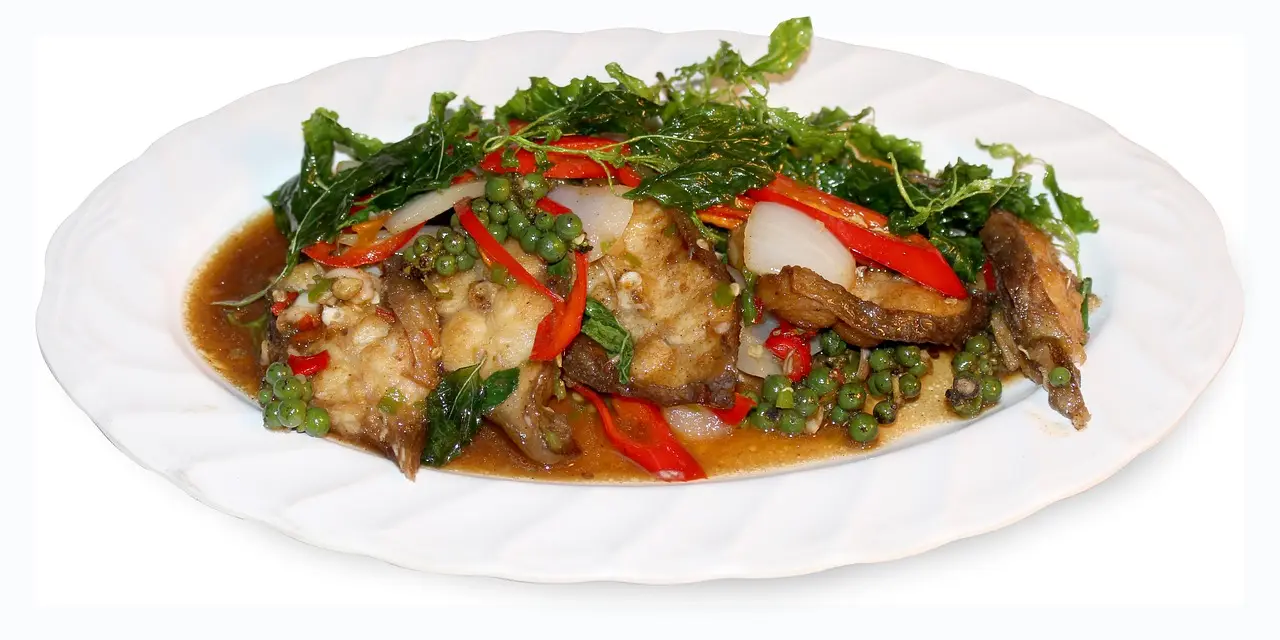
A stir-fry is over almost before it starts: a roaring flame, a smoking wok, a splash of oil, a clatter of the spatula, and dinner is on the plate. The technique, called chao in Chinese, means frying small pieces of food in a little very hot oil while tossing them non-stop 1. It began in China and spread across Asia and then the world 1. Behind that weeknight-dinner speed sits a long history of expensive oil, scarce firewood and city cooks in a hurry.
Background
There is a rhythm to it. Heat the wok until it just starts to smoke, then add cold oil, never the two together, or the food sticks 2. Chinese cooks have a saying for this: "hot wok, cold oil" 1. Garlic, ginger and spring onion go in first until fragrant, then the ingredients that take longest, usually meat, then the rest, then sauce 13. Cut everything to roughly the same size so it cooks evenly 1. And do not crowd the wok, or the temperature drops and your stir-fry turns into a steam 2.
Chinese cooking splits the technique in two. Chao is the everyday stir-fry. Bao, "explode", uses even fiercer heat and a flash of tossing, with meat coated in egg white or starch to hold in the juices and only light seasoning to let natural flavours shine 3.
Then there is wok hei, the "breath of the wok": the smoky, charred aroma that clings to a great restaurant stir-fry 2. The phrase "breath of a wok" comes from cookbook author Grace Young 1. The Michelin Guide calls it "part science, part art, part magic"; the science part is caramelised sugar, browning and a touch of smoking oil at heat well beyond most Western cooking 2.
History
The word chao is old, but its meaning wandered. In the Han dynasty (206 BCE to 220 CE) dry stirring parched grain, and in the Tang dynasty chao meant roasting tea leaves 1. The first clear cooking use comes in the Qimin Yaoshu, a sixth-century farming manual, which includes a recipe for scrambled eggs stir-fried in sesame oil with spring onion 1. The technique returns in a dozen Song dynasty recipes, around the time Chinese cooks began frying with vegetable oil rather than animal fat; until then, vegetable oil mostly lit lamps 1.
For a long time stir-frying stayed a minor player, because oil was expensive 1. Boiling and steaming ruled. Stir-frying gained ground in the late Ming dynasty, partly because wood and charcoal near cities grew costly and a fast, hot cook saved fuel, and partly because busy commercial city life favoured quick meals 1. Even then it did not take over: wok dishes make up only 16 per cent of the recipes in the famous eighteenth-century cookbook Suiyuan shidan 1.
English got the word "stir-fry" in 1945, when Buwei Yang Chao coined it in How to Cook and Eat in Chinese, describing chao as "big-fire-shallow-fat-continual-stirring-quick-frying" 1. Chinese immigrants had already brought the technique to America 1. In the health-conscious 1970s, as one cookbook put it, everyone seemed to be buying a wok, and stir-fries stayed popular because they could be on the table in about fifteen minutes 1.
Customs, rules and rituals
The wok itself needs care. Traditional woks are cast or crude iron and get seasoned with oil or pork fat before use; with time they build a dark, slick coating of hardened oil that stops food sticking and adds to that charred aroma 2. In the bao style, a quick rinse after each dish stops leftover bits burning onto the base 1.
Wok hei matters most in Cantonese cooking, where stir-frying is the cornerstone 2. Top chefs show off by tossing the flame itself into the wok 2. Hong Kong's open-air street stalls, the dai pai dongs, made a whole culture out of it. The New York Times reports that the city once had hundreds; new regulations have left about 20, and few still cook over the kerosene flames that give the strongest smoky flavour 4.
Place in human experience
Stir-frying grew out of thrift: a fast, hot cook that saved scarce fuel in crowded cities 1. Centuries later the same speed won over busy Western families squeezing dinner into crowded evenings 1. Different worlds, same problem, same pan.
It also carries deep memory. In 2024 photographer Alex Lau took his mother, Pamela, back to Hong Kong to find the wok hei of her youth 4. She had grown up working long factory shifts in Kowloon and eating cheap dinners at dai pai dongs afterwards, and after moving to New York in 1974 she could never find the same flavour 4. At Oi Man Sang, open since 1956 and perhaps the last kerosene stall in the city, they finally found it, eating in silence while monsoon rain poured down 4. Asked whether it matched her memories, Pamela said sharing it with her son made it even better 4. That is a lot to ask of a hot pan. Somehow the wok delivers.
Sources
- "Stir frying", Wikipedia, https://en.wikipedia.org/wiki/Stir_frying
- "What is...wok hei?", MICHELIN Guide, 12 October 2016, https://guide.michelin.com/en/article/dining-out/what-is-wok-hei
- Jacqueline M. Newman, "Chinese Cooking Techniques", Flavor and Fortune 6(3), 1999, via Internet Archive, https://web.archive.org/web/20151024045239/http://www.flavorandfortune.com/dataaccess/article.php?ID=200
- Alex Lau, "Wok Hei Is Vanishing From Hong Kong. My Mom Wanted to Taste It Again.", The New York Times, 26 September 2024, https://www.nytimes.com/interactive/2024/09/26/magazine/hong-kong-dai-pai-dong.html