Ginger
Snap a knob of fresh ginger and you get that bright, peppery, almost lemony smell before you've even picked up a knife. Ginger (Zingiber officinale) is…
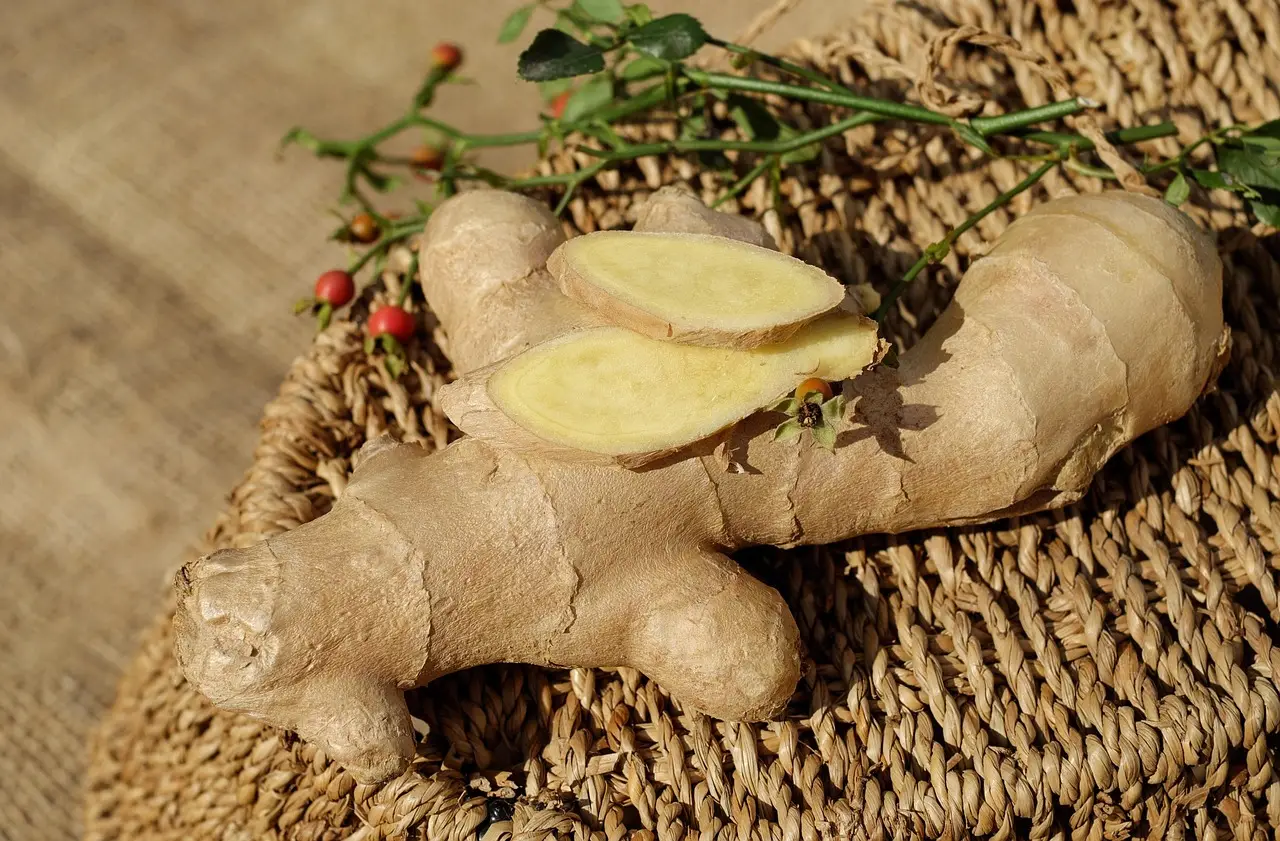
Snap a knob of fresh ginger and you get that bright, peppery, almost lemony smell before you've even picked up a knife. Ginger (Zingiber officinale) is the underground stem of a tropical plant, and it's one of the oldest travelling spices on earth. It sailed across the Pacific with early seafarers, crossed the Indian Ocean to Rome, priced itself like livestock in medieval England, and ended up in gingerbread men. Not bad for something that looks like a gnarled thumb.
Background
That knobbly "root" is really a rhizome, a stem that grows sideways underground. Cultivated ginger is a true cultigen: it doesn't grow wild anywhere, so it only exists because people kept planting it 1.
Where it came from depends on who you ask. Most sources point to maritime Southeast Asia, where Austronesian peoples probably domesticated it around 5,000 years ago 14. The Philippine medicinal-plant database StuartXchange instead lists its native range as Assam, China, the eastern Himalaya and India 6. Either way, it's a plant of warm, wet Asia.
The name has done some travelling of its own. English "ginger" comes from Old English gingifer, via Latin and Greek zingiberis, from Sanskrit srngaveram. That's often explained as "horn-body", after the rhizome's shape, though etymologists suspect a folk tale and point to an older Dravidian word, Tamil inchi-ver 2. And calling a redhead "ginger"? That dates from 1885 for people; fighting cocks got the label first, in 1785 2.
History
Austronesian voyagers carried ginger with them as they spread across the Indo-Pacific, and words for it reached as far as Hawaii 1.
It also travelled west. Greek and Roman doctors used it from at least the first century AD 4. Here's a fun twist: Dioscorides and Pliny both thought ginger grew along the Red Sea coast. Historian Petros Bouras-Vallianatos notes that not one ancient source mentions an Asian origin, probably because Red Sea ports were where traders handed it over 4. Galen mentions ginger about sixty times. When Emperor Diocletian capped prices in AD 301, preserved ginger was allowed up to 400 denarii a pound and dried ginger 250, among the priciest medicines on the list 4.
The price stayed eye-watering. In fourteenth-century England, a pound of ginger cost about as much as a sheep 1. Later, Spanish colonists took it to the Caribbean in the 1600s, where on Hispaniola and Puerto Rico it briefly overtook sugar as the top export crop 1.
Customs, rules and rituals
- China. Confucius liked it with everything. The Analects says plainly: "He was never without ginger when he ate. He did not eat much" 3. Some later Daoist rule books, though, add ginger to their list of pungent foods to avoid 7.
- Austronesian ritual. Ginger was used in healing rites, to ask spirits for protection, and to bless ships 1.
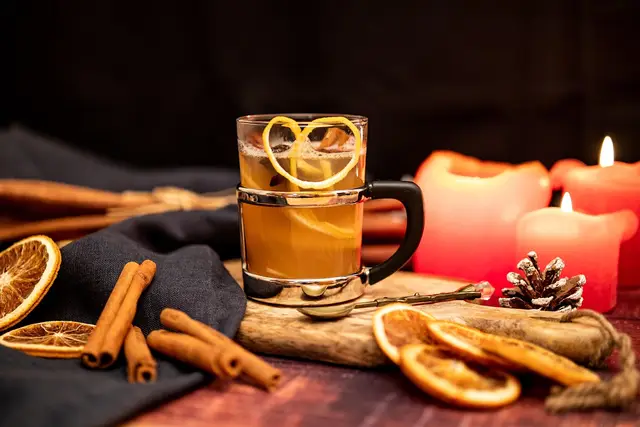
- The Philippines. Families drink warm ginger tea for sore throats, rub it on aches and use the juice on cuts 6.
- Japan. Pink pickled gari cleans the palate between pieces of sushi, and red beni shōga sits on top of noodles and rice bowls 1.
- Christmas in Europe. Gingerbread became a fair and festival treat across medieval Europe. A 992 story credits an Armenian monk, Gregory of Nicopolis, with bringing it to Europe, but that's a claim, not a proven fact 5. A fifteenth-century German guild controlled gingerbread making, and Swedish nuns baked it in 1444 to settle stomachs 5.
Place in human experience
Ginger has always lived on the line between food and medicine. A sixteenth-century English writer described gingerbread as a cake "to comfort the stomacke" 5, and Filipino cooks still reach for it the same way 6. The warm feeling explains a lot about its winter fame. Food historian Michael Krondl links gingerbread's holiday status to the old belief that spices heat you up when it's cold 8.
It was also a status symbol. Because ginger cost so much, fancy gingerbread first belonged to the wealthy 8. Historian Carole Levin says Elizabeth I threw a banquet featuring gingerbread figures of foreign dignitaries and courtiers 8. Imagine being served yourself as a biscuit.
Lower down the social ladder, gingerbread turned romantic, or slightly sinister. Levin describes Tudor-era folk practitioners baking gingerbread men as love charms: get the man you fancy to eat one made for him and, so the belief went, the man would fall for you 8.
And a fun reminder that names drift: Paul Freedman notes a mid-fifteenth-century English recipe for "gyngerbrede" that contains no ginger at all and comes out more like toffee 8.
From Austronesian outriggers to Confucius's dinner table to a Tudor love spell, ginger keeps turning up wherever people want warmth, comfort and a bit of magic.
Sources
- "Ginger", Wikipedia. https://en.wikipedia.org/wiki/Ginger
- Harper, D., "ginger", Online Etymology Dictionary. https://www.etymonline.com/word/ginger
- Confucius, The Analects, Book X, trans. James Legge, Standard Ebooks. https://standardebooks.org/ebooks/confucius/analects/james-legge/text/chapter-10
- Bouras-Vallianatos, P., "Pharmacological Substances From Asia in Late Antique Medical Works: Myths and Facts", Pharmacy in History 67(1), 2025. https://pmc.ncbi.nlm.nih.gov/articles/PMC7619475/
- "Gingerbread", Wikipedia. https://en.wikipedia.org/wiki/Gingerbread
- Stuart, G. U., "Luya: Zingiber officinale", StuartXchange Philippine Medicinal Plants. https://www.stuartxchange.com/Luya
- Costantini, F., "Disgusting vegetables: Wuxin taboo in Daoist prescription's texts", Rocznik Orientalistyczny 75(1), 2022, Polish Academy of Sciences. https://journals.pan.pl/Content/123795/PDF/ROrient%2075%20z.%201-22%209Costantini.pdf
- Waxman, O. B., "The Surprising Reasons Why Gingerbread Men Became a Holiday Classic", TIME, 22 December 2016. https://time.com/4602913/gingerbread-men-history/