Steaming
Lift the lid on a bamboo basket and a cloud rolls out, carrying the smell of pork buns or prawn dumplings. Steaming is about as simple as cooking gets:…
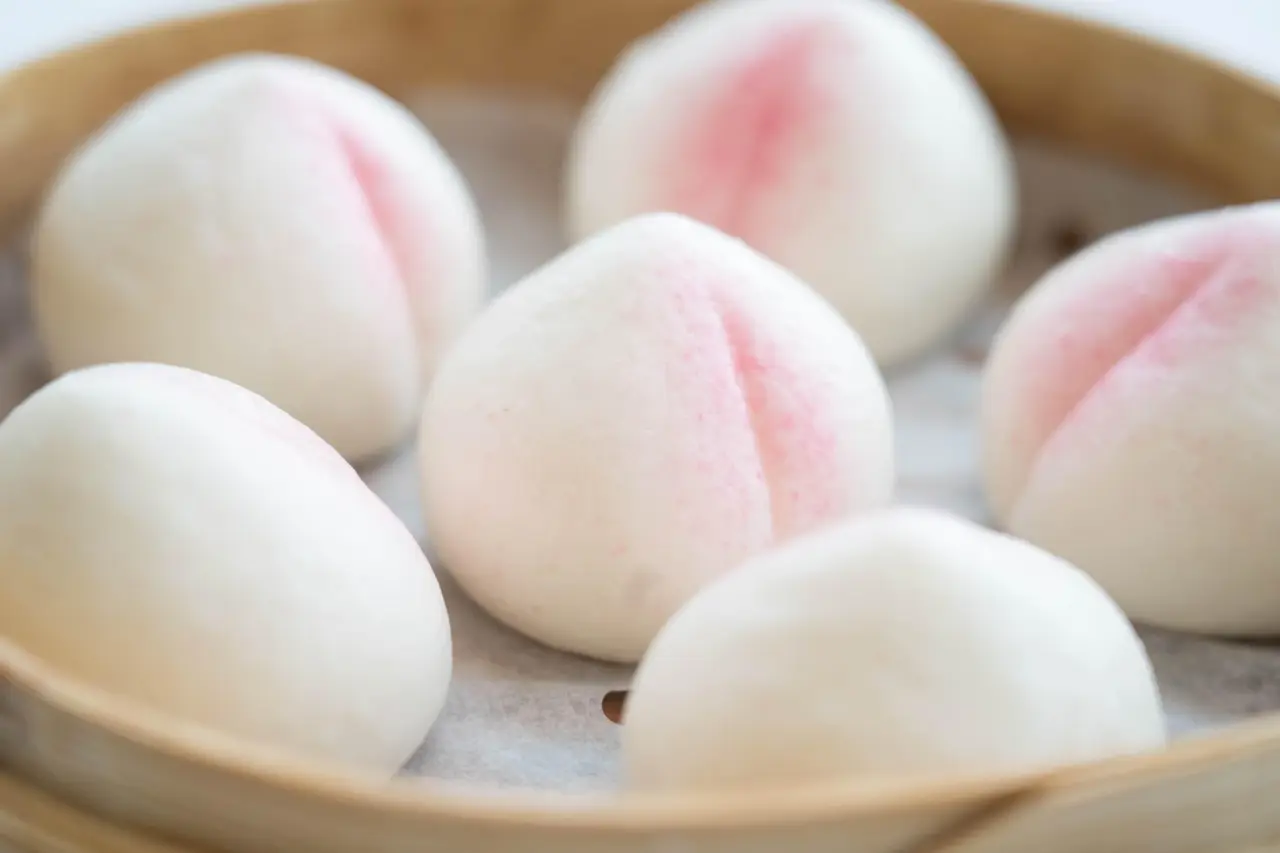
Lift the lid on a bamboo basket and a cloud rolls out, carrying the smell of pork buns or prawn dumplings. Steaming is about as simple as cooking gets: food sits above boiling water, never in it, and the vapour does the work. That simplicity hides a long story. Steamers are among the oldest cooking tools people have made, and steamed food anchors meals from Guangzhou teahouses to Moroccan wedding feasts to a South Indian breakfast plate 123.
Background
Steam cooks gently and evenly. The food rests on a rack, a plate, a bed of greens or a perforated basket over the boiling pot, and how long it takes depends on how thick it is and how you want it to turn out 4. A wok with a rack, or even chopsticks laid across it to hold a plate, does the job if you have no steamer 4.
The classic Chinese steamer, the zhenglong, is a stack of round bamboo trays with a lid. Each tray has holes in its base so steam can rise through the whole tower, and the stacks go straight to the table at dim sum 1. Bamboo has a quiet advantage over metal: its lid soaks up excess moisture instead of dripping it back onto delicate food 9.
History
Steaming in China is very old. Food historian Jacqueline Newman writes that scholars believe people were smoking and steaming food by at least 5000 BCE, well before frying was known, and that pottery stoves around 6,000 years old have turned up at the Neolithic sites of Hemudu and Yangshao 4. Ceramic steamers called yan come from the Banpo site, and in the lower Yangzi, steaming pots called zeng appear in the Hemudu and Liangzhu cultures, where people used them to steam rice 1. The bamboo steamer as we know it probably took shape in southern China during the Han dynasty; a tomb mural from the Eastern Han (25 to 220 CE) in Henan shows the earliest clear picture of one 1.
Steamed bread has a good invention myth. Chinese legend credits the general Zhuge Liang, in the third century, with making meat-filled buns shaped like human heads and throwing them into a raging river in place of real heads to calm the river spirits, hence mantou, said to mean "barbarian's head" 5. The written record is less dramatic. Around 300 CE the writer Shu Xi described steamed cakes and called them mantou in a poem 5.
India's idli has its own origin argument. Food scientist K. T. Achaya pointed out that early Indian texts describing an idli-like dish, from 920 and 1130 CE, leave out rice, long fermentation and steaming, and that the Chinese traveller Xuanzang wrote in the seventh century that India had no steaming vessels 6. Achaya suggested cooks travelling with Hindu kings in Indonesia brought steaming and fermentation back between 800 and 1200 CE, along with a dish called kedli 6. Not everyone agrees. Writer Janaki Lenin searched for a kedli recipe and found none 7, and the archaeologist Dorian Fuller places steaming in Neolithic South India around 2000 BCE 3. The jury, and the batter, are still out.
Customs, rules and rituals
Dim sum grew up around tea. In Guangzhou, travellers stopped at teahouses for yum cha, "drinking tea", with small snacks on the side 8. One old phrase sums up the custom: "one cup, two pieces", meaning a pot of tea and two little bites 8. Dim sum itself translates as "touch the heart" 8. Steamed buns were among the first teahouse snacks when Cantonese dim sum culture took off in the late nineteenth century 8.
In North Africa, steaming is the heart of couscous. Semolina is rolled by hand and steamed, and the dish appears at weddings, festivals and family gatherings, served with vegetables and meat that change with region and season 2. In 2020 Algeria, Mauritania, Morocco and Tunisia jointly placed couscous on UNESCO's list of intangible cultural heritage 2. Families pass the skill on by watching and copying, and women play a central part 2.
Idli even has a day of its own. In 2015 a Chennai caterer named Eniyavan began celebrating 30 March as World Idli Day 3.
Place in human experience
Steaming tells us how people lived. Some of the first steaming pots in the Yangzi valley cooked rice 1. Much later, stacking baskets let one pot of boiling water cook several dishes at once 1, handy in a busy port like Guangzhou, where teahouses fed a steady stream of travellers 8. Business people struck deals over dim sum, and friends simply talked 8.
The steamer also carries memory. UNESCO describes couscous as full of meanings tied to "solidarity, conviviality, sharing meals and togetherness" 2. Ask anyone who grew up with weekend yum cha, Friday couscous or idli for breakfast and you will hear the same thing in plainer words: the steam coming off the pot smells like home.
Sources
- "Bamboo steamer", Wikipedia, https://en.wikipedia.org/wiki/Bamboo_steamer
- "Knowledge, know-how and practices pertaining to the production and consumption of couscous", UNESCO Intangible Cultural Heritage, https://ich.unesco.org/en/RL/knowledge-know-how-and-practices-pertaining-to-the-production-and-consumption-of-couscous-01602
- "Idli", Wikipedia, https://en.wikipedia.org/wiki/Idli
- Jacqueline M. Newman, "Chinese Cooking Techniques", Flavor and Fortune 6(3), 1999, via Internet Archive, https://web.archive.org/web/20151024045239/http://www.flavorandfortune.com/dataaccess/article.php?ID=200
- "Mantou", Wikipedia, https://en.wikipedia.org/wiki/Mantou
- D. Balasubramanian, "Changes in the Indian menu over the ages", The Hindu, 21 October 2004, via Internet Archive, https://web.archive.org/web/20141206094937/http://www.thehindu.com/seta/2004/10/21/stories/2004102100111600.htm
- Janaki Lenin, "A tale of two sambhars", The Hindu, 30 March 2012, https://www.thehindu.com/news/cities/chennai/chen-columns/a-tale-of-two-sambhars/article3262394.ece
- "Dim sum", Wikipedia, https://en.wikipedia.org/wiki/Dim_sum
- "Steaming", Wikipedia, https://en.wikipedia.org/wiki/Steaming