Chilli Peppers
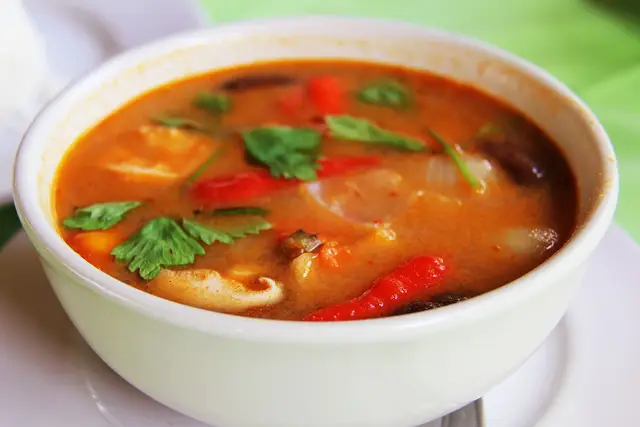
Thai curries, Sichuan hotpot, Hungarian paprika, Korean gochujang, Indian vindaloo, Ethiopian berbere: it's hard to imagine any of them without chillies.…
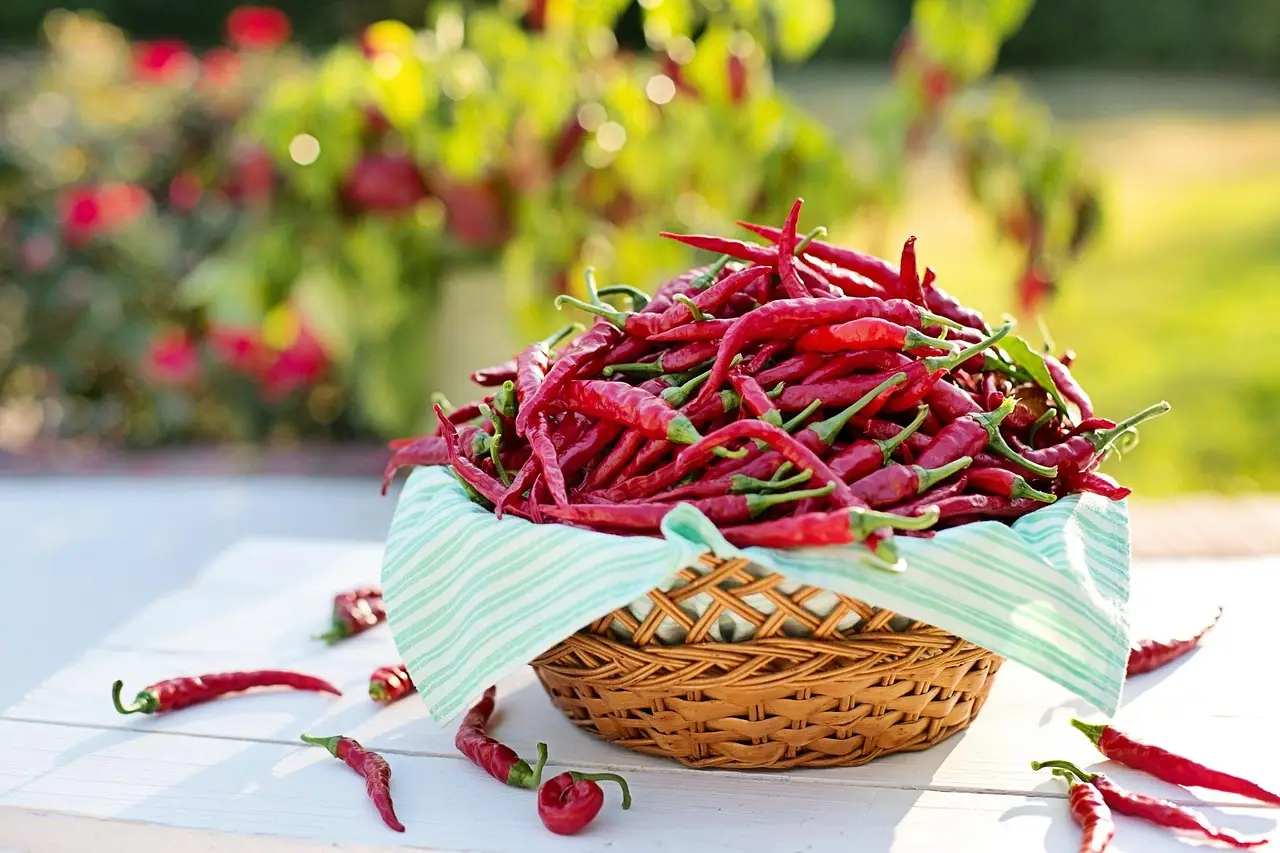
Thai curries, Sichuan hotpot, Hungarian paprika, Korean gochujang, Indian vindaloo, Ethiopian berbere: it's hard to imagine any of them without chillies. Yet every one of those cuisines managed without them until about 500 years ago 1. Chillies are American by birth, and their trip around the world, carried by birds, sailors, traders and, darkly, the slave trade, is one of the fastest makeovers food has ever seen 1. Grab a glass of milk. This one has a kick.
Background
Chillies belong to the nightshade family, cousins of tomatoes, potatoes and tobacco, and no relation at all to black pepper 1. The main cultivated species are 1:
- Capsicum annuum: jalapeño, cayenne and the sweet bell pepper.
- C. frutescens: home of Tabasco.
- C. chinense: from western Amazonia.
- C. baccatum and C. pubescens: South and Central American specialists.
The heat comes from capsaicin. Here's a myth worth busting: it isn't mostly in the seeds. It sits in the pale inner membrane, the placenta, that holds them 2. That membrane carries almost 90 per cent of the capsaicin, so scrape it out and you lose most of the fire 1.
Heat is measured in Scoville Heat Units. A jalapeño rates around 3,000 to 8,000. The current world champion, Pepper X, grown by Ed Currie of South Carolina over more than a decade of cross-breeding, averages 2,693,000 2. Please don't.
History
Wild chillies began in the lowlands of Brazil as tiny red berries 3. Birds spread them. Birds don't feel capsaicin's burn, and seeds pass through them unharmed, so the plant gets a free delivery service. Scientists think chillies evolved their heat to put off mammals 3. Research by Joshua Tewksbury's team suggests the heat also helps fight fungal infections that insects spread 4.
People were eating chillies in Mesoamerica by around 5000 BCE and farming them between 5000 and 3400 BCE, making them one of the oldest cultivated crops 1. A 2014 study led by UC Davis plant scientist Paul Gepts combined genetics, archaeology, linguistics and ecology to place the domestication of the common chilli in central-east Mexico, from southern Puebla and northern Oaxaca to south-eastern Veracruz 5. The word "chilli" itself comes from Nahuatl, the Aztec language 1.
Then came Columbus. He was looking for black pepper, found something hot, and called it pimiento, Spanish for pepper. The name stuck, along with centuries of confusion 1.
The Portuguese spread chillies fastest. After reaching India in 1498, they shipped chillies from Brazil, and a 16th-century botanist called chillies from Goa "Pernambuco peppers" after the Brazilian region 1. African cooks, who already loved the peppery spice grains of paradise, took to chillies at once 1. The Portuguese reached Indonesia by 1540, and chillies arrived in the Philippines in 1564 along Spanish routes 1.
China is a puzzle. Sichuan and Hunan, now famous for heat, were linked to the outside world by the overland Silk Road rather than coastal ports, so the Portuguese may not have been first 1. Europe, meanwhile, was slow. Chillies reached Italy in 1526 and England in 1548 but stayed curiosities for years. Hungary may have got them via Turkish or Muslim traders rather than from western Europe, and Europeans only learned in 1868 that chillies weren't originally Indian 1.
There's a grim chapter, too. Portuguese slave traders spread chillies across Africa, and chillies became so central to West African food that ships carried large quantities across the Atlantic and plantation gardens grew them. That, not the spice trade, is how chillies took hold in North America 1.
Customs, rules and rituals
Most cuisines use chillies as a spice. Bhutan treats them as a vegetable. The national dish, ema datshi, is literally "chilli cheese": green chillies cooked with cheese, nothing more in the strict version 6. Writer Dorji Ohm told the BBC that if a Bhutanese family invites you to eat, "they have to serve you ema datshi. Otherwise the meal is incomplete" 6. Children start young: mothers add a pinch of chilli to babies' food and increase it bit by bit 6.
A practical tip from Thimphu: if it's too hot, don't reach for anything hot to drink, it makes it worse 6.
Place in human experience
Why would anyone eat something that hurts? Partly for comfort and identity. Ohm thinks Bhutan's chilli habit began because the country is cold and spicy food warms the body; heaters arrived, but by then "ema datshi is deep in our culture" 6. One diner told the BBC her grandmother makes the best one, and that's that 6.
Partly it's bravery. Ohm remembers her parents praising her every time she ate chilli: "Oh you're such a brave girl!" 6. Anyone who has watched friends dare each other through a hot wing knows that feeling, and so does the whole Scoville arms race, where growers spend ten years chasing a few more units of pain 2.
And partly it's history on a plate. The chilli tells the story of the last five centuries: an American plant that Portuguese ships, African cooks and Asian kitchens made their own so completely that most of us now think of it as theirs 1.
Sources
- "Chili: Small Fruit Sets Global Palettes on Fire", YaleGlobal Online, Yale University. https://archive-yaleglobal.yale.edu/chili-small-fruit-sets-global-palettes-fire
- "Pepper X dethrones Carolina Reaper as world's hottest chilli pepper", Guinness World Records, October 2023. https://guinnessworldrecords.com/news/2023/10/pepper-x-dethrones-carolina-reaper-as-worlds-hottest-chilli-pepper-759706
- "The Story of Chile Peppers", Chile Pepper Institute, New Mexico State University. https://cpi.nmsu.edu/chile-info/for-kids-pages/the-story-of-chile-peppers.html
- "What Made Chili Peppers So Spicy?", NPR. https://www.npr.org/templates/story/story.php?storyId=93636630
- "Birthplace of domesticated chili pepper identified in Mexico", University of California, Davis, 17 April 2014. https://www.ucdavis.edu/news/birthplace-domesticated-chili-pepper-identified-mexico
- "Bhutan's love affair with chillies", BBC News. http://news.bbc.co.uk/2/hi/south_asia/4315155.stm