Coriander Leaves
Few herbs start fights at the dinner table like coriander. To most of the world, a handful of the fresh green leaves is bright, citrusy and essential:…
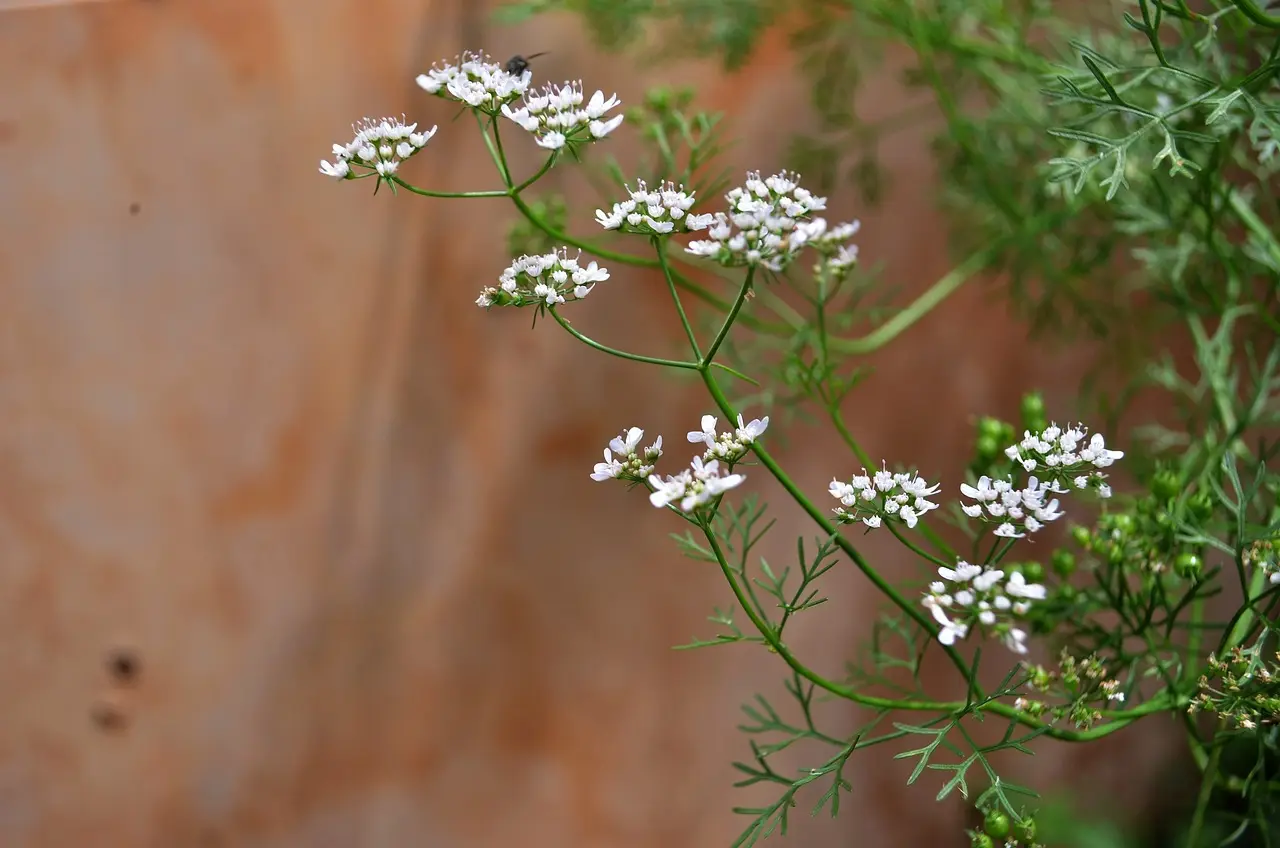
Few herbs start fights at the dinner table like coriander. To most of the world, a handful of the fresh green leaves is bright, citrusy and essential: scattered over a curry, stirred into salsa, piled onto a bowl of pho. To a stubborn minority, it tastes like a bar of soap 12. Same plant, two completely different experiences, and science has a surprisingly good explanation. Americans call the leaves cilantro; Australians, Brits and most cooks elsewhere call them coriander. Either way, you probably have an opinion.
Background
Coriander (Coriandrum sativum) is one plant that gives us two very different ingredients: the round seeds, warm and spicy, and the soft green leaves, sharp and fresh 1. The plant most likely comes from the eastern Mediterranean or Asia Minor 1.
Its many names map where it's loved. In Thailand it's pak chi, in Vietnam ngò or mùi, in Hindi dhania patta (simply "coriander leaves"), and in Mandarin xiāng cài, the "fragrant vegetable" 1. English speakers sometimes call it Chinese parsley or Indian parsley 1. "Cilantro" came into English by 1907 from Spanish, itself from the Latin coriandrum 3.
That Latin word has a cheeky back story. It traces to the Greek koriannon, which botanists often link to koris, meaning bedbug, thanks to the smell of the unripe fruit 3. Yes, the name of your favourite garnish may literally mean "bug plant".
History
Coriander is one of the oldest flavours people have left a trace of. In Nahal Hemar cave in Israel, archaeologists found fifteen dried coriander fruits in a layer roughly 6,000 to 8,000 years old 2. Around 500 millilitres of coriander fruits were recovered from Tutankhamun's tomb, a sign the Egyptians grew it 2. A Mycenaean Linear B tablet from Pylos records it being grown for perfume, and Bronze Age Sitagroi in Macedonia turned up large quantities 2. Ancient India knew it too: Sanskrit texts call the plant kustumbari 1.
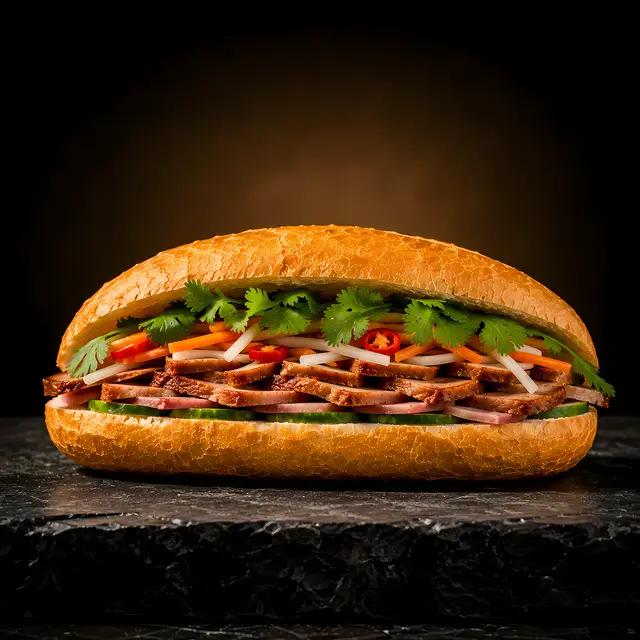
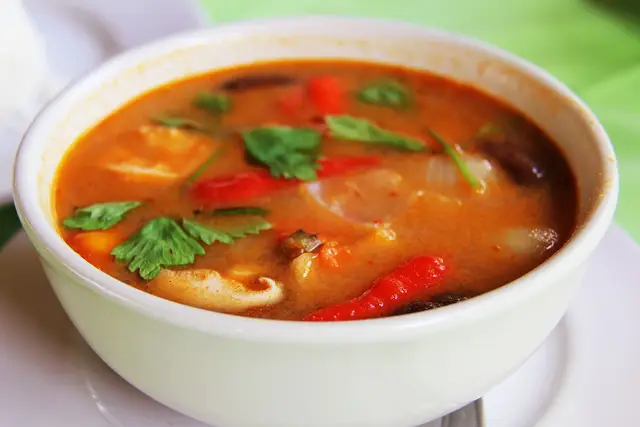
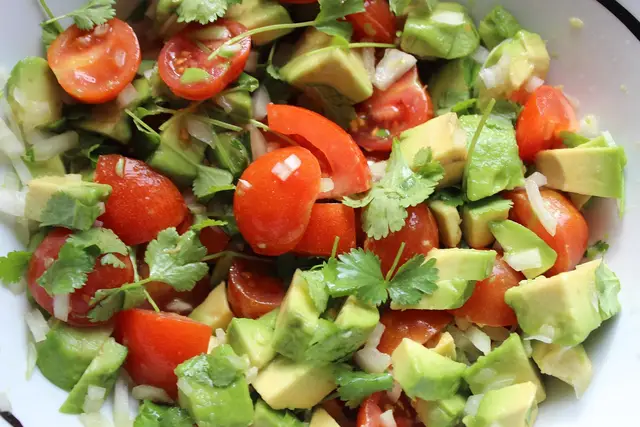
Notice that all those finds are seeds. The old record says little about the leaves, so how ancient cooks used the greens is mostly a mystery 12. Today the leaves rule in particular kitchens. In Vietnam they're close to indispensable and show up on nearly every dish. Thai cooks use the leaves in soups and salads and pound the roots into curry pastes because they hold their flavour in the heat. Latin American cooking needs them for salsa, ceviche and guacamole. Southern Indian cooks use them too, in dishes such as rasam. In western Asia they're less common, though Georgian cooking and Yemeni zhoug paste both rely on them 1.
Customs, rules and rituals
Coriander leaves are usually a finishing touch, added at the end or on top so their fresh scent stays bright. Indian and Central Asian cooks are an exception: they often use large amounts and cook them until the flavour softens 2. In Thailand, nothing goes to waste: the roots go into the curry paste and the leaves go on top 1.
Place in human experience
Now for the great divide. Spice writer Gernot Katzer notes that "many people of European heritage" find the leaves "displeasing, soapy, like burnt rubber", while in Asia, Latin America and Africa "almost everybody loves them" 1. A 2012 survey by Lilli Mauer and Ahmed El-Sohemy put numbers on it: 21% of East Asians, 17% of Europeans and 14% of people of African descent disliked coriander, compared with only 7% of South Asians, 4% of Hispanic people and 3% of Middle Eastern participants 2. Note that last group: the cuisines that use the most coriander produce the fewest haters, which hints that growing up with it matters.
So is it genetic? Partly. NPR followed one self-confessed hater to the Monell Chemical Senses Center in Philadelphia. Holding his nose, he found coriander tasted like harmless parsley; letting go, "it's like a bottle of soap". The problem was smell, not taste 4. Monell scientist Charles Wysocki took chopped coriander to a twins festival in Ohio and found identical twins nearly always agreed on whether they loved or hated it, suggesting "a strong genetic component" 4.
In 2012, researchers at the genetics company 23andMe studied more than 26,000 people and found a genetic variant linked to finding coriander soapy. It sits near a smell receptor gene, OR6A2, that responds strongly to the aldehydes that give coriander its scent 5. Those aldehydes are the same family of compounds that make the leaves smell soapy to some noses 1. But genes explain only a small slice, roughly 8.7% of the variation the study could measure 5, which leaves plenty of room for what's on your plate growing up.
There's hope for the haters, too. Katzer notes that European enthusiasm for the leaves has grown steeply since the late 20th century as people ate more food from around the world 1. Turns out you can learn to love the bug plant.
Sources
- Gernot Katzer, "Coriander (Coriandrum sativum L.)", Gernot Katzer's Spice Pages. http://gernot-katzers-spice-pages.com/engl/Cori_sat.html
- "Coriander", Wikipedia (citing Kislev 1988 on Nahal Hemar; Zohary, Hopf and Weiss 2012 on Tutankhamun; Chadwick 1976 on Linear B; and Mauer and El-Sohemy, "Prevalence of cilantro (Coriandrum sativum) disliking among different ethnocultural groups", Flavour, 2012). https://en.wikipedia.org/wiki/Coriander
- "Coriander" and "cilantro", Online Etymology Dictionary. https://www.etymonline.com/word/coriander
- "Getting To The Root Of The Great Cilantro Divide", NPR. https://www.npr.org/templates/story/story.php?storyId=98695984
- Nicholas Eriksson et al., "A genetic variant near olfactory receptor genes influences cilantro preference", arXiv, 10 September 2012. https://arxiv.org/abs/1209.2096