Grilling
Grilling is the oldest trick in the kitchen: food, fire, and nothing much in between. Every continent has its version, from Korean tabletop galbi to…
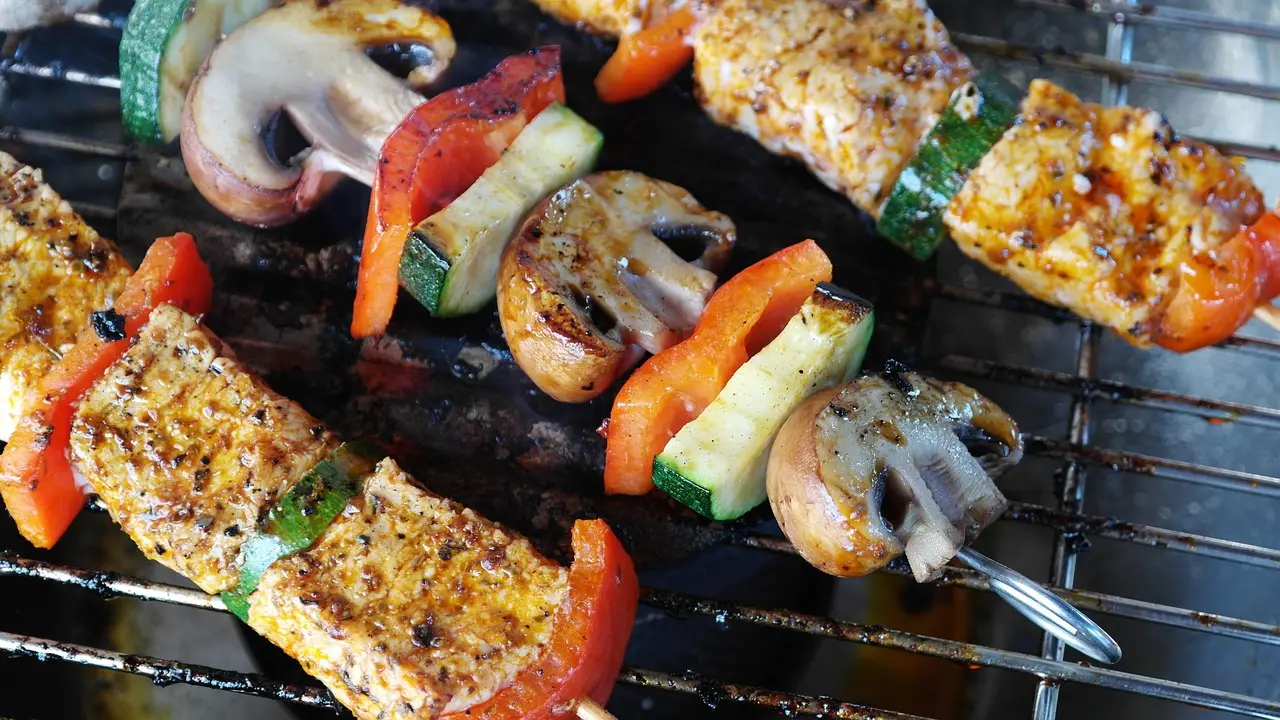
Grilling is the oldest trick in the kitchen: food, fire, and nothing much in between. Every continent has its version, from Korean tabletop galbi to Argentine asado to Japanese yakitori skewers 1. It is also the one kind of cooking that still pulls a crowd outside to stand around, hold a drink and offer unhelpful advice. That habit is very, very old.
Background
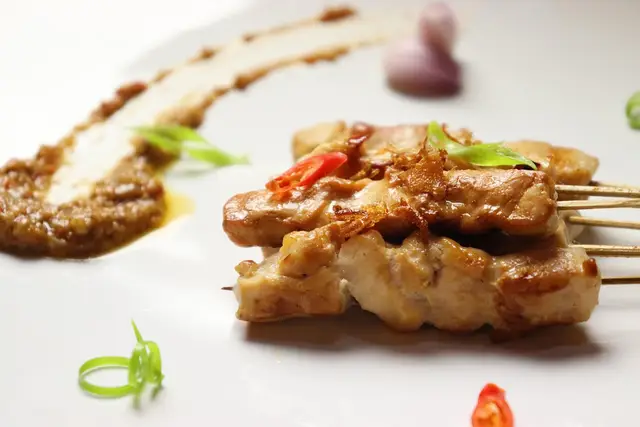
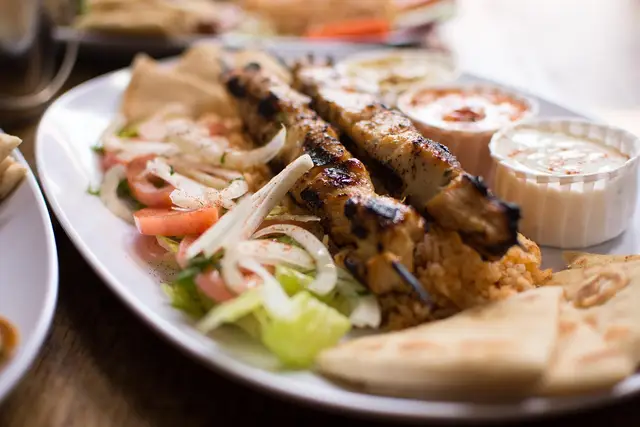
Strip grilling back and it is meat, fish or vegetables cooked by direct heat from below, over charcoal, wood or gas, or by a broiler from above 1. Korean gui covers bulgogi, galbi and samgyeopsal; Japan has yakitori and yakiniku; Argentina has steak a la parrilla; Mexico has carne asada; and South-East Asia has satay 1.
There is a catch worth knowing. Very hot grilling can form compounds called heterocyclic amines and polycyclic aromatic hydrocarbons, which are linked to cancer. Marinating may cut how much forms 1. So the marinade your grandmother swore by turns out to be doing a second job.
History
The story starts long before anyone owned tongs. At Wonderwerk Cave in South Africa's Northern Cape, a team led by Francesco Berna of Boston University found microscopic plant ash and charred bone about one million years old, bone heated to around 500°C 3. They read it as the oldest secure evidence of controlled fire, likely lit by Homo erectus. Other archaeologists, including Wil Roebroeks and Paola Villa, urge caution: this looks like a one-off fire, and habitual fire use probably arrived closer to 400,000 years ago 3.
The first proof of actual cooking comes from Gesher Benot Ya'aqov in northern Israel, on the shore of an ancient lake. Around 780,000 years ago, early humans there ate two giant species of carp. By testing the crystals in the fish teeth, researchers led by Irit Zohar showed the fish met moderate heat, cooked rather than burnt 4. The first grilled fish dinner, more or less, and nobody overdid it.
The word "barbecue" travels a different road. The Taíno people of the Caribbean cooked on raised wooden frames, a kind of rack built from four posts with sticks tied across the top. Their word for it, barabicu, became Spanish barbacoa. The chronicler Gonzalo Fernández de Oviedo y Valdés is widely credited with the first printed use, in 1526 2. In the United States, barbecue split into regional styles: in South Carolina, French and German settlers pushed sauces towards mustard, while Memphis, close to the Mississippi's molasses trade, went sweet and tomato-based 2.
Then came the backyard. In 1952 George Stephen, who worked at Weber Brothers Metal Works near Chicago, looked at a buoy on Lake Michigan and wondered whether cutting the shape in half would let him control airflow 5. It became the Weber kettle, a domed grill built partly so a father of twelve could stop burning dinner. Stephen entered the American Royal's Barbecue Hall of Fame in 2013 5.
Customs, rules and rituals
Grilling comes with its own manners, and every country swears its way is correct.
In Argentina the gathering is the asado, and the steak comes a la parrilla, off the grill 1. In South Africa, 24 September is Heritage Day, which most people simply call Braai Day. A braai chef named Jan Scannell proposed it as a day for gathering around a fire, and Archbishop Desmond Tutu became its cheerful patron. In a country with eleven official languages, Tutu pointed out, the word braai has made it into all of them 6. A Cape Town butcher put it simply to NPR: braai brings your friends together and your family together 6.
Japanese yakiniku shrinks the whole affair down: meat and vegetables go over small charcoal or gas grills at high heat 1.
Place in human experience
Why does grilling feel so different from boiling a pot of pasta? Part of it is the crowd. A South African braai puts the cooking in the middle of the gathering, friends and family together around one fire 6. The NPR report on Braai Day even ties the modern fire back to Wonderwerk Cave, a reminder that South Africans have been gathering around flames in that same landscape for a very long time 6.
Then there is the question of who holds the tongs. The idea that grilling belongs to men is surprisingly young. Writer Kayla Kibbe traces it to 1950s suburbia, when new homes came with backyards, parenting books urged fathers to get involved at home, and advertisers sold the grill as a badge of manliness 7. The kitchen stayed coded as the woman's job; the patio became Dad's stage. The numbers have been shifting: a 2014 report found the share of women running the grill rose from 20 per cent to 25 per cent in a single year 7.
So the backyard grill carries a lot: a million years of fire, a Taíno word carried off by Spanish ships, a buoy in Lake Michigan, and a 1950s advertising campaign. Next time someone hovers over the barbecue insisting they know best, you can tell them the fish at Gesher Benot Ya'aqov were cooked perfectly 780,000 years ago, without anyone's help.
Sources
- "Grilling", Wikipedia. https://en.wikipedia.org/wiki/Grilling
- Jaclyn Diaz, "Barbecue is everywhere for the Fourth of July. Here's its origin story", NPR via KQED, 3 July 2025. https://www.kqed.org/arts/13978302/history-of-barbecue-bbq-barbeque-fourth-of-july-caribbean-taino
- "From the ashes, the oldest controlled fire", Science News, 2 April 2012. https://www.sciencenews.org/article/ashes-oldest-controlled-fire
- "Hominins were cooking fish already in the early Paleolithic period about 780,000 years ago", Johannes Gutenberg University Mainz press release (study in Nature Ecology & Evolution, 14 November 2022). https://press.uni-mainz.de/hominins-were-cooking-fish-already-in-the-early-paleolithic-period-about-780000-years-ago
- "Weber Kettle: Born from a Buoy", Weber. https://www.weber.com/US/en/blog/behind-the-grill/weber-kettle-born-from-a-buoy/weber-30962.html
- Eyder Peralta, "South Africa celebrates its diversity with National Braai Day", NPR via KWIT, 24 September 2021. https://www.kwit.org/2021-09-24/south-africa-celebrates-its-diversity-with-national-braai-day
- Kayla Kibbe, "Why We Still Think Grilling Is for Men", InsideHook, 29 June 2019. https://www.insidehook.com/?p=268550