Chickpeas
Nutty, buttery and cheerfully lumpy, the chickpea has been in human kitchens for about 10,000 years, longer than almost anything else in your pantry .…
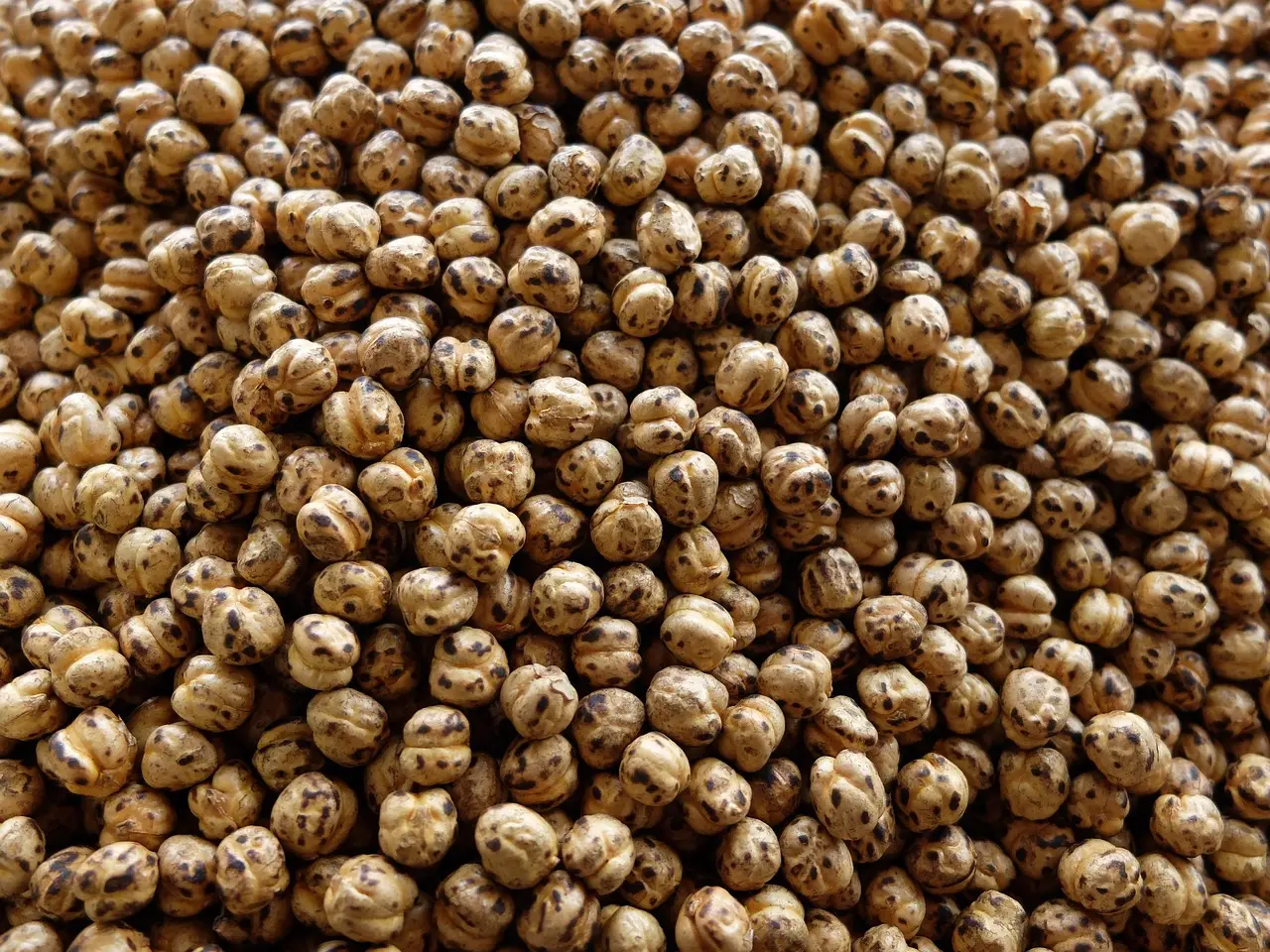
Nutty, buttery and cheerfully lumpy, the chickpea has been in human kitchens for about 10,000 years, longer than almost anything else in your pantry 1. Mash it and you get hummus. Grind it and you get the flour behind pakoras and Sicilian fritters. Simmer it with spices and you have chana masala. Even the cloudy water in the tin turns out to be useful, as vegan bakers worked out a few years ago 5. Not bad for a bean shaped like a tiny ram's head.
Background
Look closely at a chickpea and you might see the ram. The Roman farming writer Columella said the old name arietillum came from the seed's likeness to a ram's head, and the Greek botanist Theophrastus already called one variety "rams" 1.
There are two main kinds 1:
- Desi: small, dark and rough-skinned. Most common in South Asia, Ethiopia, Mexico and Iran.
- Kabuli: big, pale and smooth, the one in most tins. Common round the Mediterranean and Middle East, and only reached India in the 18th century.
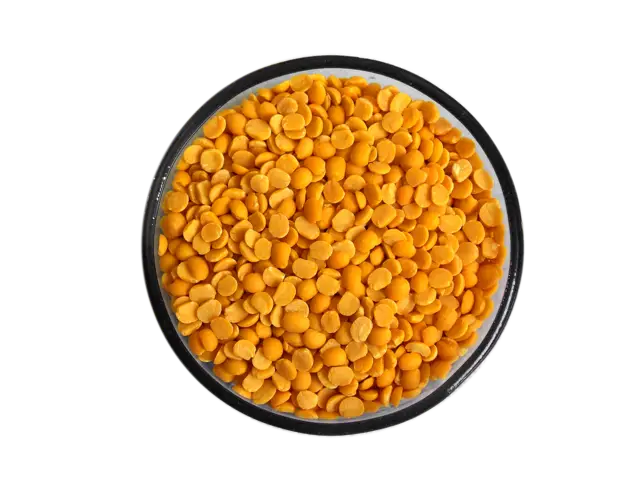
Split and hulled desi chickpeas become chana dal, a backbone of South Asian dal cooking 4. And India grows far more chickpeas than anywhere else: about three-quarters of the world's 16.5 million tonnes in 2023, ahead of Australia, Turkey, Russia and Ethiopia 1.
History
Chickpeas belong to the founding crops of farming, alongside wheat, barley, peas and lentils, domesticated around 10,000 years ago 1. Archaeologists have found them at Tell Abu Hureyra and Tell El-Kerkh in Syria from the 8th millennium BCE, and at Çayönü in Turkey from around 7500 to 6800 BCE 1. Cookbook writer Anissa Helou calls the chickpea "one of the earliest legumes ever cultivated" 2.
From there they spread in every direction. Chickpeas were well established in Egypt and the Middle East by 3300 BCE, reached Greece in the late Neolithic, turned up in the Indian subcontinent by around 1750 to 1500 BCE, and made it to Ethiopia by the Iron Age 1. Spanish and Portuguese ships carried them to the Americas in the 16th century 1.
The English name is a happy accident. Latin cicer became French pois chiche, which English borrowed as "chich-pease". "Pease" was once both singular and plural, like "wheat", but by the 17th century people assumed the "s" made it plural, chopped it off and invented the "pea" 3. Bonus fact: the Roman orator Cicero's family name comes from cicer too 3. "Garbanzo", meanwhile, likely comes from the Basque garbantzu, roughly "dry seed" 3.
Customs, rules and rituals
Every cuisine that meets the chickpea finds a new job for it 1:
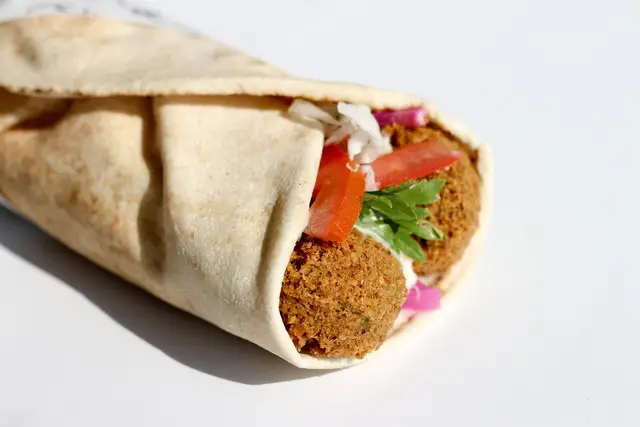
- Hummus and falafel across the Middle East.
- Chana masala, chickpea curries and chana dal in India and Pakistan, plus besan (chickpea flour) for pakoras, dhokla and the sweet Mysore pak.
- Cocido madrileño, Madrid's slow-cooked stew, and chickpea tapas in Spain.
- Panelle fritters in Sicily and farinata flatbread in Liguria.
- Burmese tofu, made from chickpea flour.
They show up at celebrations too. Ashkenazi Jewish families serve whole chickpeas, called arbes, hot with salt and black pepper at the Shalom Zachar, a celebration welcoming a new baby boy 1.
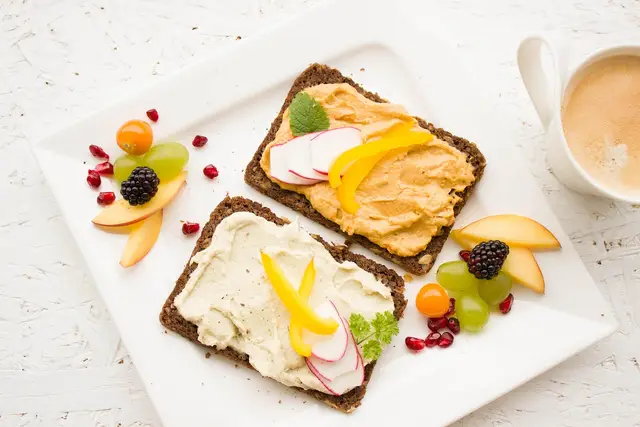
And hummus? The word "hummus" simply means "chickpeas"; the dip is properly hummus b'tahini, chickpeas with sesame paste, garlic and lemon 2. In Jerusalem the arguments are mostly about serving: smooth or chunky, more tahini or more chickpea, topped with fava beans, pine nuts or minced meat 2.
Place in human experience
Few foods carry as much feeling as hummus. Lebanon and Israel fought what the press called the "Hummus Wars". In 2008 Lebanon's industrialists accused Israel of marketing a Lebanese dish as Israeli and pushed for EU recognition, without success 2. Then it turned into a cook-off for the Guinness record: Lebanon made about 2,000 kg in 2009, the Arab-Israeli restaurant Abu Ghosh answered with about 4,000 kg in a satellite dish, and Lebanon hit back in 2010 with 10,452 kg, one for each square kilometre of the country 2.
So who invented it? Nobody can say. Some Israeli chefs point to the Book of Ruth's line about dipping bread in hometz, though in modern Hebrew that word means vinegar 2. Food historian Charles Perry leans towards 18th-century Damascus, because whipping hummus up the side of the bowl looks like a polished city dish, not an ancient peasant one 2. Historian Ari Ariel points to 13th-century Cairo cookbooks with a cold purée of chickpeas, vinegar and pickled lemon 2. Film-maker Oren Rosenfeld sums it up: "Hummus is a Middle Eastern food claimed by all and owned by none" 2.
The chickpea's newest trick is pure kitchen magic. By 2015 vegan bakers had worked out that the liquid in a tin of chickpeas whips up just like egg white. Baker Goose Wohlt named it aquafaba, roughly "bean water", building on experiments by French chef Joël Roessel, and by mid-2015 a Facebook group swapping chickpea meringue results had more than 11,000 members 5. Ten thousand years on, people are still finding new things to do with this little bean.
Sources
- "Chickpea", Wikipedia (citing archaeobotanical studies, Theophrastus, Columella and FAOSTAT 2023). https://en.wikipedia.org/wiki/Chickpea
- Diana Spechler, "Who invented hummus?", BBC Travel, 11 December 2017. http://www.bbc.com/travel/story/20171211-who-invented-hummus
- "The History of the Word Chickpea", Bon Appétit. https://www.bonappetit.com/test-kitchen/ingredients/article/the-history-of-the-word-chickpea
- "Chana dal", BBC Food. https://www.bbc.co.uk/food/chana_dal
- "Stop Pouring Your Chickpea Liquid Down the Drain. It's a Magical Ingredient.", Slate, June 2015. https://slate.com/culture/2015/06/aquafaba-baking-with-chickpea-liquid-for-vegan-meringues.html