Soy Sauce
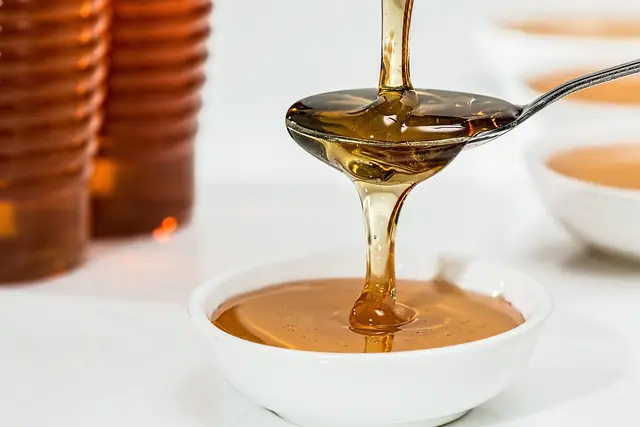
Pour a little into a dish and look at it against the light: a deep red-brown, almost mahogany. Then the smell, salty and malty with a hint of something…
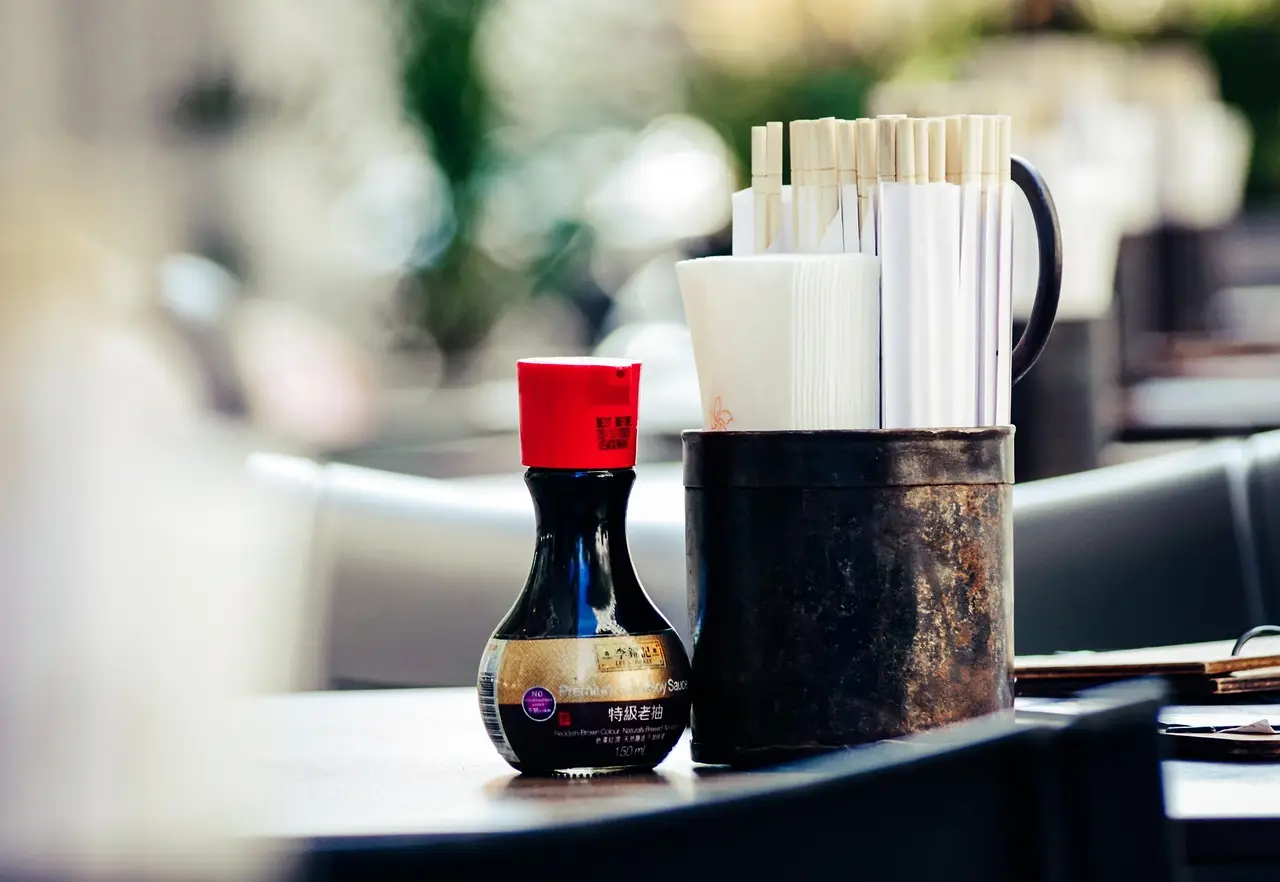
Pour a little into a dish and look at it against the light: a deep red-brown, almost mahogany. Then the smell, salty and malty with a hint of something like coffee or dark bread. A splash turns plain rice into a meal and gives a stir-fry its glossy, savoury coat. Soy sauce is a liquid seasoning brewed from fermented soybeans, usually with wheat, salt and a helpful mould. It began in China, travelled with Buddhist monks and Dutch merchants, and may even be the great-grandparent of tomato ketchup.
Background
Japan's soy sauce brewers recognise five official styles 3:
- Koikuchi, the everyday dark soy, about 80 per cent of Japan's production
- Usukuchi, lighter in colour but saltier, from the Kansai region, about 10 per cent, used where cooks want to keep vegetables bright
- Tamari, thick and rich, brewed mainly in the Chūbu region, a favourite with sushi and sashimi
- Saishikomi, "re-fermented", dense and sweet, centred on Yamaguchi
- Shiro, pale amber "white" soy from Hekinan in Aichi, for clear soups and custards
China, Korea, Indonesia and the Philippines each have their own styles, from Korean ganjang to Indonesian kecap and Filipino toyo 15.
History
Here's where the experts politely disagree.
The usual story says soy sauce took its current form about 2,200 years ago under China's Western Han dynasty, with early versions such as qingjiang around AD 40 1. Its ancestors are jiang, a fermented paste, and chi, fermented soy nuggets 2.
Soy researchers William Shurtleff and Akiko Aoyagi of the SoyInfo Center read the record more cautiously. Jiang made with meat or fish appears around 300 BC, and soybean jiang by about AD 535 in the farming manual Qimin Yaoshu 2. Yet that detailed manual never mentions jiangyou, the word for liquid soy sauce, which suggests it "probably did not exist or [was] not well known" then 2. They note a gap of about sixteen centuries in the written record and argue soy sauce may not have been widely used in China until the 1600s 2. So: ancient in its roots, perhaps surprisingly modern as a bottle on every table.
Korea has its own long story. A 4th-century Goguryeo tomb mural shows fermentation jars 5. When King Sinmun of Silla married in February 683, the wedding provisions included ganjang, doenjang (soybean paste) and meju, the fermented soybean blocks that start the process 5. Joseon-era manuals later set down detailed brewing rules, including timing, taboos and storage 5.
Japan received soy foods from China with Buddhist monks from the 7th century, who also brought vegetarian eating; the Japanese came to call the sauce shōyu 1. In 1647 the Dutch East India Company began exporting it 1. Europeans bought it but couldn't brew it, because they lacked Aspergillus oryzae, the fermenting mould 1.
Customs, rules and rituals
Soy sauce grew up alongside Buddhist vegetarianism, which gave cooks a reason to build deep, meaty flavour without meat 1.
In Britain it slipped into the gentleman's sauce bottle. Lord Byron wrote of travellers "accustom'd from a boy / To eat their salmon, at the least, with soy" 4. British firms blended soy with vinegar and spices into table sauces, and Lea & Perrins' Worcestershire sauce, created around 1837, contained 10 to 30 per cent imported soy sauce 4. In 1886 Switzerland's Maggi made the first European soy-style seasoning from hydrolysed vegetable protein 4.
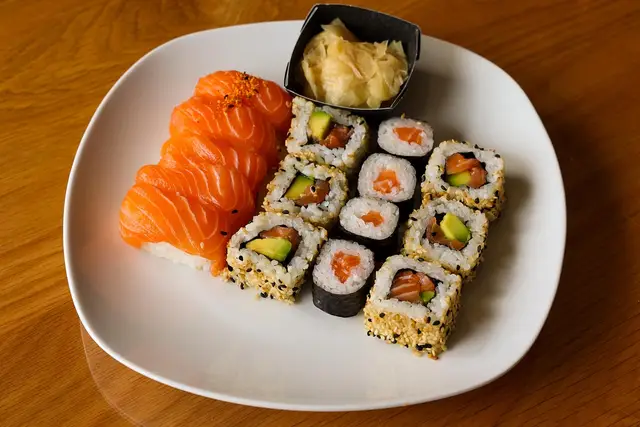
At the Japanese table, the rule is to match the soy to the food: tamari or saishikomi for sushi and sashimi, usukuchi when colour matters, shiro for delicate soups 3.
Place in human experience
Soy sauce shows how a flavour moves with people. Monks carried it to Japan with their faith 1. A Korean king's wedding pantry listed it 5. Dutch ships carried it to Europe as a luxury 1, and it hid inside Britain's most famous bottled sauce 4.
It may even have named another condiment. The word "ketchup" probably comes from Malay kichap, a fish sauce, perhaps from a Chinese word meaning "brine of fish" 6. Indonesian kecap, the word for soy sauce, comes from the same Chinese roots 1. English speakers first used "ketchup" in the 1680s for an East Indian sauce; tomato ketchup came around 1800 in the United States 6.
And it shows how patience becomes identity. Japan's five styles 3, Korea's centuries of brewing manuals 5 and the slow ferment behind every bottle tie families and regions to their own taste of salt and time.
So the next time you dip a dumpling, think of Han dynasty cooks, a Silla king's wedding and a British poet's salmon. Not bad for one little dish.
Sources
- "Soy sauce", Wikipedia, Wikimedia Foundation. https://en.wikipedia.org/wiki/Soy_sauce
- William Shurtleff and Akiko Aoyagi, History of Soy Sauce, chapter 1, SoyInfo Center. https://www.soyinfocenter.com/HSS/soy_sauce1.php
- "Types of soy sauce and how to use them", Japan Soy Sauce Brewers' Association. https://www.soysauce.or.jp/en/types-and-how-to-use-them
- William Shurtleff and Akiko Aoyagi, History of Soy Sauce, chapter 7, SoyInfo Center. https://www.soyinfocenter.com/HSS/soy_sauce7.php
- "Ganjang", Wikipedia, Wikimedia Foundation. https://en.wikipedia.org/wiki/Ganjang
- "Ketchup", Online Etymology Dictionary. https://www.etymonline.com/word/ketchup